
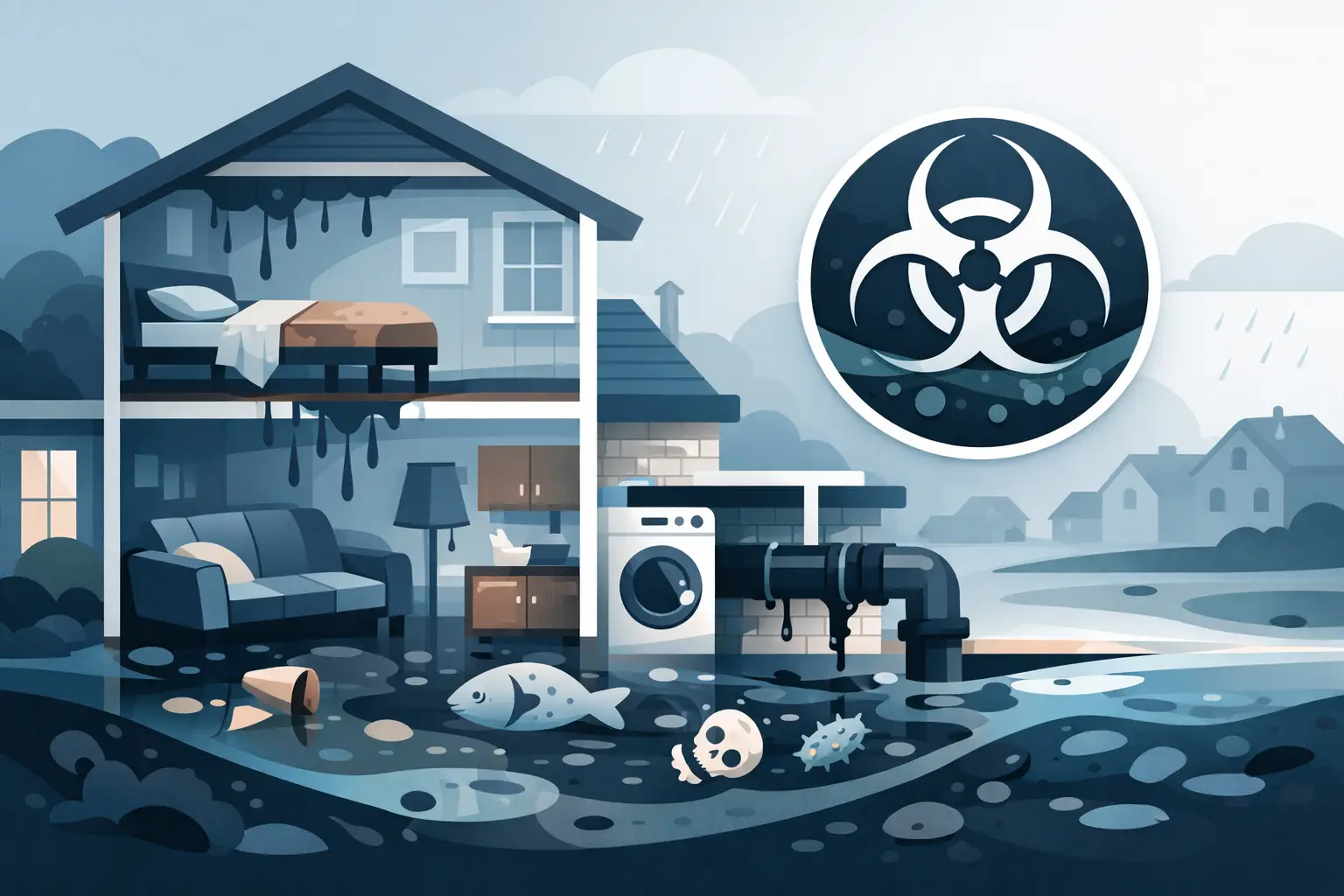
A toilet backs up across the bathroom floor. A sewer line pushes dirty water into the basement. Floodwater enters through a low doorway after heavy rain. In each case, the question is not simply how much water is present. Homeowners need to know: what does category 3 water mean for the safety of their home, belongings, and family?
Category 3 water is grossly contaminated water that can contain harmful bacteria, viruses, parasites, sewage, chemicals, and other pathogens. It is often called black water. This type of loss requires immediate professional cleanup, not a shop vacuum, household cleaner, or a wait-and-see approach.
For homeowners in Mason and nearby Cincinnati communities, category 3 water damage is one of the most urgent restoration situations. The water can spread contaminants into flooring, drywall, insulation, furniture, and stored belongings quickly. The longer it remains, the greater the health concern and the more extensive the repair work can become.
What Does Category 3 Water Mean?
The water restoration industry classifies water by its level of contamination. Category 3 is the most hazardous classification. It describes water that is unsanitary and likely to cause illness if people come into contact with it.
Common sources of category 3 water include sewage backups, toilet overflows containing waste, broken sewer pipes, drain backups, and flooding from rivers or stormwater. Water that begins as cleaner water can also become Category 3 if it sits for too long and supports significant microbial growth.
This classification is about contamination, not color or smell alone. A puddle may look relatively clear and still contain harmful microorganisms. On the other hand, dark or foul-smelling water is a strong warning that you should keep people and pets away and call a trained restoration team right away.
Why Category 3 Water Is a Serious Home Emergency
Sewage-contaminated water does more than leave a mess behind. It can carry bacteria such as E. coli, viruses, parasites, and contaminants from household waste, soil, or outdoor runoff. Contact with the water or contaminated surfaces can create health risks, especially for children, older adults, pets, and anyone with a weakened immune system.
The contamination also moves farther than many homeowners expect. Water can wick into drywall, soak behind baseboards, travel beneath vinyl or laminate flooring, and enter carpet padding. If the water reaches a finished basement, it may affect framing, insulation, cabinets, furniture, and personal items all at once.
Mold is another concern after any water event, but category 3 losses require additional caution because the materials are not only wet. They may be contaminated. Drying a contaminated material without proper removal and cleaning does not make it safe.
Common Causes of Category 3 Water Damage
A sewer backup is one of the clearest examples. When a municipal sewer line or private lateral line cannot move wastewater properly, sewage can come back through floor drains, toilets, tubs, or showers. Basements are especially vulnerable because they are often the lowest point in the home.
A toilet overflow can also become Category 3 when it contains fecal matter. Even a small overflow should be treated seriously if waste is present. The affected area may be limited, but bacteria can spread through splashing, foot traffic, and absorbent materials nearby.
Outdoor floodwater is another common source. Rainwater flowing across streets, yards, and driveways can pick up fuel, fertilizers, animal waste, sewage, and debris before entering a home. A storm-related basement flood may look like ordinary rainwater, but it should not automatically be treated as clean.
Drain backups, failed sump pumps during severe weather, and damaged plumbing connected to waste lines can create similar conditions. The source matters, but the proper response is the same: stop exposure, contain the area, and bring in trained professionals.
What to Do Right Away After a Sewage Backup
First, keep people and pets out of the affected area. Do not walk through sewage water unnecessarily, and do not let children investigate the damage. If the water is near electrical outlets, appliances, or the electrical panel, avoid touching anything until it can be assessed safely.
If you can do so without entering contaminated water, stop the source. Shut off water to an overflowing toilet or avoid using plumbing fixtures if a drain or sewer backup is active. For a widespread backup, contact a plumber as needed to address the cause while a restoration company handles cleanup and drying.
Do not use a household vacuum or shop vacuum on sewage water. Do not try to save contaminated carpet padding, paper goods, mattresses, or other absorbent materials. These items are difficult or impossible to fully disinfect after Category 3 exposure.
Take a few photos for your insurance claim from a safe location, then call for professional sewage cleanup. Fast action can limit how far contamination travels and can help protect structural materials that may still be salvageable.
How Professional Category 3 Water Cleanup Works
Category 3 cleanup is a controlled process. It begins with an inspection to identify the source, the affected materials, and where moisture and contamination have traveled. Restoration technicians use moisture detection tools to check areas that may not look wet on the surface.
The first step is removing contaminated water with professional extraction equipment. Technicians then remove unsalvageable porous materials, which may include carpet, padding, wet insulation, damaged drywall, baseboards, and affected contents. The exact scope depends on how long the water was present, how far it spread, and what materials it contacted.
After removal, the remaining structure is cleaned and treated using industry-appropriate antimicrobial processes. Specialized drying equipment is placed to remove moisture from framing, subfloors, and other building materials. Air movement, dehumidification, and regular moisture monitoring are used to make sure the space is actually dry, not merely dry to the touch.
This is where professional experience matters. Cleaning the visible floor without checking behind walls or beneath flooring can leave moisture and contamination behind. That can lead to odors, damaged materials, mold growth, and a more expensive repair later.
Can You Keep Any Belongings After Category 3 Water?
It depends on the item and the level of exposure. Non-porous materials such as some metal, glass, and hard plastic items may be cleaned and disinfected when handled properly. Solid wood furniture may sometimes be evaluated for restoration, depending on how deeply the water penetrated and whether contamination reached unfinished surfaces, joints, or upholstery.
Porous items are harder to save. Carpet padding, fabric-covered furniture, mattresses, paper products, cardboard boxes, stuffed toys, and many stored basement items often need to be discarded. Drywall and insulation that contacted sewage water are commonly removed because they absorb contamination.
It can be frustrating to throw away belongings that appear intact. But appearance is not a reliable measure of safety after a sewage loss. A trained restoration team can help identify what may be cleaned, what should be removed, and what documentation may be useful for insurance.
Category 3 Water Cleanup Needs Fast, Local Help
When contaminated water enters your home, every hour matters. Water can move through finished spaces, soak structural materials, and increase the amount of demolition required. Quick professional response helps reduce secondary damage while protecting the people who live in the home.
Kans Water Restoration provides water damage restoration, sewage cleanup, structural drying, and mold remediation for homeowners and businesses in Mason and surrounding communities. With trained technicians and industry-standard restoration methods, the focus is on removing the contamination, drying the affected structure, and helping you move toward a clean, safe property again.
If you suspect sewage, drain-backup, or flood contamination in your home, do not wait for the water to disappear on its own. Keep the area closed off, avoid handling affected materials, and get qualified restoration help so your home can be cleaned and dried the right way.

