
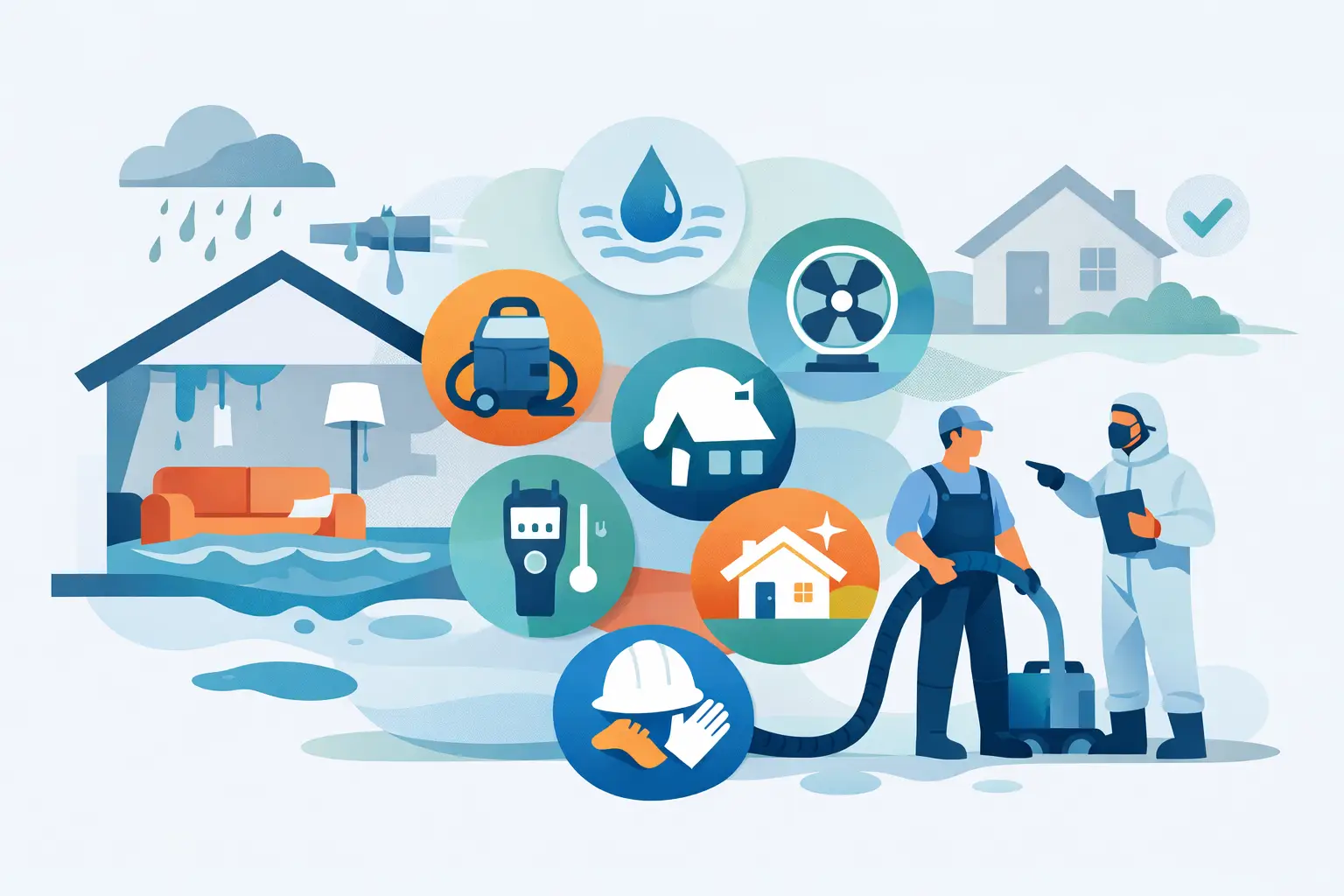
When water gets into a home, the clock starts right away. The right water damage restoration steps can mean the difference between a manageable cleanup and weeks of structural drying, repairs, and mold problems. For homeowners in Mason and nearby communities, that matters most when a basement floods at night, a toilet overflows upstairs, or a pipe leak spreads behind walls before anyone notices.
Why water damage restoration steps matter
Water damage is rarely just about the visible puddle on the floor. Moisture moves fast into drywall, insulation, subfloors, trim, and framing. What looks minor at first can turn into warped materials, odors, staining, and microbial growth within a short window.
That is why professional restoration follows a process, not guesswork. A trained crew is not just removing standing water. They are finding where the water traveled, identifying what can be saved, and drying the structure in a way that lowers the risk of lingering damage later. In a residential setting, that often means protecting flooring, walls, cabinets, and personal belongings while keeping the home as safe and clean as possible.
Step 1: Emergency response and damage inspection
The first step is showing up quickly and figuring out exactly what happened. Water loss is not one-size-fits-all. Clean water from a supply line is handled differently than a sewage backup or a toilet overflow with contamination concerns.
During the initial inspection, a restoration team checks the source of the intrusion, the affected rooms, the depth of saturation, and the materials involved. Moisture meters, thermal imaging, and hands-on inspection help reveal what is wet beyond the obvious surface damage. This matters because a dry-looking baseboard or wall section may still hold moisture behind it.
The crew also looks at safety issues. Depending on the situation, that can include electrical hazards, contaminated water, slip risks, weakened materials, and the possibility of hidden mold if the water has been sitting for a while.
Step 2: Stop the source and secure the property
Before real cleanup starts, the source of the water must be controlled. If a pipe is still leaking or a drain is still backing up, extraction alone will not solve the problem. In some cases, homeowners need a plumber first. In others, the restoration crew can help isolate the issue and stabilize the area until repairs are made.
Securing the property may also mean moving furniture, protecting unaffected rooms, setting up containment, or removing immediate hazards. If the water loss involves contaminated water, this step becomes even more important. The goal is to keep damage from spreading and reduce health concerns for the people living in the home.
Step 3: Water extraction comes first
Once the source is under control, standing water has to go. This is one of the most time-sensitive water damage restoration steps because the longer water sits, the deeper it soaks into materials.
Professional extraction equipment removes water far faster than household vacuums or fans ever could. In a basement flood, that may involve powerful pumps and vac systems to clear out pooled water. In a bathroom overflow, it may mean targeted extraction around vanities, flooring edges, and nearby drywall.
Fast extraction helps limit swelling, staining, and material breakdown. It also shortens the drying timeline, which can reduce both disruption and overall restoration costs. That said, extraction is only the start. Even after visible water is gone, materials can still hold a large amount of moisture.
Step 4: Remove unsalvageable materials when needed
Not every material can or should be saved. This is one of the harder parts of the process for homeowners, but it is often necessary to get the structure dry and sanitary again.
It depends on the category of water, how long the materials were wet, and what the materials are made of. Carpet padding, swollen laminate flooring, wet insulation, and contaminated porous materials may need to be removed. With sewage or drain backup losses, disposal is often required because sanitation becomes the priority.
Good restoration work is not demolition for the sake of demolition. It is controlled removal based on what is affected and what will create ongoing issues if left in place. Experienced technicians aim to preserve as much as practical while still doing the job the right way.
Step 5: Structural drying and dehumidification
This is where many property owners underestimate the problem. A room can look dry and still have significant moisture inside walls, subfloors, framing, and other concealed spaces. If drying is incomplete, the result can be odor, material failure, and mold growth later on.
Professional structural drying uses commercial air movers, dehumidifiers, and moisture tracking to bring affected materials back toward dry standards. Equipment placement is intentional. It is not just about putting a few fans in the room and hoping for the best.
Monitoring is part of the job. A qualified crew checks readings over multiple visits and adjusts equipment as conditions change. Some homes dry fairly quickly. Others take longer because of dense building materials, layered flooring, finished basements, or humidity conditions inside the property. That is one reason IICRC-based restoration methods matter. Drying should be measured, documented, and verified, not assumed.
Step 6: Cleaning, sanitizing, and odor control
After extraction and drying are underway, affected surfaces need to be cleaned properly. In many water losses, there is more to address than moisture alone. There may be soil, bacteria, residue, or the kind of damp smell that lingers in carpet, drywall cavities, or baseboards.
Cleaning methods depend on the type of loss. A clean water line break is different from a washing machine backup or sewage event. Some situations call for antimicrobial treatment, detailed wipe-downs, HEPA vacuuming, or odor control methods to address the source of the smell rather than cover it up.
This step is also where mold prevention becomes part of the conversation. Not every water loss causes mold, but wet materials left untreated create the conditions for it. If microbial growth has already started, remediation may need to be handled as its own scope of work.
Step 7: Repairs and recovery planning
The final phase is getting the home back to normal. Sometimes that means minor repairs like replacing baseboards, sections of drywall, or flooring materials. In larger losses, the rebuild can be more involved.
What matters most is having a clear picture of what was damaged, what was dried successfully, and what needs to be restored or replaced. Homeowners are already dealing with enough stress after a flood or backup. A professional company should make the path forward easier, not harder to understand.
For some properties, this phase also includes insurance documentation support. Photos, moisture records, and itemized damage information can help show what happened and what work was necessary. That does not guarantee how every claim will go, but thorough documentation usually puts the homeowner in a better position.
When the process changes
Not every job follows the exact same path. A small sink overflow caught quickly may need extraction and limited drying, while a finished basement flood may require removal of wet materials, deep drying, odor treatment, and mold prevention measures. Commercial properties can add another layer because downtime matters just as much as the building materials.
The type of water also changes the approach. Clean water, gray water, and black water losses are not treated the same, and they should not be. The more contamination involved, the more important controlled removal, sanitation, and proper protective procedures become.
Choosing the right team for the job
Homeowners usually call for help when they are under pressure. Water is spreading, materials are getting damaged, and nobody wants to make the wrong call. That is why experience matters.
A company focused on water cleanup, structural drying, mold concerns, and post-disaster recovery will usually spot issues that a general contractor or basic cleanup crew can miss. The difference shows up in how the job is assessed, how moisture is tracked, and how secondary damage is prevented.
For local homeowners, responsiveness matters too. Fast arrival can save flooring, reduce tear-out, and shorten the time it takes to get a room or basement back in service. Kans Water Restoration serves this kind of need with practical, hands-on help built around real emergency conditions in Ohio homes.
If water has gotten into your home, the best next step is not to wait and see. The sooner the problem is inspected, extracted, and dried correctly, the better your chances of avoiding bigger repairs and mold issues a few days from now.

