
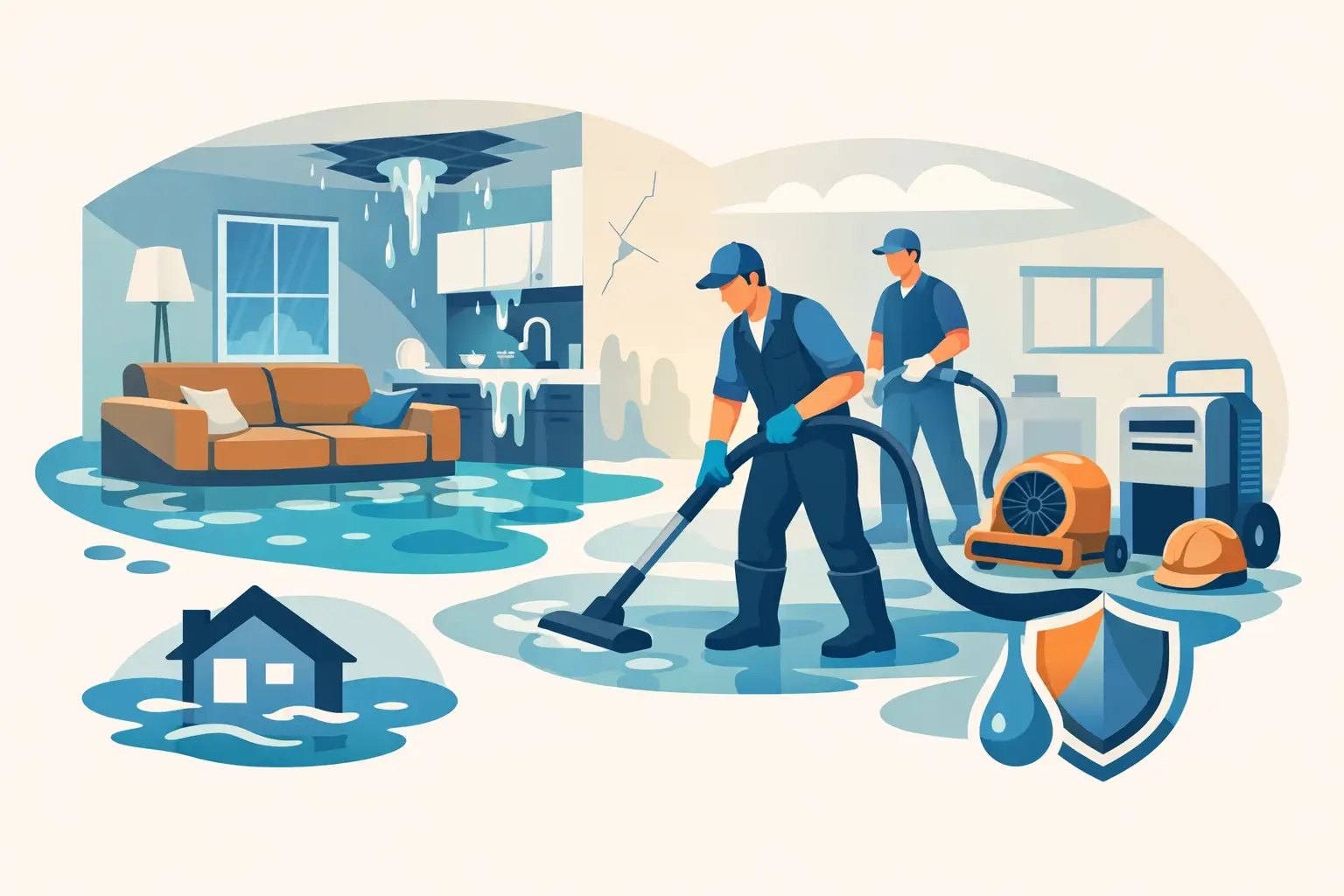
A pipe bursts at 2 a.m., the basement carpet is soaked, and water is already moving into the drywall. In that moment, most homeowners are not asking technical questions. They are asking who can get here fast and stop the damage. If you have ever wondered what is water damage restoration service, the short answer is this: it is the professional process of removing water, drying the structure, cleaning affected areas, and preventing bigger problems like mold, odors, and material failure.
Water damage restoration is not just mopping up a mess. A serious water loss can soak insulation, subfloors, baseboards, framing, and hidden cavities behind walls. Even when surfaces look dry, moisture can remain trapped where it keeps spreading damage. That is why restoration companies use moisture meters, commercial extraction equipment, air movers, dehumidifiers, and proven drying methods to bring a property back to a safe, stable condition.
What is water damage restoration service, really?
At its core, water damage restoration service is a professional response to unwanted water inside a home or business. The goal is to limit damage quickly, remove standing water, dry affected materials, sanitize where needed, and restore the property as much as possible.
This service usually starts after events like a burst pipe, appliance leak, sump pump failure, roof leak, toilet overflow, sewer backup, or storm-related flooding. Some losses are obvious right away. Others start small and become major problems after water sits for hours or days.
A trained restoration company does more than clean what you can see. Technicians assess how far the water has traveled, what materials can be saved, and what needs to be removed to prevent long-term issues. In many cases, the real work is in the hidden moisture, not the puddle on the floor.
What happens during water damage restoration?
The first step is emergency response and inspection. The crew identifies the source of the water, checks whether the leak or overflow has been stopped, and evaluates the damage. This includes checking walls, flooring, trim, cabinets, and nearby rooms for moisture migration.
Next comes water extraction. Standing water needs to be removed as quickly as possible because the longer it sits, the more damage it causes. Fast extraction can make a major difference in whether materials like carpet, hardwood, drywall, or cabinets can be saved.
After extraction, the drying process begins. This is where many homeowners underestimate the job. Drying a structure properly takes more than a few fans from the garage. Professionals place commercial air movers and dehumidifiers strategically, then monitor moisture levels over several days. The equipment setup depends on the size of the loss, the type of materials affected, indoor humidity, and how long the water has been present.
Cleaning and sanitation may also be necessary, especially after gray water or sewage-related losses. Water from a clean supply line is one thing. Water from a toilet overflow, drain backup, or contaminated source is another. In those situations, affected materials may need deeper cleaning, antimicrobial treatment, or removal if they cannot be safely restored.
The final stage is restoration or rebuild work. Sometimes that means minor repairs like replacing baseboards and patching drywall. Other times, it involves flooring replacement, insulation removal, or rebuilding sections of a damaged room. It depends on the severity of the loss and how quickly the response happened.
Why speed matters more than most people think
Water damage gets worse by the hour. Within a short time, water can spread into nearby rooms, wick up drywall, swell wood materials, and soak padding and insulation. If moisture remains, mold and mildew can begin to grow in as little as 24 to 48 hours under the right conditions.
That is why professional restoration is built around fast action. A quick response can reduce demolition, lower repair costs, and shorten the overall recovery time. Waiting a day or two because the floor looks like it is drying on its own can lead to hidden moisture, stronger odors, and more extensive repairs.
For homeowners in places like Mason, West Chester, Loveland, and nearby communities, this matters even more in basements and lower-level living spaces. These areas often have limited airflow, porous materials, and multiple moisture paths, which means water can sit where you do not immediately see it.
Not all water damage is the same
One reason homeowners need a professional assessment is that different water losses carry different risks. Clean water from a broken supply line is generally less hazardous if addressed quickly. Gray water from appliances, sinks, or certain overflows may contain contaminants. Black water, such as sewage backup or floodwater with heavy contamination, requires a much more controlled cleanup process.
The category of water affects how the restoration is handled. It changes what can be cleaned, what should be removed, and what safety precautions are needed. This is one of those situations where it really does depend on the source, the materials involved, and how long the water has been sitting.
A small clean-water leak caught early may require extraction and drying with minimal tear-out. A finished basement affected by a sewer backup is a different job entirely. That loss may involve disposal of porous materials, detailed cleaning, odor treatment, and applied microbial remediation steps to reduce health and sanitation risks.
What water damage restoration service includes beyond drying
A lot of people think the service ends once the visible water is gone. It does not. Proper restoration also addresses the secondary damage that follows a water event.
That can include mold prevention, odor control, material removal, and structural drying inside wall cavities or under flooring. It may also involve checking areas that are easy to miss, such as behind vanity cabinets, beneath laminate floors, around toilet bases, or inside finished basement walls.
If moisture is left behind, the problem keeps moving even after the room looks better. Paint can bubble. Flooring can cup or separate. Drywall can soften. Musty smells can show up days later. A professional company works to stop that chain reaction, not just improve the appearance of the room.
This is where trained technicians and industry-standard methods matter. Companies with IICRC water damage restoration knowledge and applied microbial remediation experience are working from established procedures, not guesswork.
When should you call a restoration company?
Call as soon as you find water where it should not be. That includes obvious emergencies like flooding and burst pipes, but it also includes slower-developing problems such as repeated toilet overflows, appliance leaks, or water stains that suggest hidden moisture.
Some homeowners wait because the damage seems small. Sometimes that works out. Sometimes it turns a manageable issue into a much larger restoration project. If water has affected drywall, flooring, insulation, cabinetry, or more than one room, it is smart to bring in professionals right away.
You should also call if there is any chance of contamination, especially after sewage backups or drain overflows. Those situations are not just wet. They are unsanitary and need proper cleanup.
How to choose the right company
The best water damage restoration service is not just the one with a truck available today. You want a company that responds quickly, communicates clearly, and knows how to inspect, extract, dry, and remediate the problem without cutting corners.
Ask whether they handle emergency response, structural drying, sewage cleanup, and mold-related issues. Ask if their technicians are trained in recognized restoration standards. Ask how they document moisture and track drying progress. A dependable local company should be able to explain the process in plain language and tell you what happens next.
That local piece matters. Homeowners under stress want someone nearby who understands the area, can get there fast, and has experience with the kinds of basement flooding, plumbing failures, and moisture issues common in suburban Ohio homes. Kans Water Restoration is one example of the kind of local service homeowners look for when speed and practical know-how matter most.
What is water damage restoration service worth to a homeowner?
It is worth peace of mind when your home no longer feels safe or under control. It is worth protecting structural materials before they weaken, protecting indoor air quality before mold takes hold, and protecting your time from a cleanup that keeps getting bigger.
Most of all, it is worth having trained people take over when the situation is moving faster than you can. Water damage creates stress because it spreads, hides, and changes quickly. A good restoration service brings order back to the situation with a clear process and the right equipment.
If water has entered your home, the right move is usually the fast one. The sooner the water is removed and the structure is dried correctly, the better your chances of limiting damage and getting life back to normal.

