
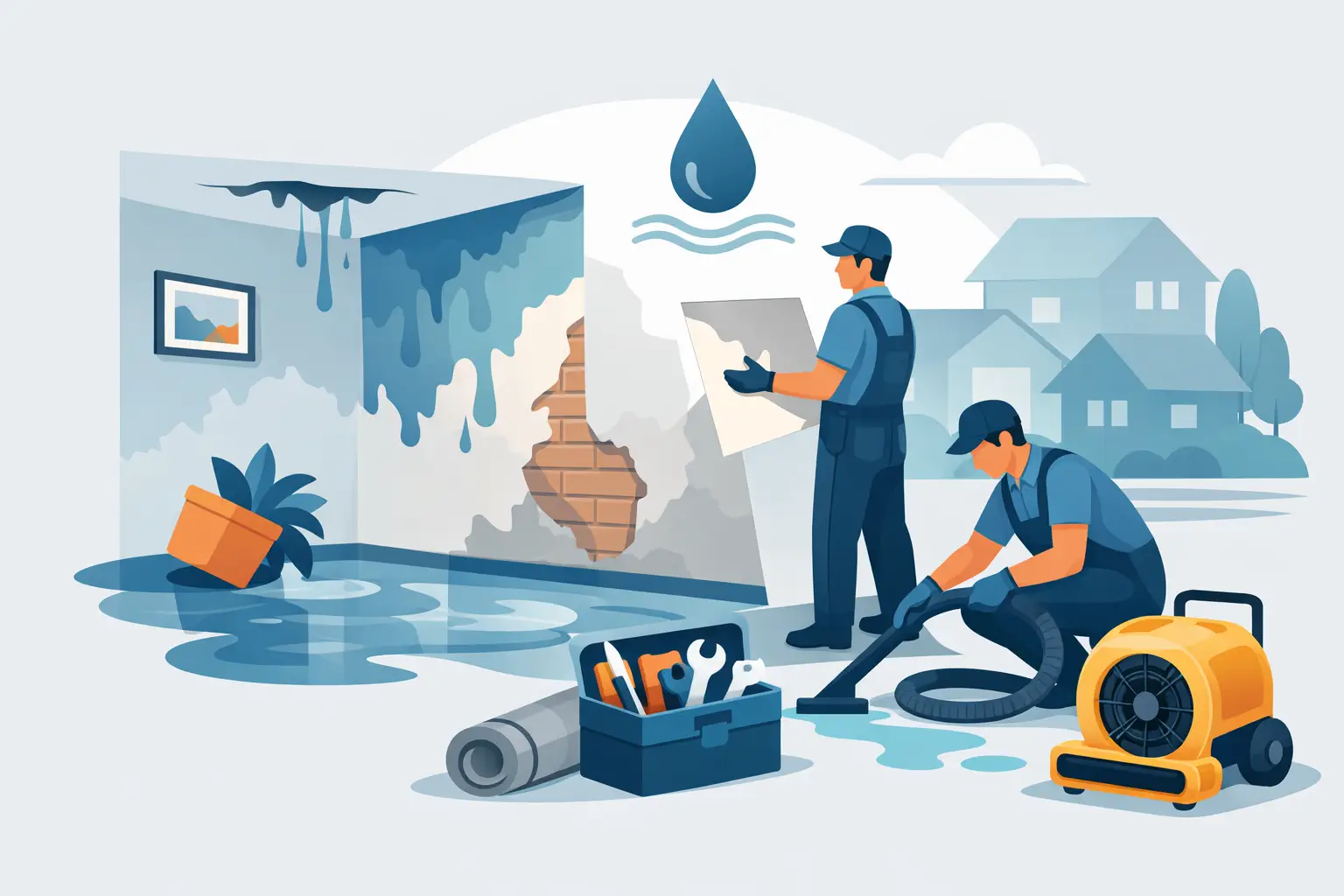
A wet basement at 10 p.m. is not the time to sort through conflicting advice online. If you are asking what is water damage repair, the short answer is this: it is the professional process of removing water, drying the structure, cleaning affected areas, and repairing damage before moisture turns into bigger problems like warped materials, odors, or mold growth.
For most homeowners, water damage repair is not just about getting rid of visible water. It is about protecting the parts of the home you cannot easily see – subfloors, wall cavities, insulation, trim, and framing. When the job is handled correctly, the goal is to return the space to a clean, dry, safe condition as quickly as possible.
What Is Water Damage Repair and What Does It Include?
Water damage repair usually starts the moment a trained crew arrives and identifies the source and extent of the problem. That could be a burst pipe, sump pump failure, overflowing toilet, appliance leak, heavy rain intrusion, or a drain backup affecting lower levels of the home.
From there, the work moves in stages. First comes water extraction. Standing water has to be removed quickly because the longer it sits, the farther it spreads into flooring, drywall, cabinets, and structural materials. After extraction, the drying phase begins using commercial air movers, dehumidifiers, and moisture detection equipment. This is where professional restoration separates itself from basic cleanup. A floor can look dry while the materials underneath still hold enough moisture to keep causing damage.
Cleaning and sanitizing are also part of the process, especially when the water came from a toilet overflow, sewage issue, or contaminated source. In those cases, repair is not only about moisture control. It is also about making the area safe again.
Then comes the repair side. Depending on the loss, that may mean removing damaged drywall, replacing baseboards, repairing flooring, rebuilding sections of a bathroom or basement, or addressing mold and mildew that started to develop after the water event.
Why speed matters more than most people think
Water damage gets worse by the hour, not just by the day. In the first stretch, water spreads into porous materials and can begin swelling wood, loosening adhesives, and staining surfaces. If conditions stay damp, mold can begin developing in as little as 24 to 48 hours.
That is why fast action matters so much. A prompt response can often reduce how much material needs to be removed and replaced. It can also lower the chance that a simple leak turns into a much larger restoration project.
There is also a cost side to this. Delayed cleanup often means more demolition, more drying time, and more repair work later. What starts as a small bathroom overflow can become damaged trim, ruined flooring, affected drywall, and a lingering odor issue if moisture is left behind.
Water cleanup is only one part of the job
One of the biggest misunderstandings homeowners have is thinking water damage repair just means vacuuming up water and putting fans in the room. That may help at the surface, but it is rarely enough for a real loss.
Professional repair involves moisture mapping and targeted drying. Technicians check where the water migrated and what materials were affected. In a basement, that might include lower wall sections, carpet pad, stored contents, framing, and the concrete environment itself. In a bathroom, it could mean water under tile, behind vanities, or inside wall cavities near plumbing lines.
This matters because trapped moisture is what causes the second wave of problems. The visible mess may be gone, but if wet materials stay enclosed, the home can develop musty smells, staining, soft drywall, buckled flooring, or microbial growth later.
Different water losses call for different repair methods
Not every water loss is handled the same way. Clean water from a supply line leak is not treated the same as water from a washing machine overflow that sat for a day, and neither is the same as sewage from a drain backup.
The category of water affects how aggressive the cleanup and removal process needs to be. Clean water losses may allow some materials to be dried and saved if the response is quick. Gray water and black water losses often require more controlled removal, sanitation, and disposal of affected porous materials.
The location matters too. A small leak in an unfinished utility room is very different from water affecting a finished basement, hardwood floors, or a bathroom next to occupied bedrooms. The repair plan depends on what got wet, how long it has been wet, and whether the materials can be restored safely.
What homeowners should expect from a professional crew
A reliable restoration company should do more than show up with a few fans. Homeowners should expect a clear explanation of the damage, a practical action plan, and equipment that matches the size and type of loss.
That includes inspection tools to locate hidden moisture, extraction equipment to remove standing water, and commercial drying equipment to lower moisture levels in both building materials and the air. Just as important, the crew should monitor the drying progress instead of setting equipment and disappearing.
You should also expect straightforward communication. In a stressful situation, people want answers they can understand. What is damaged? What can be saved? How long will drying take? Is there a mold risk? Is the area safe to use? Good restoration work is technical, but the communication should still be simple and honest.
For homeowners in Mason and nearby communities, that local responsiveness matters. When water is moving through a basement or soaking a bathroom floor, you do not want vague timelines. You want a trained crew that can get there, get started, and stay focused until the structure is dry.
What is water damage repair not?
It is not basic housekeeping, and it is not a wait-and-see problem. Water damage repair is also not always the same as remodeling. Some homeowners assume repairs only begin once all the drying is finished, but in reality, restoration often overlaps with cleanup, demolition, sanitation, and planning for reconstruction.
It is also not always visible. Some of the worst moisture damage happens behind walls, under flooring, and inside finished lower levels where water traveled farther than expected. A room may look mostly normal and still have enough hidden moisture to create long-term damage.
That is one reason professional assessment matters. Guesswork can leave wet materials in place, and that usually becomes more expensive later.
When to call for help instead of trying to handle it yourself
If the affected area is small and fully from a clean, contained source, some homeowners can manage initial cleanup. But once water spreads beyond a simple surface mess, professional help is usually the safer call.
You should reach out right away if water affected drywall, insulation, hardwood, carpet padding, cabinetry, or finished basement materials. The same goes for toilet overflows, drain backups, repeated leaks, musty odors, or any situation where the water may have been sitting longer than you thought.
The trade-off is simple. A do-it-yourself approach may seem faster in the moment, but if hidden moisture stays behind, the repair gets bigger. Professional restoration costs money, but it can prevent deeper structural damage and reduce the chance of mold remediation later.
Companies with IICRC-based restoration and microbial remediation knowledge bring a level of process that matters in real homes. That is especially true when the problem involves contamination, recurring moisture, or indoor areas your family uses every day.
The real goal of water damage repair
The real goal is not to make the room look better for a day. It is to get the home dry, stable, and safe again. That means addressing the source, removing the water, drying what can be saved, removing what cannot, and repairing the damage in a way that prevents more problems from showing up a month later.
For a homeowner, peace of mind comes from knowing the issue was handled thoroughly. That is what water damage repair should deliver. If your basement, bathroom, or another part of your home has taken on water, do not wait for signs to get worse. Get it checked, get it dried properly, and get your home back on solid ground.

