
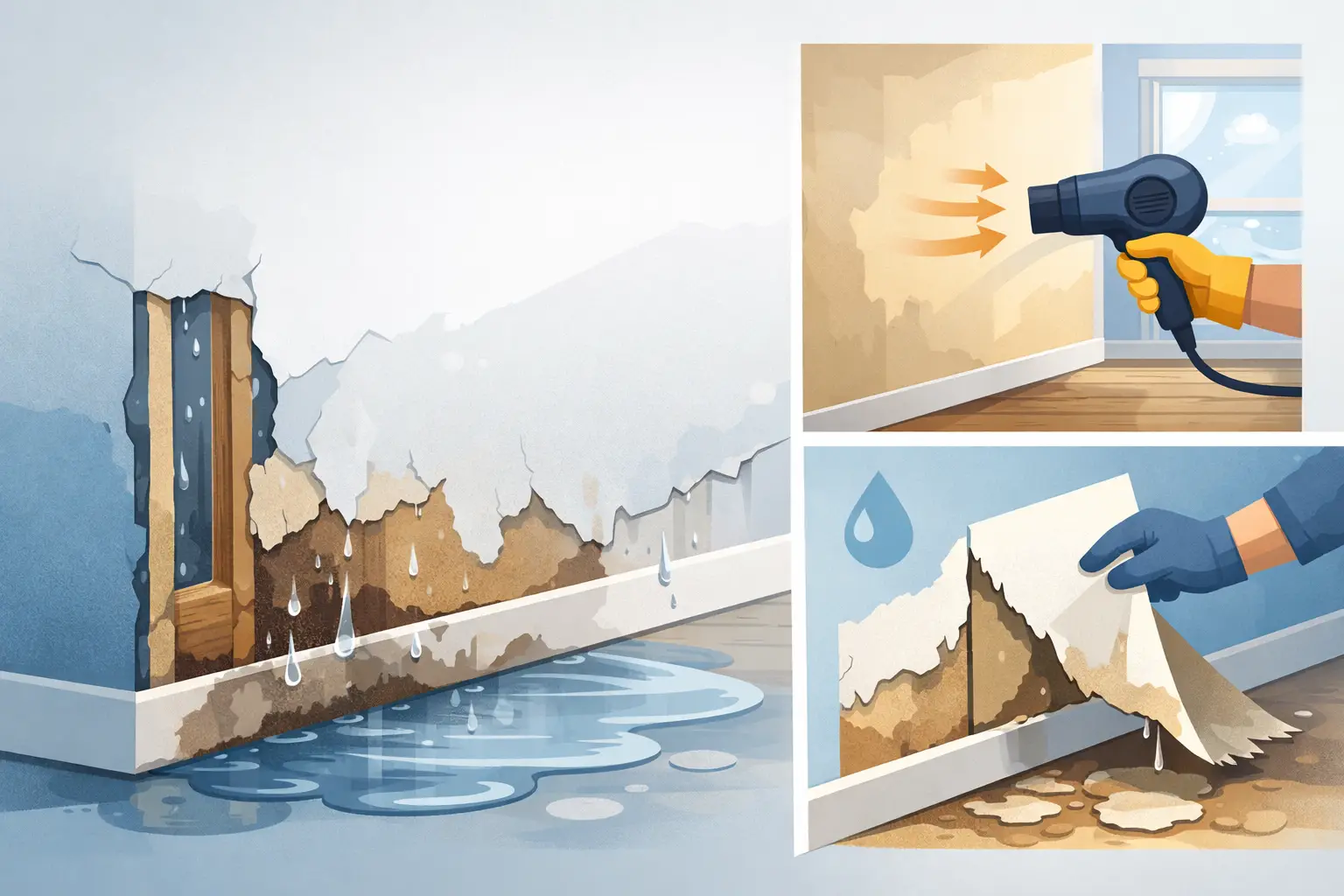
A wall can look fine on the outside and still be a problem behind the paint. That is why one of the first questions homeowners ask after a leak or backup is, can wet drywall be saved? The honest answer is sometimes – but only if the water source, contamination level, and drying timeline all work in your favor.
Drywall is not a forgiving material. It absorbs water fast, loses strength quickly, and can support mold growth if moisture stays trapped inside the wall cavity. In some cases, prompt drying can save it. In other cases, keeping it in place only delays the real repair and gives mold more time to spread.
Can wet drywall be saved after water damage?
It depends on three things: what kind of water got into it, how long it has been wet, and how much of the wall was affected. Clean water from a small supply line leak is very different from sewage, a toilet overflow, or stormwater that carried contamination into the home.
If the drywall was hit by clean water and the area was addressed quickly, there is a chance it can be dried and kept. That usually means moisture was discovered within a day or two, the drywall has not started to crumble or swell badly, and the insulation behind it is either dry or can also be properly dried.
If the water came from a drain backup, toilet overflow involving waste, or any category of contaminated water, the answer changes fast. Porous materials like drywall usually need to be removed because they cannot be reliably cleaned to a safe standard once contamination gets in. The same is true when the wall has been wet long enough for mold growth to begin.
When drywall can sometimes be saved
There are situations where drying in place is a reasonable option. A small leak under a bathroom sink, a refrigerator line drip caught early, or a minor pipe leak inside a wall may leave only limited moisture damage. In those cases, restoration technicians can use moisture meters, thermal imaging, and controlled structural drying to see how far the water traveled and whether the material is still sound.
Drywall is more likely to be saved when the paper facing is intact, the board has not sagged, and there is no staining pattern suggesting prolonged saturation. The lower the moisture load, the better the odds. Fast extraction, air movement, and dehumidification matter a lot in the first 24 to 48 hours.
The location matters too. A small wet area high on a wall may dry better than drywall at the baseboard line, where water tends to wick upward and soak trim, insulation, and framing. Once moisture reaches the lower sections of a wall, the affected area is often larger than it first appears.
When wet drywall should be removed
Homeowners usually hope for drying because it sounds less invasive. Sometimes that is the right call. Sometimes it is not. If the drywall is soft to the touch, swollen, crumbling, or separating at seams, replacement is often the safer and more cost-effective path.
Drywall should usually be removed when it has been exposed to contaminated water, when visible mold is present, or when moisture has remained trapped long enough to create odor and microbial growth concerns. Wet insulation behind the wall is another major factor. If insulation is saturated, the wall cavity often cannot dry correctly without opening the area.
Basements are a common example. After flooding, the bottom portion of drywall may look only slightly stained, but the backside can stay wet for days. That creates the perfect setup for hidden mold. Cutting out the affected lower section is often the best way to dry the framing, remove damaged insulation, and avoid a bigger issue later.
The hidden problem behind the wall
What homeowners see on the surface is only part of the story. Drywall acts like a sponge, but the wall system behind it matters just as much. Studs, insulation, vapor barriers, baseboards, flooring edges, and trim can all hold moisture. If those materials stay wet, the wall can continue to feed mold even after the painted surface feels dry.
That is why surface fans alone are not enough for many losses. A room may feel dry, but the moisture content inside the wall can still be too high. Professional drying is based on measurement, not guesswork. Without that, people often repaint too early, close the wall too soon, or leave damp material in place.
This is also where small leaks turn into expensive repairs. A slow leak behind a wall may not show obvious damage until the drywall paper discolors, the paint bubbles, or a musty odor starts showing up in the room. By then, the drywall itself is only one part of the problem.
Why timing matters so much
The first day matters. The second day matters even more. Once water has had time to soak into porous material and sit, the chance of saving drywall drops quickly.
Mold does not need standing water to become a concern. It needs moisture and a food source, and drywall paper gives it exactly that. That is why waiting to “see if it dries on its own” often leads to more demolition later. Fast action gives you the best chance to save materials and limit the repair area.
The source of the water also needs to be fully stopped before drying begins. If a leak is still active, or if humidity in the wall cavity remains high because of poor ventilation, the drywall will keep taking on moisture. Drying equipment cannot overcome an ongoing water source.
What a professional inspection looks for
A proper restoration inspection is not just a glance at the stain. Technicians look at the class of water damage, how far moisture migrated, whether the drywall has lost integrity, and whether related materials have also been affected.
They check the wall with moisture detection tools and compare wet readings to normal dry standards. They also evaluate whether the wall cavity can be dried in place or whether selective removal is needed to release trapped moisture. In many cases, the goal is not to remove more than necessary – it is to remove exactly what is needed so the structure can dry safely.
That balance matters to homeowners. Nobody wants unnecessary tear-out. But keeping compromised drywall to avoid a short-term repair can create a much larger mold remediation job later.
If the water came from sewage or a backup
This is the easiest call. Drywall affected by sewage or heavily contaminated backup water generally should not be saved. Porous materials absorb contaminants deep into the material, and drying does not make them sanitary.
That includes many toilet overflows, drain backups, and flood events where outside water entered the home. Once contamination is involved, the priority shifts from simple drying to safe removal, cleaning, and restoration. Trying to keep drywall in that situation is usually the wrong gamble.
The safest next step for homeowners
If your wall just got wet, do not assume it has to be torn out, and do not assume it is fine either. The right answer comes from a prompt inspection and moisture mapping. That is the only way to know whether the drywall can be dried in place or if removal is the safer option.
For homeowners in Mason and nearby communities, this is where experienced restoration help matters. A trained crew can identify the water source, check for hidden moisture, set up proper drying, and remove only what cannot be saved. Companies like Kans Water Restoration handle this work every day, especially in basements, bathrooms, and other areas where water damage spreads fast.
The best outcome usually comes from acting early. If the drywall can be saved, early action gives it the best chance. If it cannot, early removal helps protect the rest of the house from a much bigger moisture and mold problem. When water gets into your walls, a quick decision backed by real testing is worth far more than guesswork.

