
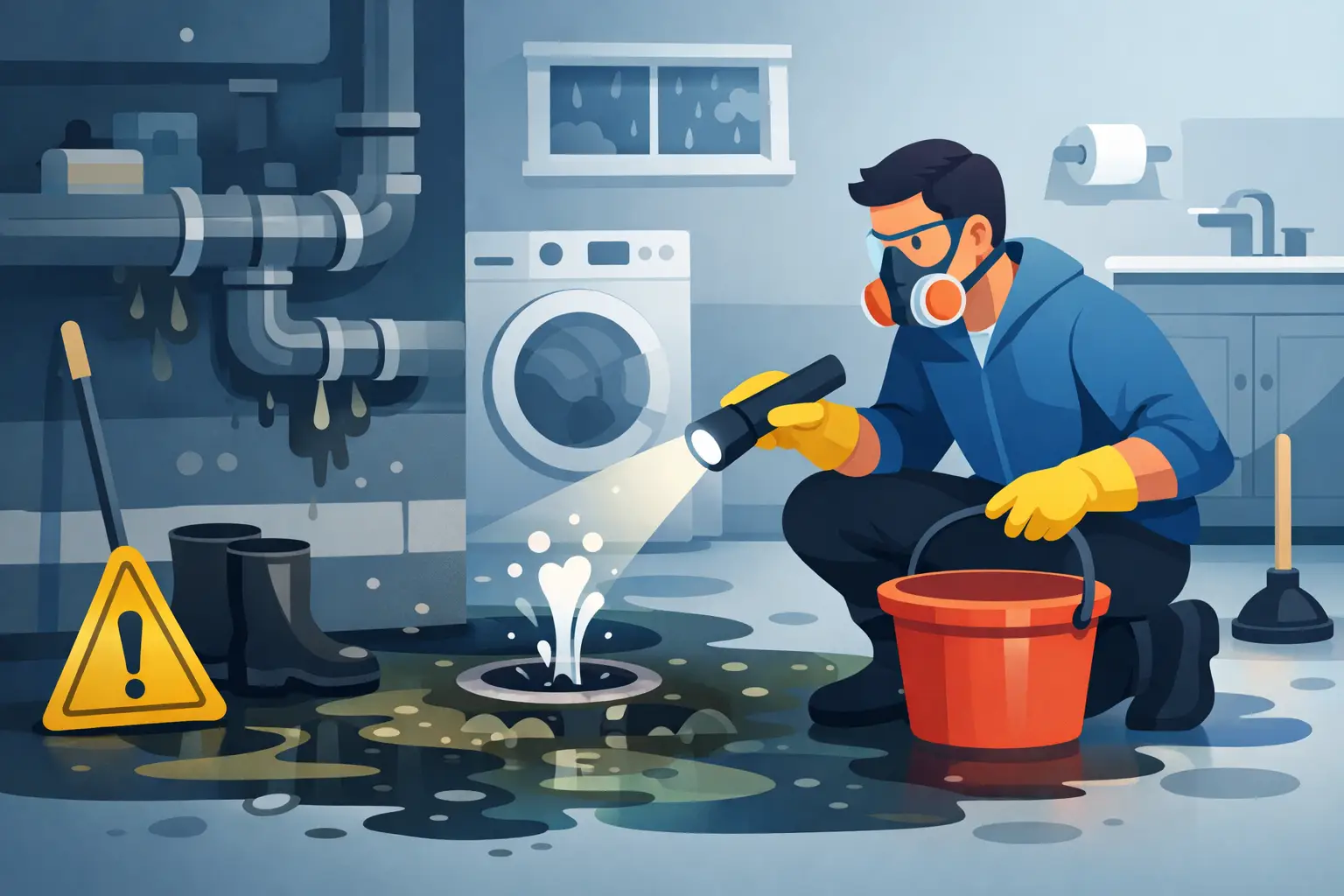
A sewage backup can turn a usable basement or bathroom into a contaminated area within minutes. Knowing how to respond to sewage backup is less about cleaning it yourself and more about protecting your family, limiting damage, and getting qualified help on site quickly. Wastewater may contain bacteria, viruses, parasites, and other contaminants that do not belong in your home.
How to Respond to Sewage Backup Safely
Your first priority is to keep people and pets away from the affected area. Do not walk through standing sewage water, and do not let children or animals near wet carpet, flooring, furniture, or belongings. Even a small backup around a floor drain or toilet can spread contamination farther than it appears.
Take these immediate steps while you arrange professional sewage cleanup:
- Stop using toilets, sinks, showers, washing machines, dishwashers, and other plumbing fixtures. Adding water to the system can make the backup worse.
- Keep clear of electrical outlets, cords, appliances, and the breaker panel if water is nearby. If it is safe to do so without entering the water, turn off power to the affected area.
- If a toilet is overflowing, remove the tank lid and carefully close the flapper valve at the bottom of the tank. You can also turn the shutoff valve behind the toilet clockwise.
- Move dry, uncontaminated items away from the area only if you can do so without crossing sewage water. Do not try to save items that have been soaked with wastewater.
- Call a professional restoration company and, if the backup is active or widespread, a licensed plumber to identify the source.
If sewage water has reached electrical equipment, is rising quickly, or has entered a finished living area, leave the area and wait for trained help. A sewage emergency is not the time to take chances with contaminated water or electrical hazards.
Do Not Treat Sewage Like Ordinary Water Damage
A clean-water supply line leak and a sewage backup require very different cleanup methods. Sewage is generally treated as highly contaminated water, often called Category 3 water or black water in the restoration industry. It can come from a sewer line backup, overflowing toilet with waste, clogged main drain, septic system problem, or a municipal sewer issue.
Mopping the visible water and spraying air freshener will not make the space safe. Contamination can soak into carpet padding, drywall, insulation, baseboards, subflooring, and porous belongings. It can also be tracked through the home on shoes, paws, and cleaning tools.
Avoid using a household vacuum, shop vacuum, or fans on sewage water. Vacuums can become contaminated, while fans may move dirty moisture and odors into other parts of the home. Do not mix cleaning chemicals in an attempt to disinfect the area. Some combinations can create dangerous fumes, and surface cleaning alone may not address contamination inside building materials.
What Professional Sewage Cleanup Should Include
A proper response starts with finding the source and stopping the flow. Depending on the cause, that may involve a plumber clearing a drain obstruction, repairing a broken line, or checking the sewer connection. Restoration work begins once the source is under control.
Trained technicians assess the affected rooms, materials, moisture migration, and contamination level. They use protective equipment and specialized extraction tools to remove wastewater without spreading it through the property. Materials that cannot be safely cleaned, such as sewage-soaked carpet padding, insulation, and some drywall, may need to be removed.
The remaining surfaces are cleaned and treated using appropriate antimicrobial methods. Then the structure is dried with professional air movement and dehumidification equipment. Drying matters because moisture left behind can lead to mold and mildew growth, warped flooring, damaged trim, and persistent odors.
A professional team should also monitor moisture levels in walls, floors, and other concealed areas. A basement can look dry on the surface while moisture remains under flooring or behind finished walls. That hidden moisture is where secondary damage often starts.
Kans Water Restoration provides sewage cleanup, water extraction, structural drying, and mold remediation for homeowners throughout Mason and nearby Cincinnati communities. With 15 years of hands-on restoration experience, the team follows industry-standard water restoration and applied microbial remediation practices to help return affected spaces to safe, usable condition.
Protect Your Health and Your Home
Sewage exposure can cause illness, especially for young children, older adults, pregnant people, and anyone with a weakened immune system. If someone had direct contact with wastewater, have them wash thoroughly with soap and clean water as soon as possible. If they develop stomach illness, fever, rash, or symptoms that concern you, contact a medical professional.
Keep doors closed between the affected area and the rest of the house when possible. If the backup is in a basement, avoid carrying contaminated belongings upstairs. For a bathroom backup, use another bathroom until the plumbing issue and contamination have been addressed.
Hard, nonporous items may sometimes be cleaned and disinfected. Porous materials are more complicated. Upholstered furniture, mattresses, stuffed toys, paper products, books, cardboard boxes, rugs, and carpet padding may not be recoverable after sewage contact. The right decision depends on the material, the amount of exposure, and how quickly the contamination was addressed. A restoration assessment can help you avoid keeping unsafe items or discarding belongings that can be properly restored.
Document the Damage Before Cleanup Begins
Once everyone is safe and help is on the way, take photos or video from a dry, safe location. Capture the source of the backup if visible, the standing water, affected rooms, damaged finishes, and personal belongings. Make a basic list of items that were exposed, including furniture, flooring, appliances, and stored property.
This documentation can support an insurance claim. Coverage depends on your policy and the source of the backup. Some homeowners policies exclude sewer or drain backup unless you have added specific coverage. Do not delay cleanup while waiting for an insurance decision, though. Fast extraction and drying can reduce the extent of damage and may help prevent mold from becoming another problem.
Keep receipts, estimates, and any communication related to the loss. If a plumber identifies the cause, ask for their findings in writing. That information may be useful for your insurer and can help determine whether repairs are needed to prevent another backup.
Prevent the Next Sewer or Drain Backup
Not every sewage backup is preventable, especially during heavy rain or a municipal sewer issue. Still, a few maintenance decisions can lower the risk. Avoid flushing wipes, paper towels, feminine hygiene products, grease, or other items that do not belong in the drain. Have recurring slow drains investigated instead of waiting for a complete blockage.
If your home has a basement floor drain, keep it accessible and check it periodically for odors, slow drainage, or water around the drain. Homes with a history of sewer backups may benefit from a plumber’s inspection, sewer camera evaluation, or a properly installed backwater valve. The best option depends on your home’s plumbing layout and the source of past problems.
A sewage backup is disruptive, unpleasant, and time-sensitive, but you do not have to manage it alone. Keep people out of the affected space, stop using water fixtures, document what you can safely see, and get trained cleanup help moving before contamination and moisture spread further through your home.

