
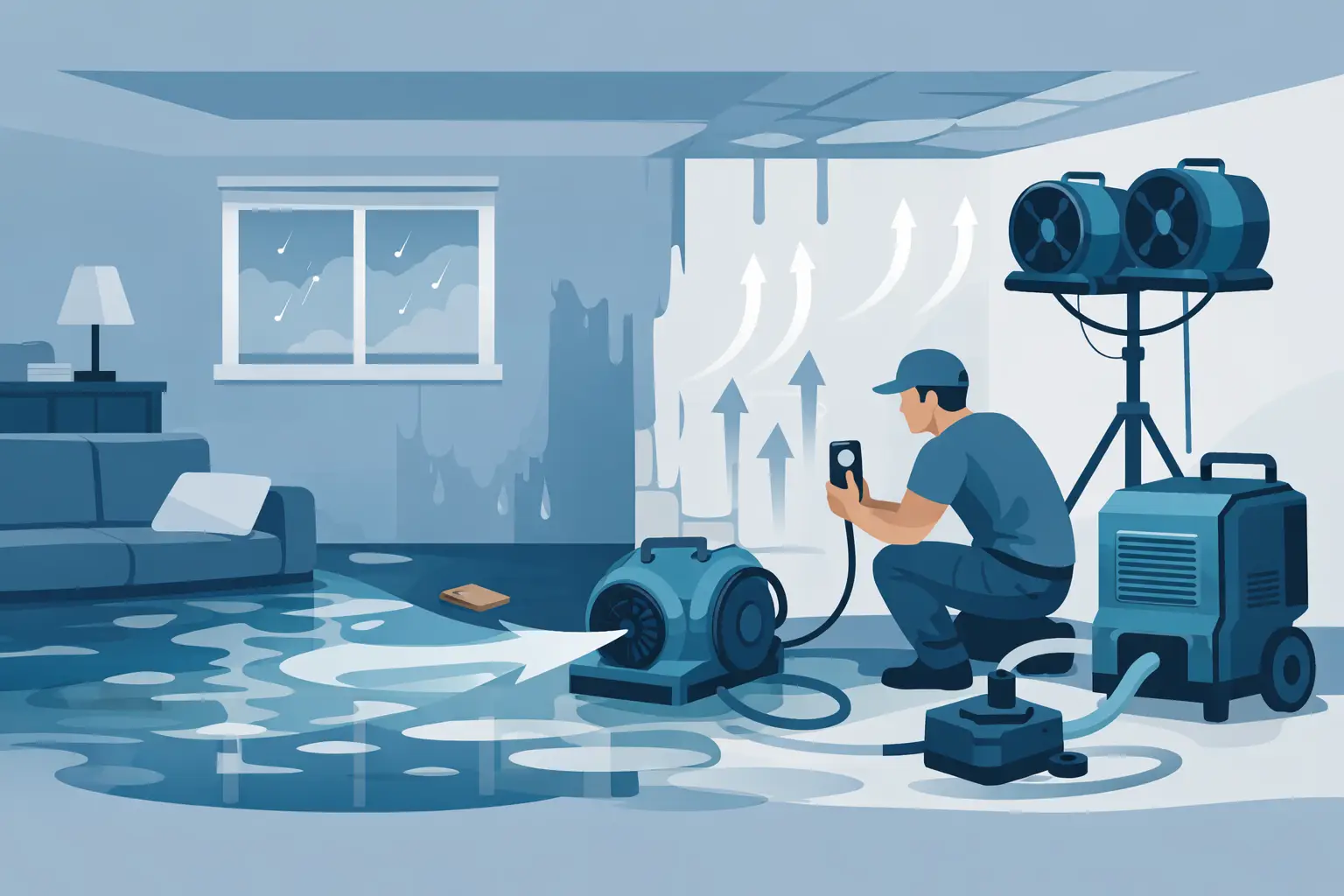
When water gets into drywall, subfloors, insulation, and framing, the mess you can see is only part of the problem. Structural drying after indoor flooding is what helps stop that hidden moisture from turning into warped materials, musty odors, and mold growth a few days later. If your basement, bathroom, kitchen, or lower level has taken on water, drying the structure quickly is what protects the house.
Why structural drying matters after a flood inside your home
A wet carpet is obvious. What causes bigger trouble is the moisture that moves behind baseboards, under flooring, into wall cavities, and into wood framing. Even after standing water is removed, those materials can stay wet long enough to weaken finishes and create the right conditions for microbial growth.
That is why structural drying is not the same thing as mopping up or running a few fans from the garage. Proper drying is a controlled process. It is built around moisture readings, air movement, dehumidification, and regular monitoring to make sure the affected materials are actually drying, not just feeling dry on the surface.
For homeowners in Mason and nearby communities, speed matters. A toilet overflow at night, a sump failure during heavy rain, or a broken supply line under a sink can move from a cleanup issue to a repair issue fast. The longer moisture sits in place, the more likely it is that drywall softens, trim swells, flooring buckles, and mold starts to develop.
What structural drying after indoor flooding actually includes
In most cases, the process starts after the source of water has been stopped and any standing water has been extracted. From there, technicians assess how far the moisture traveled. That may include checking drywall, insulation, wood framing, subfloors, cabinets, and other porous or semi-porous materials.
The next step is setting up the right drying conditions. Air movers help push moisture off wet surfaces. Commercial dehumidifiers pull that moisture out of the air so it does not settle back into the structure. Depending on the layout and materials, technicians may also use containment, negative air, or targeted drying methods for wall cavities and tight spaces.
Not every flood affects a home the same way. Clean water from a supply line is different from drain backups or sewage-related intrusions. A finished basement with carpet and drywall behaves differently than a concrete utility room. That is why the right drying plan depends on the source of the water, how long it sat, and what materials were affected.
The biggest mistake homeowners make
A lot of people assume that if the floor looks dry, the house is dry. That is where problems start. Water travels farther than most homeowners expect, especially in basements, bathrooms, and rooms with layered materials. It can wick up drywall, soak padding under carpet, and settle beneath vinyl, laminate, or engineered wood flooring.
The other common mistake is waiting a day or two to see if things improve. That delay can make a big difference. Materials that might have been dried and saved early sometimes need to be removed later because moisture stayed trapped too long. Once odors set in or visible mold starts to appear, the scope of work can increase.
Professional drying is also about documentation. A trained crew uses moisture meters and other tools to track progress and determine when materials have reached acceptable drying goals. Without that step, it is easy to stop too soon.
How professionals know what can be dried and what should be removed
This is where experience matters. Some materials respond well to drying if the response is quick. Wood framing, many subfloors, and some finish materials can often be dried in place when the water is addressed early and the contamination level is low. Other materials do not recover as well, especially if they have been saturated for too long or exposed to contaminated water.
Drywall, insulation, carpet padding, and lower cabinets may need partial removal in certain situations. That does not always mean a full tear-out, but it does mean the affected area has to be evaluated carefully. A good restoration company is not there to remove more than necessary, but it also should not leave behind wet materials that will cause trouble later.
The trade-off is simple. Aggressive demolition can increase cost and disruption. Drying too conservatively can leave hidden moisture in place. The right approach is based on moisture mapping, material condition, and water category, not guesswork.
Equipment matters, but the plan matters more
Homeowners often ask whether a few rental fans and a dehumidifier are enough. Sometimes they help with a very minor spill caught immediately. For indoor flooding that reaches walls, flooring systems, or multiple rooms, that usually is not enough.
Professional equipment moves more air and removes far more moisture than standard household units. Just as important, technicians know where to place that equipment and how to adjust it as drying progresses. Airflow that is poorly aimed or dehumidification that is undersized can slow the process and leave wet pockets behind.
Monitoring is what ties the job together. Moisture levels should trend down in a predictable way. If they do not, the plan may need to change. A section of wall may need to be opened. Insulation may need to come out. Flooring may need closer inspection. Drying is not just setting equipment and coming back later. It is an active process.
Structural drying and mold prevention go hand in hand
One of the biggest reasons homeowners call after a flood is fear of mold. That concern is justified. Moisture left in enclosed building materials can support mold growth quickly, especially in humid areas, dark wall cavities, and finished basements.
Fast structural drying lowers that risk by removing the moisture mold needs to grow. It also helps reduce the musty smell that often lingers after a flood event. If mold is already present, drying alone is not the full fix. The affected materials may need remediation by technicians trained in proper containment and cleanup procedures.
That is one reason many homeowners prefer a company that understands both water damage restoration and microbial issues. Flooding and mold are closely connected. Treating one while ignoring the other usually leads to repeat problems.
What to expect during the drying process
Most homeowners want to know two things right away – how long this will take and how disruptive it will be. The answer depends on the severity of the intrusion, the materials affected, and whether contaminated water is involved. Some drying jobs can move quickly. Others take several days of equipment runtime and repeated moisture checks.
You should expect noise from air movers and dehumidifiers. In some cases, rooms may need to stay closed off during the process. If baseboards, sections of drywall, or flooring need to be removed to release trapped moisture, that will be explained as part of the drying plan.
A dependable restoration crew should keep the process clear and practical. Homeowners do not need a science lecture during an emergency. They need to know what got wet, what is being dried, what may need removal, and what comes next.
When to call for help
If water has moved beyond a surface spill, it is time to bring in a professional. That includes basement flooding, toilet overflows, drain backups, appliance leaks that soaked surrounding materials, and any water intrusion that sat longer than expected. The same goes for situations where you notice soft drywall, swelling trim, buckling floors, or a damp odor after cleanup.
For homeowners in Mason, West Chester, Loveland, Maineville, Liberty Township, Blue Ash, Kenwood, Montgomery, and nearby areas, a fast response can protect more of the home and reduce the chance of bigger repairs. Kans Water Restoration handles this kind of work with the urgency it deserves, using trained technicians and industry-standard drying methods to get moisture out of the structure, not just off the surface.
If your home has had indoor flooding, the best next step is simple. Get the water source stopped, get the area assessed, and get the drying started before hidden moisture gets comfortable.

