
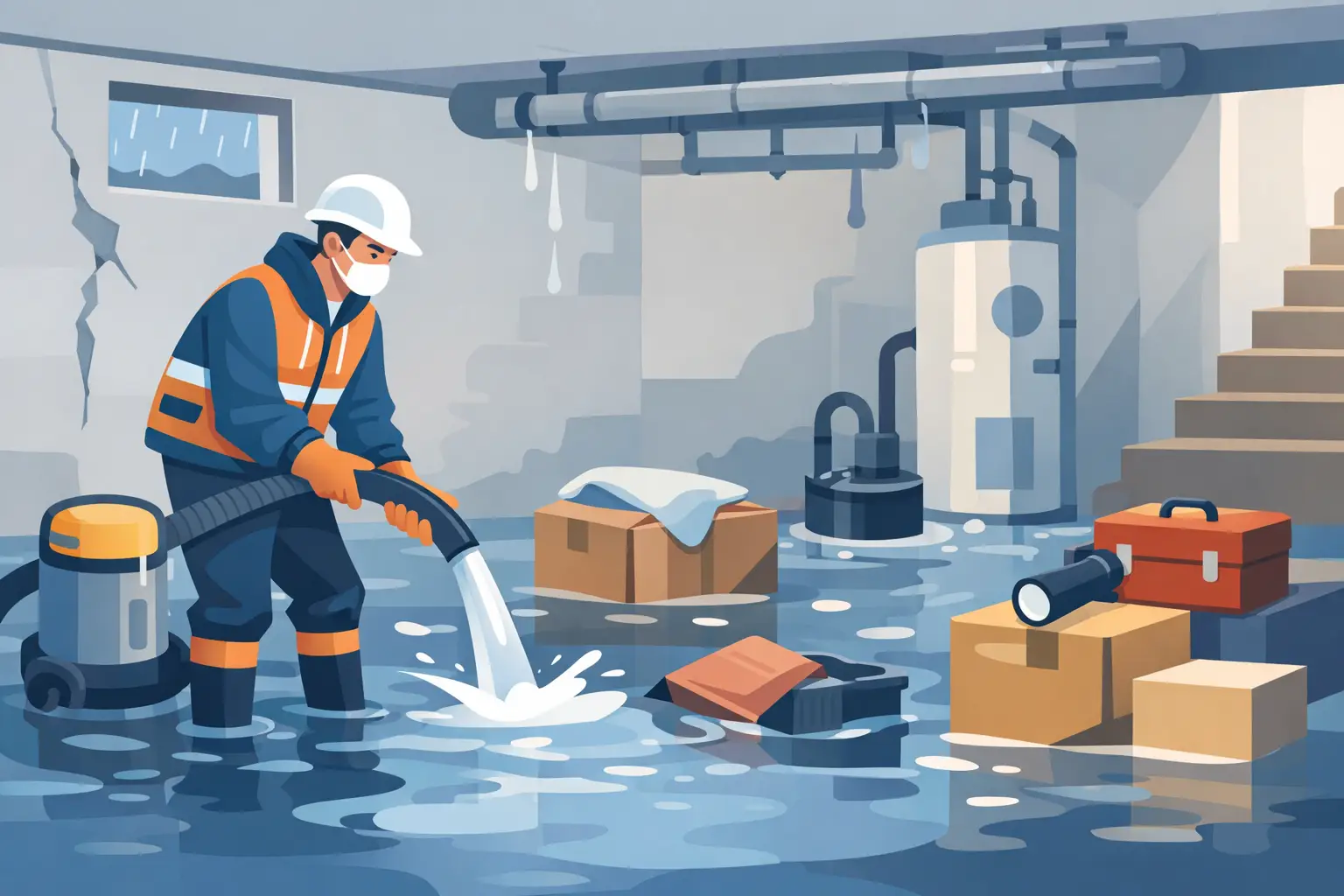
A flooded basement can turn from a few inches of water into a serious property problem fast. If you are wondering how to handle basement flood damage, the first priority is not saving furniture or starting cleanup. It is protecting your family from electrical hazards, contaminated water, and hidden moisture that can lead to mold.
For homeowners in Mason and nearby communities, quick professional action can make the difference between a manageable restoration project and major repairs to flooring, walls, insulation, and personal belongings.
Start With Safety Before Entering the Basement
Do not walk into a flooded basement if the water may have reached outlets, appliances, electrical panels, or extension cords. Water and electricity are a dangerous combination. If it is safe to do so from a dry area, shut off power to the basement. If you cannot safely access the breaker panel, stay out and call for help.
The source of the water matters, too. Water from a broken supply line or a clean appliance leak may begin as clean water, but it still needs fast extraction and drying. Water from a floor drain backup, sewer line, toilet overflow, or outside flooding can carry bacteria and other contaminants. Treat that water as unsafe. Keep children and pets away, and do not handle soaked items without proper protective equipment.
If the water is still entering the basement, stop the source only when it is safe. Shut off the main water valve for a plumbing failure, or contact a plumber if the source is unclear. For stormwater or sewer backups, do not assume the problem has stopped just because the rain has slowed.
Document the Damage for Your Insurance Claim
Before cleanup begins, take clear photos and video of the water level, affected rooms, damaged belongings, and visible source of the flood. Open cabinet doors and photograph any wet contents. Record damaged flooring, baseboards, drywall, furniture, appliances, and stored items.
This documentation can help when you speak with your insurance company. Flood coverage, sewer backup coverage, and standard water damage coverage are not always the same. A pipe burst may be handled differently than groundwater entering through a foundation wall. Your policy and the source of the water will determine what may be covered.
Do not wait for an adjuster before taking reasonable steps to prevent additional damage. Insurers generally expect homeowners to protect the property from further loss. Professional water extraction and structural drying are often necessary immediately, especially when water has spread under finished flooring or into walls.
Get the Water Removed Quickly
Standing water should be extracted as soon as possible. A shop vacuum may help with a very small, clean-water spill, but it is not a solution for a flooded basement. It cannot properly remove water trapped beneath carpet padding, vinyl flooring, laminate, wall cavities, or insulation.
Professional restoration crews use commercial extraction equipment to remove water efficiently from floors, carpets, and affected materials. The goal is not simply to make the basement look dry. The goal is to remove enough moisture to prevent swelling, warping, odor, and microbial growth.
Time matters. Wet carpet padding often needs to be removed because it holds water and can become a breeding ground for mold and bacteria. Laminate flooring may buckle. Wood framing can absorb moisture. Drywall can wick water upward from the floor, sometimes several inches or more, even when the visible water line seems low.
Remove What Cannot Be Safely Saved
Some basement contents can be dried and restored. Others need to be removed to protect the home. The decision depends on the type of water, how long materials were wet, and what they are made from.
Hard, nonporous items such as metal shelving, plastic storage bins, and some sealed furniture may be cleaned and dried. Valuable belongings, photos, and documents may be recoverable if addressed quickly. Porous materials are more complicated. Cardboard boxes, upholstered furniture, mattresses, insulation, carpet padding, and paper goods can hold contamination and moisture deep inside.
When sewage or drain-backup water is involved, porous materials that cannot be thoroughly cleaned and disinfected often need to be discarded. This is not a corner to cut. Keeping contaminated materials in the basement can leave behind odors, bacteria, and long-term mold risk.
Avoid moving wet items through clean parts of your home. If possible, place salvageable belongings in a dry, protected area outside the affected space until they can be evaluated.
Dry the Structure, Not Just the Surface
One of the biggest mistakes after basement flooding is assuming the job is finished once the floor feels dry. Moisture can remain behind baseboards, under flooring, inside walls, and in framing. That hidden moisture is what causes many post-flood problems weeks later.
Proper structural drying requires more than opening a window or running a household fan. Restoration professionals use air movers, commercial dehumidifiers, moisture meters, and thermal imaging when needed to locate and control moisture inside building materials. They monitor drying progress and adjust equipment placement based on actual readings.
Drying is especially important in finished basements. Carpet, engineered wood, drywall, insulation, and trim can all trap moisture. In some cases, controlled removal of baseboards, drywall, or flooring is necessary to allow the area behind it to dry correctly. It may feel frustrating to remove materials that look mostly fine, but leaving wet materials in place can create a more expensive mold problem later.
Watch for Mold and Musty Odors
Mold can begin growing quickly when wet materials stay damp. A musty smell, discoloration on walls, bubbling paint, soft drywall, or recurring humidity may signal moisture that has not been fully addressed.
Do not cover odors with air fresheners or paint over stained drywall. Those steps hide the warning signs without fixing the cause. A proper mold response starts with moisture control. The affected materials must be dried, cleaned, removed, or remediated based on the extent of the damage and the type of material involved.
For larger losses or contaminated water events, trained technicians can establish containment, use appropriate cleaning methods, and remove damaged materials without spreading debris through the rest of the home. IICRC-guided water restoration and applied microbial remediation practices help ensure the work addresses both the visible damage and the conditions that caused it.
Understand When a Flood Is an Emergency
Call a professional restoration company right away when you have standing water, water near electrical systems, sewage contamination, a burst pipe, widespread wet carpet, or water that has reached finished walls. You should also call when the basement flooded while you were away, because the water may have been sitting longer than you realize.
A small leak can sometimes be contained, but even then, the area should be checked for moisture beneath flooring and behind walls. It depends on where the water traveled and how long it remained there. A slow water heater leak in an unfinished utility room may require less demolition than a drain backup that spread through a finished family room.
Kans Water Restoration helps homeowners and businesses in Mason, West Chester, Loveland, Maineville, Liberty Township, Blue Ash, Kenwood, Montgomery, and surrounding areas with water extraction, structural drying, sewage cleanup, and mold remediation. With more than 15 years of restoration experience, the focus is on getting the water out, finding hidden moisture, and helping make the space safe again.
Prevent the Next Basement Flood
After the basement is dry, take time to identify why the flooding happened. Have plumbing leaks repaired, inspect the sump pump, clear gutters and downspouts, and make sure exterior drainage carries water away from the foundation. If the flood came from a backup, ask a qualified plumber whether a sewer backup prevention device or drain repair makes sense for your home.
Store belongings in plastic bins instead of cardboard, and keep valuable items off the basement floor. If your basement has flooded before, consider installing a battery backup for the sump pump. Power outages and heavy rain often happen at the same time, which is exactly when a standard pump is most likely to fail.
A flooded basement is stressful, but you do not have to guess what is happening under the floor or behind the walls. Get the area assessed quickly, keep your family out of unsafe water, and bring in trained help before moisture gets the chance to become a bigger problem.

