
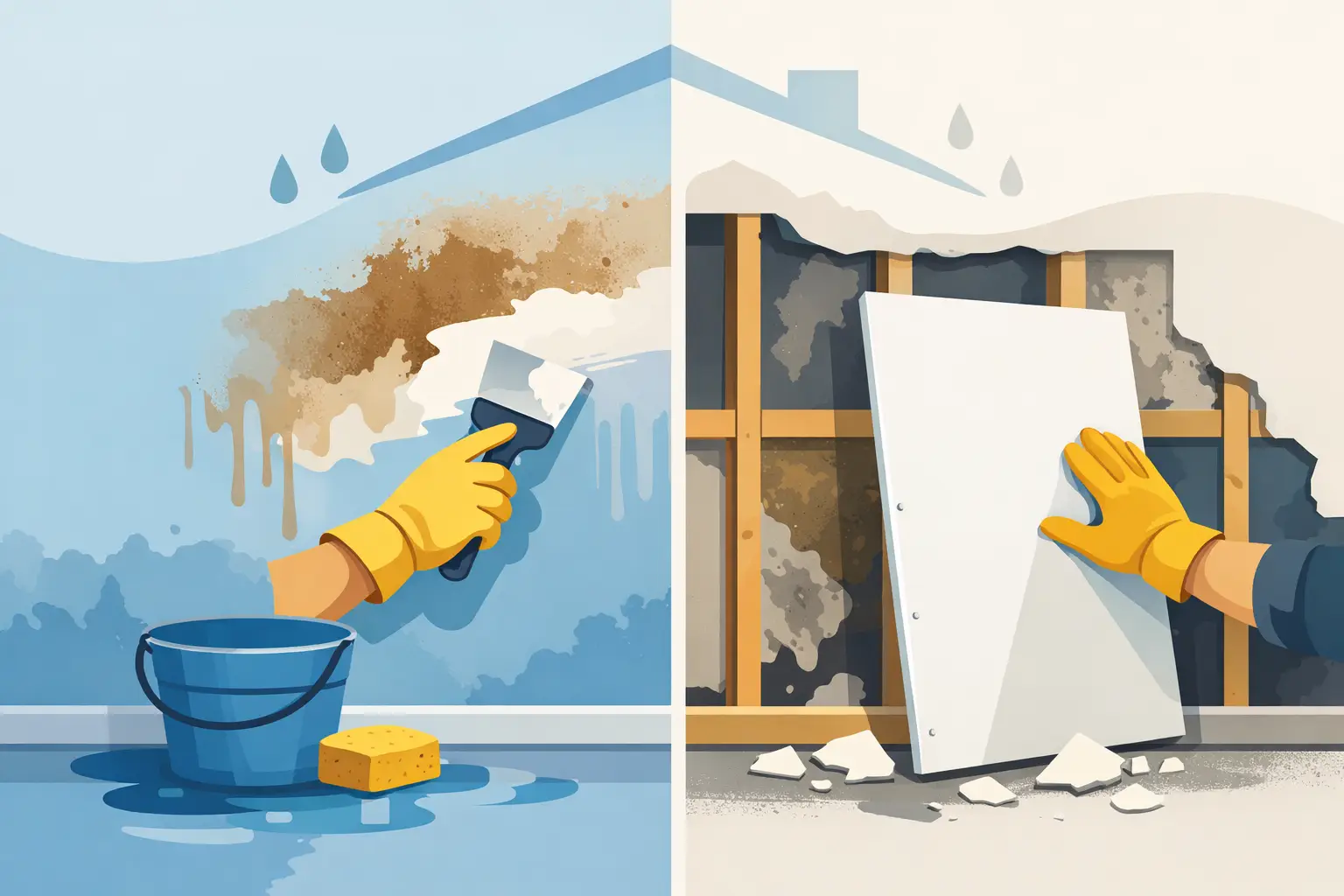
A ceiling stain below an upstairs bathroom or a wet basement wall after a storm can look like a small repair. It may not be. The decision to repair versus replace water damaged drywall depends on where the water came from, how long the wall stayed wet, and whether the drywall can be fully dried without leaving mold, odor, or hidden damage behind.
Drywall is made with a gypsum core and paper facing. Once it absorbs water, it can lose strength quickly. A wall may appear dry on the surface while moisture remains inside the cavity, around insulation, or along the bottom plate. That is why the first priority is stopping the water source and drying the structure, not simply patching a stain.
When Water Damaged Drywall Can Be Repaired
Drywall can sometimes be saved after a clean-water event, especially when the problem is caught early. A supply-line leak, an overflowing sink with clean water, or a small roof leak may affect only a limited area. If technicians can begin extraction and structural drying quickly, the drywall may dry without swelling, crumbling, or supporting mold growth.
Repair is more likely to be appropriate when the drywall is still firm, the paper face is intact, and moisture readings show that the wall has returned to a safe, dry condition. A small stain may still need primer and paint, but cosmetic work should come after the drying process is complete.
For example, a refrigerator supply line may drip behind a kitchen wall for a short time before it is discovered. If the affected area is small, the water is clean, and drying begins promptly, a restoration team may be able to dry the wall in place. Specialized air movement and dehumidification equipment can remove moisture from materials that would not dry properly with fans alone.
The key word is promptly. Water that remains in drywall, insulation, trim, or framing for days creates a different problem. The longer materials stay wet, the less likely repair becomes.
When to Replace Water Damaged Drywall
Replacement is usually the safer option when drywall has lost its shape or strength. Soft areas, sagging ceilings, bubbling paint, swollen seams, peeling paper, and crumbling gypsum are all signs that the material may no longer be reliable. Pressing on a wall that feels spongy or finding a ceiling that sags under its own weight should be treated as a safety concern.
Drywall also often needs to be removed when water came from a contaminated source. Toilet overflows involving waste, sewage backups, and drain line failures can introduce bacteria and other contaminants into porous materials. Even after surface cleaning, drywall and insulation may not be safely salvageable. Controlled removal allows affected materials to be taken out, the structure to be cleaned, and the area to be dried correctly before rebuilding begins.
Mold is another reason replacement may be necessary. Mold can grow where you cannot see it, including behind baseboards and inside wall cavities. If the drywall has visible mold growth, extensive moisture exposure, or a persistent musty odor, cutting out damaged sections may be necessary to reach the source and prevent the issue from spreading.
A professional assessment matters because the visible stain is not always the full extent of the damage. Water can travel along framing, soak insulation, and settle at the bottom of a wall several feet away from the original leak.
The Water Source Changes the Answer
Not all water damage is equal. Clean water from a broken supply line is generally less hazardous than water from a washing machine discharge, a drain backup, or a sewage overflow. Water from outside flooding can also carry soil, bacteria, and contaminants into a home.
With clean water, quick drying may allow more materials to be saved. With gray water or sewage-contaminated water, removal is often necessary because porous building materials absorb contaminants. Trying to dry and cover damaged drywall from a backup can leave an unhealthy condition behind the finished wall.
This is especially common in basement bathrooms, laundry rooms, and finished lower levels throughout Mason and nearby communities. A floor drain backup may look contained at first, but water can wick into drywall, baseboards, carpet padding, and insulation. Proper cleanup means addressing all affected materials, not just mopping the floor.
Why Drywall Damage Is Easy to Misjudge
Homeowners often see a stain and assume the repair is limited to paint. Unfortunately, paint can hide a problem without fixing it. Water can enter drywall from above, below, or behind, and the first visible sign may appear far from the actual source.
Moisture meters, thermal imaging, and careful inspection help identify where water traveled. Technicians can check the moisture content of drywall, framing, flooring, and insulation to determine whether materials are drying as expected. This information helps prevent unnecessary demolition while also avoiding the bigger mistake of leaving wet materials sealed inside a wall.
Ceilings deserve extra caution. Wet ceiling drywall can become heavy and unstable. If you see a bulge, sag, or expanding water stain, keep people out of the area and avoid puncturing it yourself. The water may be under pressure, and the damaged material can fall unexpectedly.
Repair Versus Replace Water Damaged Drywall: A Professional Process
A reliable restoration process starts with finding and stopping the source of water. If a pipe is leaking, the plumbing issue must be addressed before drying and repairs can hold. Next comes water extraction, removal of standing water, and protection of unaffected areas.
The affected drywall and nearby materials are then evaluated. A trained team checks for moisture, contamination, deterioration, and mold risk. If drywall is sound and can be dried fully, the focus may be on controlled drying and later cosmetic repair. If it is contaminated, swollen, moldy, or structurally weakened, damaged sections are removed in a contained and orderly manner.
After removal, the wall cavity can be cleaned and dried. This is the step that protects the home from lingering odors and hidden mold. New insulation and drywall should not go in until the framing and surrounding materials meet drying goals.
Kans Water Restoration uses industry-standard drying methods and trained restoration practices to help homeowners make that call based on actual conditions, not guesswork. The goal is not to tear out more than necessary. It is to remove what cannot be safely saved and dry what can.
Do Not Wait for Mold to Make the Decision
Mold does not need a dramatic flood to become a problem. A slow leak behind a vanity, a small pipe drip in a finished basement, or water trapped under trim can provide the moisture it needs. By the time a musty smell or discoloration appears, the affected area may be larger than expected.
If drywall is wet, act quickly. Move belongings away from the area if it is safe to do so, stop the water source if possible, and avoid running household fans across sewage-contaminated water or visible mold. Fans can spread contaminated particles rather than solve the problem.
Do not reinstall baseboards, cover a wall with new paint, or replace flooring until you know the area is dry. Those shortcuts can turn a manageable water event into a more expensive mold remediation project later.
Get a Clear Answer Before Rebuilding
The right choice is not always repair or always replacement. A clean, recent water event may allow drywall to be dried and saved. A sewage backup, long-term leak, mold issue, or deteriorated wall usually calls for removal and replacement. What matters is getting an honest assessment early, before moisture becomes hidden damage.
If water has reached your drywall, especially after a toilet overflow, basement flood, plumbing leak, or drain backup, professional drying and inspection can protect the parts of your home you cannot see. A quick call for help now can keep a wet wall from becoming a much larger repair later.

