
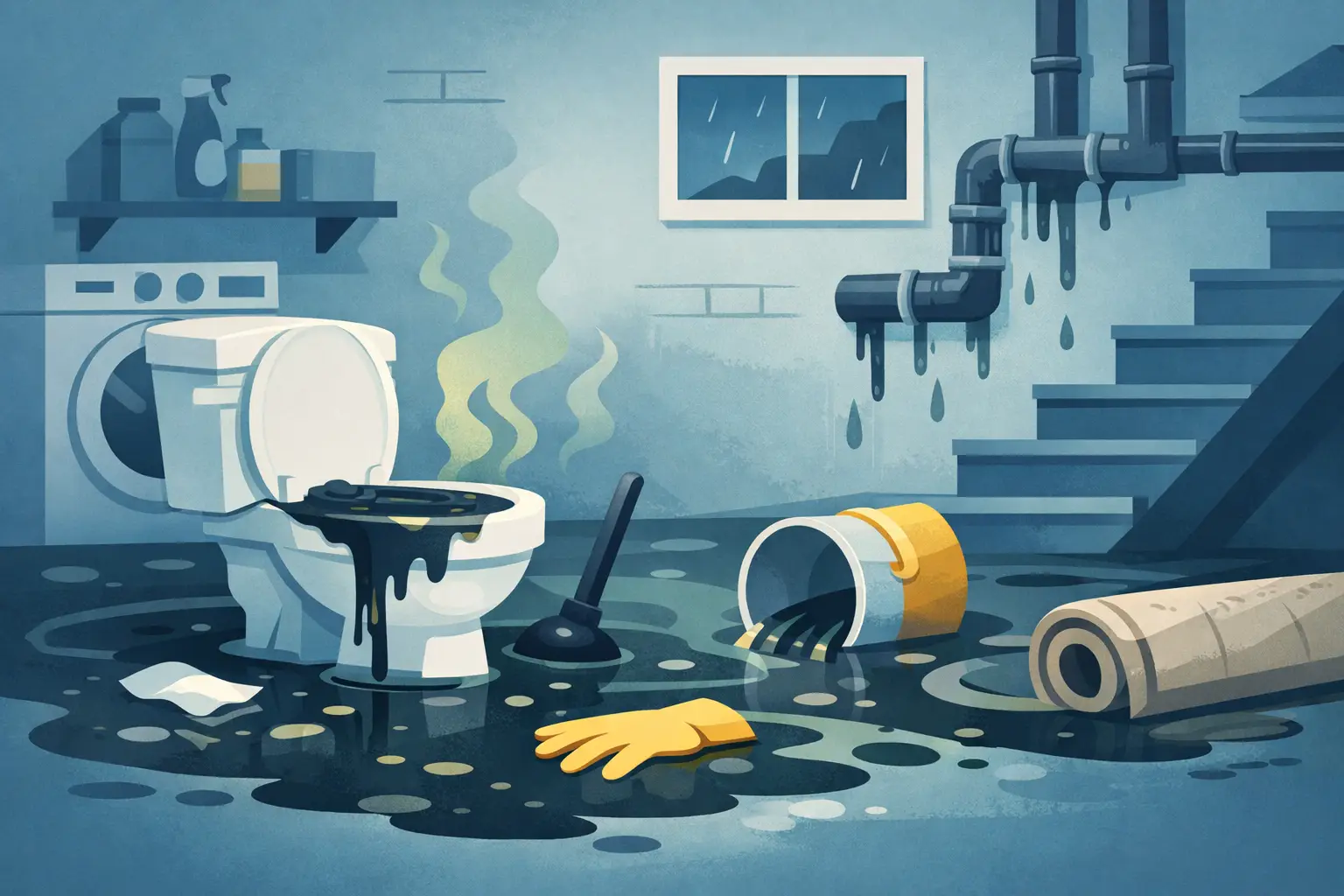
A sewage backup on a basement floor is more than a water problem. Is sewage backup dangerous indoors? Yes. Raw sewage can carry bacteria, viruses, parasites, and other contaminants that can make people sick, damage building materials, and leave unsafe conditions behind even after the visible water is gone.
If a toilet, floor drain, shower, or basement drain is backing up in your Mason-area home, keep people and pets away from the affected space. The fastest safe response is to stop using plumbing fixtures, avoid contact with the water, and arrange professional sewage cleanup as soon as possible.
Why Sewage Backups Are Dangerous Indoors
Restoration professionals generally treat sewage-contaminated water as Category 3 water, often called black water. It may come from a sanitary sewer line, septic system, overflowing toilet, or drain backup. Unlike a clean supply-line leak, this water can contain human waste, toilet paper, food waste, chemicals, and microorganisms.
The risk is not limited to standing water. Contaminants can soak into carpet, padding, drywall, insulation, unfinished wood, stored belongings, and cracks in concrete. As the area dries, residues can remain on surfaces. Disturbing those materials can spread contamination to shoes, hands, nearby rooms, and the air.
A small toilet overflow that is contained quickly may be less severe than a basement-wide sewer backup, but it still needs careful assessment. The source matters. Water that has come back through a drain or sewer line should not be treated like ordinary mop-up water.
Health Risks From Indoor Sewage Exposure
Direct contact with sewage can cause stomach illness, diarrhea, nausea, skin irritation, and eye irritation. People can also be exposed when contaminated water splashes or when cleanup activities create droplets and dust. The risk can be higher for young children, older adults, pregnant people, and anyone with a weakened immune system.
You do not need to wait for someone to feel sick before taking the situation seriously. Exposure can happen during cleanup, while moving wet belongings, or by walking through the area and tracking contamination into the rest of the home.
If anyone has had significant sewage contact and develops concerning symptoms, contact a healthcare professional. For an open wound exposed to sewage, seek medical advice promptly. Keep the focus on prevention: limit exposure first, then have the affected space cleaned, disinfected, dried, and restored correctly.
What to Do Right Away After a Sewer Backup
First, do not use sinks, toilets, showers, washing machines, or dishwashers if you suspect a main sewer line backup. Adding more water to the system can make the overflow worse. If the backup is continuing and you can safely access the main water shutoff, turn off the water supply to prevent additional use inside the house.
Stay out of standing water, especially in a basement or utility room. Water around outlets, appliances, furnaces, electrical panels, or extension cords can create a shock hazard. Do not enter the area until the electrical risk has been evaluated.
Keep children and pets out of the room, close doors to limit foot traffic, and avoid running fans that could spread contaminants to unaffected areas. Do not use a household vacuum or shop vacuum on sewage water. These tools are not designed for contaminated water and can become a source of cross-contamination.
If it is safe to do so, take photos from a dry area for your insurance records. Then contact a plumber to address the source of the backup and a qualified restoration company to handle the cleanup. These are separate but equally necessary jobs: the line needs to be repaired or cleared, and the indoor contamination needs to be removed.
What Professional Sewage Cleanup Involves
A proper sewage cleanup is not just extracting water and spraying disinfectant. The goal is to remove contamination and dry the structure so the home can return to a safe, usable condition.
Trained technicians begin by identifying the affected materials and containing the work area. They use appropriate personal protective equipment and specialized extraction equipment to remove sewage water safely. Porous materials that cannot be reliably cleaned, such as soaked carpet padding, insulation, and heavily affected drywall, may need to be removed.
After removal and detailed cleaning, technicians apply appropriate antimicrobial treatment to affected surfaces. Structural drying equipment is placed to dry concrete, framing, subfloors, and other materials that may hold moisture. Moisture readings help confirm whether hidden dampness remains behind walls or under flooring.
This process matters because sewage damage often creates two problems at once: contamination and moisture. Leaving either one behind can lead to odor, material deterioration, and mold growth. Kans Water Restoration uses industry-standard methods informed by IICRC water damage restoration and applied microbial remediation practices to address both concerns.
Should You Clean Up a Small Sewage Backup Yourself?
It depends on the source, amount of water, and materials affected. A very minor, contained toilet overflow with no sewage return through drains may be manageable with proper protective gear and thorough cleaning. But once water has spread onto carpet, soaked into drywall, entered a basement, or come from a sewer line, professional cleanup is the safer choice.
Bleach alone is not a complete answer. It does not remove waste, contaminated porous materials, or moisture trapped beneath flooring and behind walls. Mixing bleach with other cleaners can also create dangerous fumes. Household cleaning products may help with final surface cleaning in an unaffected area, but they should not replace contamination removal and structural drying.
Avoid trying to save everything. Nonporous items such as some plastic, glass, and metal belongings may be cleaned and disinfected. Upholstered furniture, mattresses, stuffed toys, paper goods, and heavily soaked textiles are often difficult or impossible to safely restore after sewage contact. A restoration professional can help determine what can be cleaned, what needs disposal, and what should be documented for an insurance claim.
Watch for Hidden Damage After the Water Is Gone
A sewage backup can look resolved once the floor is dry, but hidden moisture may still be present. Pay attention to persistent sewer odors, soft drywall, warped baseboards, buckled flooring, staining, or a musty smell in the days that follow. Those signs can point to moisture or contamination that was missed.
Basements are especially vulnerable because water can move beneath finished flooring, behind wall panels, and into stored items. In Ohio homes, a backup may also happen during heavy rain, when municipal sewer systems are under pressure, or when tree roots and clogs affect a private sewer lateral. Solving the immediate cleanup issue is essential, but identifying why it happened can help prevent the next one.
Is Sewage Backup Dangerous Indoors for the Rest of the Home?
It can be, particularly when contaminated water is tracked through hallways, when HVAC equipment is involved, or when cleanup is delayed. The affected room should be treated as a contained work area until cleaning and drying are complete. Shoes, mops, tools, and hands can easily carry contaminants into clean spaces.
Fast action reduces the chance of a larger restoration project. It also helps protect finished basements, bathrooms, furniture, and the parts of your home that you use every day. If sewer water has entered your home in Mason, West Chester, Loveland, Liberty Township, or nearby communities, do not take chances with a quick wipe-down.
Your home should feel safe the moment you walk in. When sewage backs up indoors, protect your family first, keep the area isolated, and get experienced cleanup help before hidden contamination becomes a bigger problem.

