
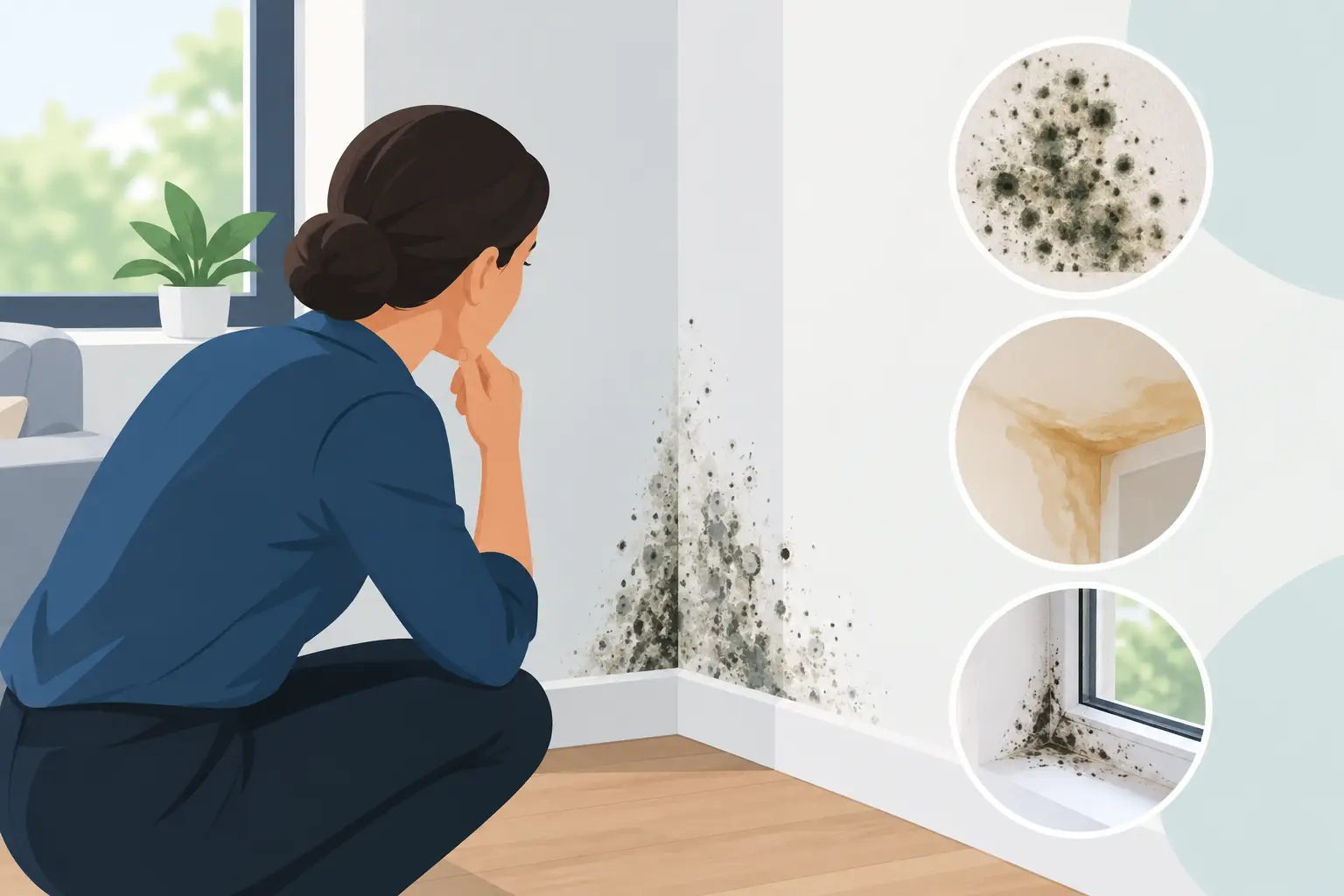
A basement can look dry at a glance and still be holding enough moisture to support mold. The same is true behind a bathroom vanity, under a kitchen sink, around a window, or inside a wall after a pipe leak. Homeowners often first notice the problem through a smell, a stain, or a change in the way a room feels.
Mold indicators are warning signs that moisture has remained in a building material long enough for mold growth to become possible or likely. They do not always mean a major contamination is present, but they should not be brushed off – especially after flooding, a toilet overflow, a drain backup, or a leak that went unnoticed.
Common Mold Indicators Inside a Home
The most familiar sign is visible growth. Mold may look black, green, gray, white, or brown, but color alone does not tell you what type of mold it is or how serious the problem may be. It can appear as fuzzy spots, flat staining, speckled marks, or a patch that keeps returning after you clean it.
A musty, earthy odor is another common clue. This smell often shows up before growth is visible because mold can develop behind drywall, beneath flooring, inside cabinets, or in insulation. If a basement, bathroom, utility room, or closet has a persistent musty smell, the moisture source needs attention even if you cannot see mold right away.
Water stains are also worth taking seriously. Yellow or brown marks on ceilings and walls can point to an old or ongoing leak. Peeling paint, bubbling drywall, warped baseboards, loose flooring, or swollen wood trim can mean water has moved into materials where normal surface cleaning will not solve the problem.
Condensation is another warning sign, particularly around windows, exterior walls, ducts, and pipes. A little condensation during a sharp Ohio temperature change may not create a mold problem by itself. Repeated condensation, however, can keep surfaces damp and create the conditions mold needs to grow.
What Mold Indicators Can Tell You About Moisture
Mold needs moisture, a food source, and time. Drywall paper, wood framing, carpeting, dust, insulation, and fabric can all provide a food source. That is why the real issue is usually not the visible spot. It is the water source that allowed that spot to develop.
For example, a small patch of mold near a shower may be caused by poor ventilation or a slow plumbing leak. Mold along a basement wall may point to seepage, a foundation issue, a failed sump pump, or floodwater that was not thoroughly dried. Growth around an HVAC vent could be related to condensation, duct issues, or high indoor humidity.
The location matters. Mold on a bathroom caulk line is different from mold spreading across wet drywall after a backup. One may be a limited surface issue, while the other can involve hidden moisture and damaged building materials. A trained restoration professional looks beyond the visible area to identify how far water traveled and what materials may need to be dried, cleaned, or removed.
Signs That Call for Prompt Professional Help
Some situations should not wait for a weekend cleaning project. Call for help promptly when you notice mold after a flood, sewage backup, burst pipe, appliance leak, or toilet overflow. Water can move beneath flooring and behind walls quickly, and mold growth can begin when materials stay wet.
You should also act quickly if the affected area is large, keeps coming back, has a strong odor, or involves porous materials such as drywall, carpet, insulation, upholstery, or ceiling tiles. These materials can hold moisture below the surface. Wiping the visible area may make it look better for a short time while the underlying problem continues.
Extra caution is needed when water may be contaminated. Sewage, drain backups, and water from an overflowing toilet can contain harmful contaminants. These losses require more than drying equipment and household cleaners. Proper cleanup includes removing contaminated materials when necessary, cleaning affected surfaces, controlling moisture, and addressing the conditions that could support microbial growth.
If someone in the home has respiratory sensitivities, asthma, allergies, or a weakened immune system, do not assume a moldy area is safe to handle without professional guidance. The practical goal is not to panic over every spot. It is to avoid exposing your family to an issue that may be larger than it appears.
What Not to Do When You Find Possible Mold
Do not paint over staining or seal a damp wall before the cause is fixed. Paint can hide the evidence, but it cannot dry wet framing, insulation, or drywall. The same goes for placing a dehumidifier in a room with an active leak. It may reduce humidity, but it will not stop water from entering the structure.
Avoid aggressively scrubbing a large affected area or tearing into walls without a plan. Disturbing damaged material can spread dust and spores to other parts of the home. It can also make it harder to determine where the water came from and how much material was affected.
Bleach is not a complete answer for mold on porous materials. It may change the appearance of surface growth, but it does not reliably address moisture inside drywall, wood, carpet padding, or insulation. Effective remediation starts with moisture control, not with covering up what you can see.
A Professional Response Starts With the Water Source
A proper mold response should begin by finding and stopping the source of moisture. That may mean repairing a plumbing leak, addressing a roof or window leak, correcting drainage, extracting standing water, or drying a basement after seepage or flooding.
Next comes a careful assessment of affected materials. Restoration technicians use moisture detection tools and drying equipment to evaluate conditions beyond the surface. Depending on the loss, the work may include water extraction, structural drying, controlled removal of damaged materials, cleaning, and odor treatment.
This approach matters because mold cleanup without drying is temporary. Drying without addressing contaminated or damaged materials can also leave a problem behind. The right scope depends on the source of water, how long materials were wet, the size of the affected area, and whether the water was clean, gray, or contaminated.
Kans Water Restoration helps homeowners in Mason and nearby communities respond to water damage, hidden moisture, and mold concerns with trained technicians and industry-standard restoration methods. When a property has been affected by water, the priority is to get it dry, clean, and safe to use again.
Protecting Basements, Bathrooms, and Other Moisture-Prone Areas
Basements deserve regular attention because they are often the first place water collects after heavy rain, a failed sump pump, or a plumbing problem. Check for damp corners, staining along walls, musty odors, and wet carpeting near finished basement walls. Do not ignore a basement that feels humid even when there is no visible water.
In bathrooms, look under sinks, around toilet bases, behind shower walls, and near exhaust fans. A fan that does not vent moisture effectively can contribute to recurring surface mold. In kitchens and laundry rooms, inspect supply lines, appliance connections, and cabinet bottoms for swelling or discoloration.
A quick look after a storm or plumbing issue can prevent a small problem from becoming a major repair. But if there is visible growth, persistent odor, wet building materials, or water from a backup, the safest move is to call a restoration professional early. Fast action gives moisture less time to spread and helps protect the parts of your home you cannot see.

