
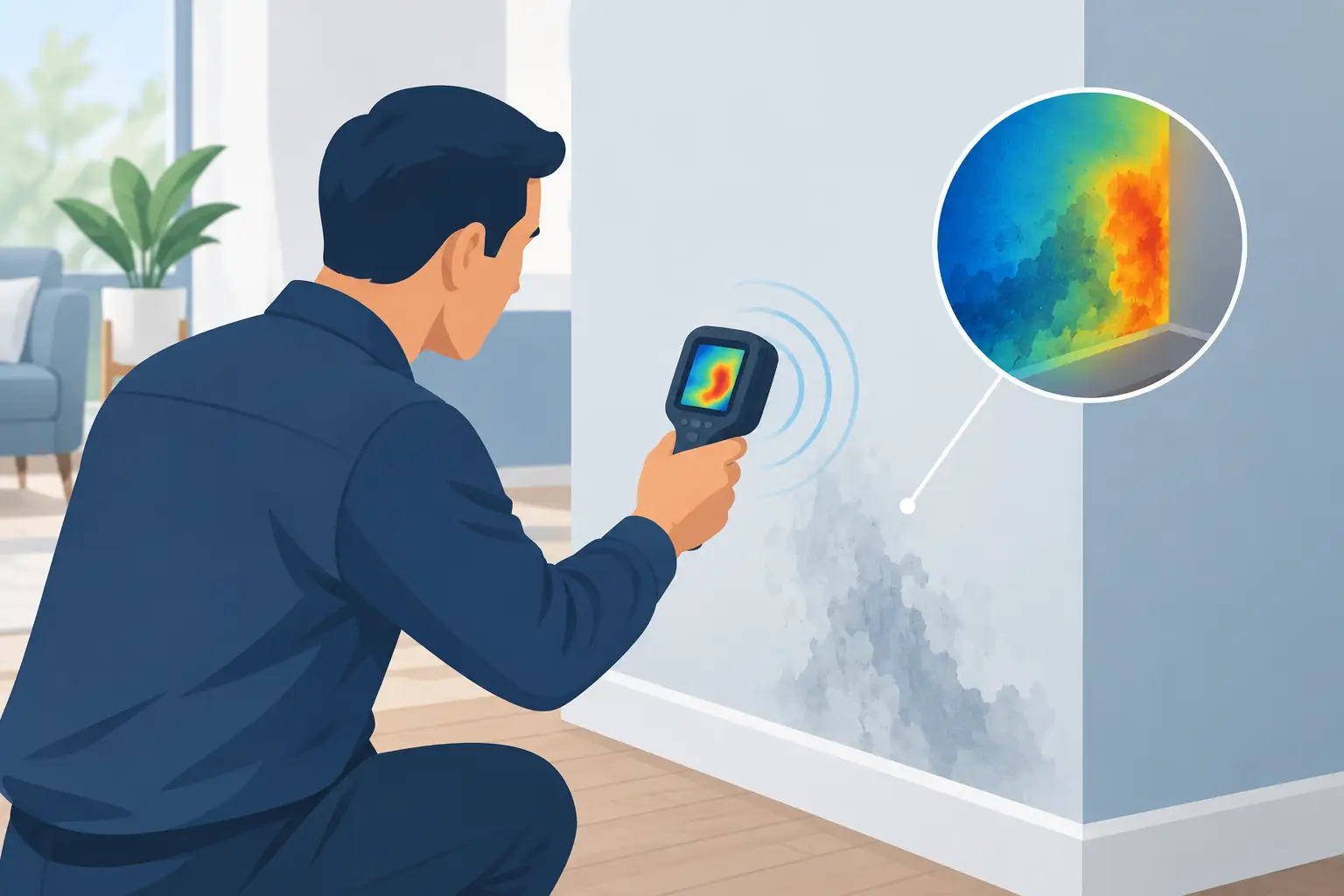
A basement can look dry while water is still soaking the bottom of finished walls. A bathroom floor can feel solid while a slow toilet leak is wetting the subfloor underneath. That is why hidden moisture detection matters after a flood, overflow, plumbing leak, or drain backup. The water you cannot see is often the water that causes the most expensive damage.
At Kans Water Restoration, we do not rely on appearance alone. Trained technicians use professional moisture-testing equipment to locate water inside building materials, determine how far it traveled, and create a drying plan based on the actual conditions in your home or business.
Water Does Not Stay Where It Started
When a pipe leaks or a toilet overflows, water follows gravity and finds openings. It can run under baseboards, behind cabinets, through insulation, beneath flooring, and into wall cavities. Carpet may dry at the surface while the pad and subfloor remain wet. A ceiling stain may appear small even though water has spread several feet above it.
This is especially common in finished basements, bathrooms, kitchens, laundry rooms, and properties with slab foundations. Mason-area homeowners also see hidden water damage after sump pump failures and storm-related flooding, when water moves into lower-level walls and flooring before it is noticed.
Removing standing water is necessary, but it is only the first part of restoration. If moisture remains in structural materials, the problem can continue long after the visible puddle is gone.
How Hidden Moisture Detection Works
Professional hidden moisture detection is a process, not a guess. Our technicians inspect the affected area and use specialized tools to identify wet materials that may look normal from the outside. Moisture meters can help measure the moisture content of drywall, wood, trim, and flooring. Thermal imaging can help identify temperature patterns that may point to moisture behind a wall or below a floor.
Those tools are useful, but they must be interpreted correctly. A cooler area on a thermal image does not automatically mean there is water. It may be caused by insulation differences, air movement, or another condition. That is why restoration technicians confirm findings with moisture readings and a hands-on inspection before deciding what needs to be dried, removed, or monitored.
The goal is to define the full affected area. This prevents a common mistake: drying only the visible portion of damage while leaving wet material hidden behind a baseboard, vanity, or wall.
What We Check After a Water Event
The inspection depends on the source and location of the water. After a bathroom overflow, attention may focus on flooring around the toilet, adjacent walls, the vanity base, and the ceiling below. After a basement flood, the inspection may include finished walls, insulation, carpet padding, wood framing, storage areas, and nearby rooms.
We also look for migration paths. Water can travel farther than many homeowners expect, particularly under laminate flooring, vinyl plank, carpet, and baseboards. In some cases, a small amount of controlled access is needed to dry the structure properly. That may mean removing a section of wet drywall or lifting affected flooring. It is not always necessary, but leaving saturated materials in place simply because they look intact can lead to bigger repairs later.
Why Fast Detection Helps Prevent Mold
Mold needs moisture and a suitable surface to grow. Drywall paper, wood, dust, insulation, and carpet backing can all support growth when they stay damp. Under the right conditions, mold can begin developing within 24 to 48 hours after water damage.
That does not mean every leak creates a mold problem. A clean-water leak found quickly and dried completely may not require mold remediation. The longer water remains trapped, however, the greater the risk. The source of the water also matters. Sewage backups, toilet overflows involving contaminated water, and groundwater intrusion require a more cautious approach because they can introduce bacteria and other contaminants into building materials.
Early moisture detection gives technicians a chance to dry the area before mold becomes a separate restoration project. It also helps protect materials that may otherwise need replacement, such as hardwood flooring, drywall, trim, and cabinets.
Signs You May Have Moisture Behind Walls or Under Floors
Not every hidden leak announces itself with a burst pipe. Many begin slowly. You may notice a musty odor in a basement, a soft spot near a toilet, peeling paint, warped trim, bubbling drywall, or flooring that begins to cup, buckle, or separate.
Other warning signs include a recurring stain on a ceiling, damp carpet along a wall, unexplained humidity, or a water bill that suddenly increases. In some cases, there are no obvious warning signs at all. A slow supply-line leak behind a refrigerator or inside a wall can remain hidden until mold, staining, or material failure becomes visible.
If you have had a recent overflow, appliance leak, roof leak, or wet basement, do not wait for a musty smell to develop. A professional inspection can show whether the structure is actually dry.
Drying the Structure, Not Just the Surface
Once moisture is located, the drying plan should match the materials and the extent of water intrusion. This may include commercial air movers, dehumidifiers, controlled demolition of unsalvageable materials, and regular moisture monitoring. Equipment is positioned to move moisture out of wet materials and control indoor humidity while the area dries.
Drying is not complete when the room feels dry or when equipment has been running for a certain number of days. Technicians should verify that moisture readings have returned to an acceptable dry standard for the affected materials. That verification is a key part of professional water damage restoration.
There are trade-offs in every job. Removing wet drywall can be disruptive, but it may be the safest option when insulation is saturated or contaminated water has entered the wall cavity. On the other hand, a clean-water issue caught early may be dried with limited removal. The right answer depends on where the water came from, how long it was present, and what materials were affected.
Common Areas Where Moisture Gets Missed
Hidden water damage often appears in the same places because these areas combine plumbing, enclosed spaces, and absorbent materials. Watch closely after any water event involving:
- Bathroom floors around toilets, tubs, showers, and vanities
- Finished basement walls, carpet padding, and baseboards
- Kitchen cabinets near sinks, dishwashers, and refrigerator lines
- Laundry rooms around washing machines, utility sinks, and drain lines
- Ceilings below bathrooms, kitchens, and second-floor laundry areas
- Floors beneath water heaters, HVAC equipment, and wet-bar plumbing
A homeowner may be able to clean up a small, contained spill. But when water has reached walls, flooring, insulation, or a ceiling below, professional moisture testing is the safer call. Household fans and shop vacuums cannot confirm what is happening inside the structure.
When to Call for Professional Help
Call for water damage restoration help right away if water came from a sewage backup, toilet overflow with contamination, broken pipe, appliance supply line, major roof leak, or flooded basement. The same applies if you see mold, smell persistent mildew, or find wet drywall, insulation, or flooring.
Time matters, but a quick response should still be thorough. An experienced restoration team can extract water, locate hidden moisture, set drying equipment, monitor the results, and address mold concerns when needed. Technicians trained in IICRC water damage restoration and applied microbial remediation methods understand how to evaluate both water damage and the conditions that can lead to microbial growth.
If your home in Mason, West Chester, Loveland, Maineville, Liberty Township, Blue Ash, Kenwood, Montgomery, or a nearby community has had a leak or water event, do not assume the damage ended when the visible water disappeared. A proper moisture inspection can give you a clear answer and a practical path forward before a hidden problem becomes a major repair.

