
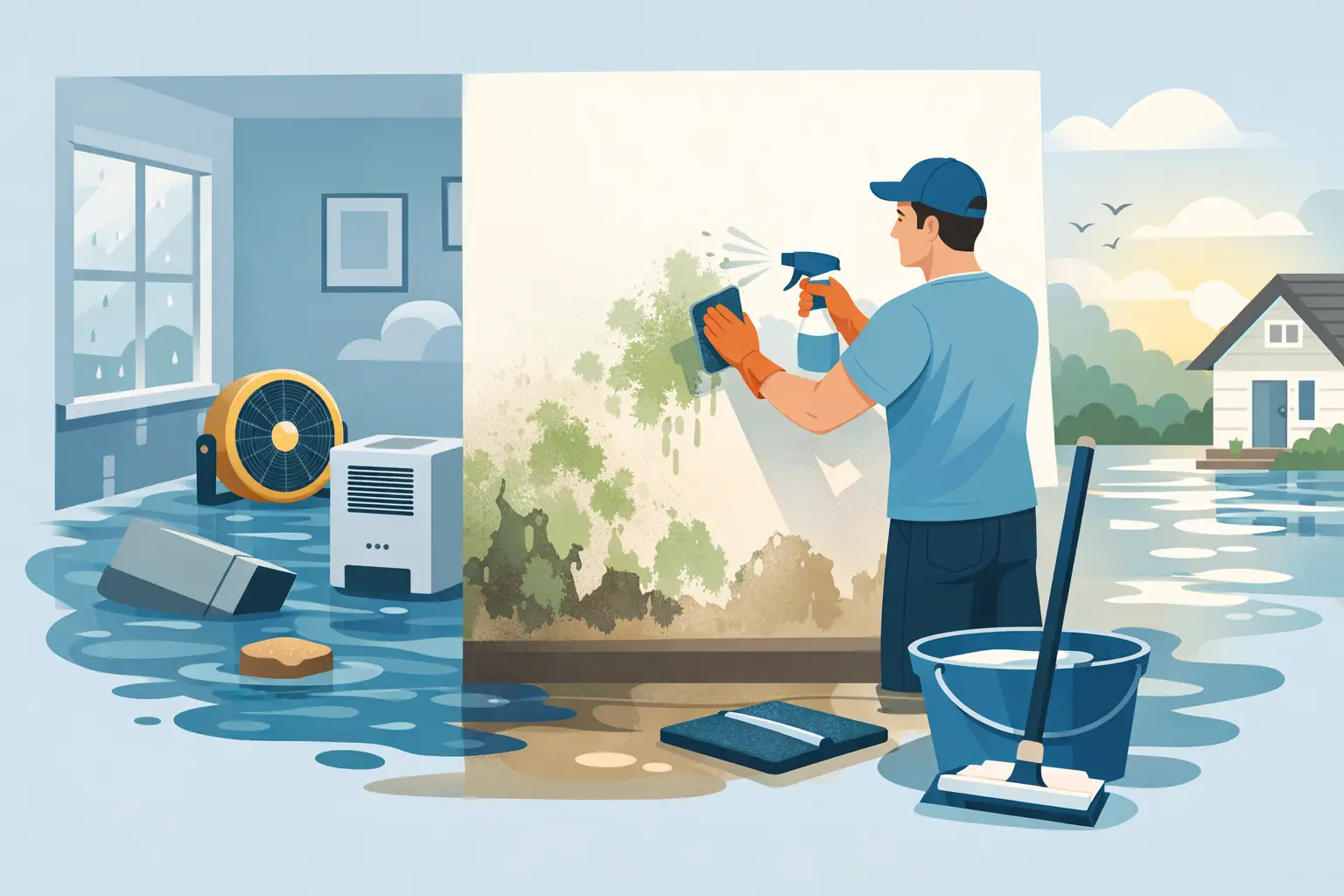
Floodwater does not need to sit for days to create a mold problem. In many homes, mold can begin growing within 24 to 48 hours when wet carpet, drywall, insulation, wood framing, or belongings do not dry completely. Knowing how to prevent mold after flooding starts with one decision: treat water damage as an urgent cleanup and drying job, not something to handle when time allows.
For homeowners in Mason and nearby Cincinnati communities, fast action protects more than finishes and furniture. It can help prevent hidden moisture, unpleasant odors, damaged building materials, and a larger remediation project later.
Start Water Removal Immediately
The first priority after a flood, plumbing backup, burst pipe, or overflowing toilet is stopping the water source if it is safe to do so. Shut off the supply to a leaking fixture, move valuables away from wet areas, and keep people and pets away from standing water.
Do not enter water near electrical outlets, appliances, or a breaker panel. If the water came from a sewer backup, toilet overflow, or drain backup, treat it as contaminated. This water may contain bacteria and other unsafe material. Do not attempt to shop-vac, mop, or salvage porous belongings until the area has been assessed and proper protective steps are in place.
Once the source is stopped, extraction needs to happen quickly. Towels and a household wet vacuum may remove visible water from a small, clean spill, but they are rarely enough after a basement flood or widespread indoor water damage. Professional extraction equipment removes far more water from carpet, padding, floor seams, and other materials where moisture hides.
The longer materials stay saturated, the more likely they are to break down or support mold growth. Wet carpet padding, for example, often cannot be dried reliably after significant flooding and may need to be removed.
How to Prevent Mold After Flooding: Dry More Than the Surface
A floor can look dry while moisture remains inside walls, under flooring, behind baseboards, and in insulation. That is why opening windows or running a few fans is not a complete drying plan after substantial water intrusion.
Proper structural drying uses air movement, dehumidification, controlled temperature, and moisture testing. Restoration technicians use moisture meters and thermal imaging tools to locate wet materials that are not obvious from the room. They then set drying equipment based on the size of the affected area, the materials involved, and the moisture level inside the structure.
Drying is not finished when the room feels comfortable. It is finished when affected materials have returned to an acceptable moisture level. Skipping this verification is one of the most common reasons mold appears weeks after a flood cleanup.
Keep the affected area ventilated when conditions allow, but understand the trade-off. On humid Ohio days, opening windows can bring more moisture indoors. A professional dehumidifier is more dependable because it pulls moisture from the air while drying equipment moves it out of materials.
Remove Materials That Cannot Be Safely Saved
Some materials can be cleaned and dried if the water was clean and action was taken immediately. Others hold moisture too deeply or become unsafe after contaminated water exposure.
Carpet, padding, upholstered furniture, paper goods, cardboard boxes, ceiling tiles, and insulation are especially vulnerable. Drywall may also need to be removed if water wicked up the wall or entered the cavity behind it. In a basement, wet finished walls can conceal moisture in framing and insulation long after the floor has been cleaned.
Hard, nonporous surfaces such as metal, glass, plastic, and sealed tile are usually easier to clean and dry. Wood flooring and wood trim require a closer evaluation. They may be salvageable with controlled drying, but they can cup, swell, or trap moisture underneath if drying is delayed.
Do not make removal decisions based only on appearance. A restoration professional can identify what is wet, what is contaminated, and what can reasonably be restored. Removing too little leaves a mold risk behind. Removing sound materials without evidence adds unnecessary cost and disruption.
Clean the Right Way, Especially After Dirty Water
Floodwater is not all the same. Water from a supply line is generally cleaner than water from a dishwasher overflow, washing machine discharge, sump backup, or sewer line. Category of water matters because it affects what can be cleaned, what must be discarded, and what protective measures are needed.
After dirty or contaminated water, cleaning should include the affected hard surfaces, contents that can be saved, and nearby areas where water may have traveled. Simply spraying a deodorizer or bleach solution into the room will not solve a contamination or mold issue.
Bleach is also not a cure-all for mold. It does not reliably penetrate porous materials such as drywall, wood, carpet, or insulation. If mold has grown into those materials, the affected section may require controlled removal and cleaning rather than surface treatment alone.
If you see visible mold, avoid scrubbing it dry or using a household fan to blow across it. That can spread spores to other parts of the home. Keep the area isolated as much as possible and have it evaluated, particularly when growth covers more than a small isolated spot or follows sewage-contaminated water.
Watch the Areas Homeowners Commonly Miss
Flooding often travels farther than expected. Water follows gravity, runs under baseboards, reaches closets, and collects beneath furniture. In finished basements, it can move behind wall panels or under laminate flooring without leaving a large visible puddle.
After the initial cleanup, check nearby rooms and lower-level spaces for damp carpet edges, peeling paint, swollen trim, bubbling flooring, musty odors, or condensation. Pay close attention to basement utility rooms, bathrooms, laundry areas, crawl spaces, and the underside of stairs.
A musty smell is not something to cover up with air freshener. It is often a sign that moisture remains or mold is already developing. The sooner the source is found, the more likely the problem can be handled before it spreads.
Document the Damage Before Major Cleanup
Take photos and video of standing water, damaged rooms, affected belongings, and the apparent source before items are moved or removed, if it is safe to do so. This can help with an insurance claim and gives the restoration team a clearer picture of what happened.
Then focus on protecting the home. Insurance questions should not delay emergency extraction and drying. Waiting for an adjuster while water remains in carpet, walls, or flooring can make the damage worse. Keep receipts, photos, and a simple record of calls and work performed.
When to Call a Water Restoration Professional
A small sink overflow on a hard tile floor may only need prompt cleaning and drying. Flooding is different when water reaches carpet or drywall, covers a large area, sits for several hours, comes from a backup, or returns after you clean it up.
Call for professional help right away when you have any of these situations:
- Water in a finished basement, crawl space, or multiple rooms
- Wet carpet, padding, drywall, insulation, or wood flooring
- A sewer backup, toilet overflow, drain backup, or other contaminated water
- A musty odor, visible mold, or moisture that returns after drying
- Water near electrical systems or a source you cannot safely stop
Trained restoration technicians can extract water, locate hidden moisture, set drying equipment, monitor progress, and address mold concerns before they become a larger indoor air and property issue. Kans Water Restoration provides this kind of focused response for homeowners dealing with water damage and mold concerns in Mason and surrounding communities.
Do Not Wait for Mold to Make the Next Move
The goal after flooding is not to make the room look normal for the moment. It is to get the structure truly dry, remove unsalvageable materials, and deal with contamination correctly. Fast, measured action is usually less disruptive than waiting for stains, odors, or visible mold to confirm there is a problem.
If your home has standing water, damp walls, wet flooring, or a lingering musty smell, treat it as a same-day concern. Getting the right drying and cleanup help now can protect the parts of your home you cannot see.

