
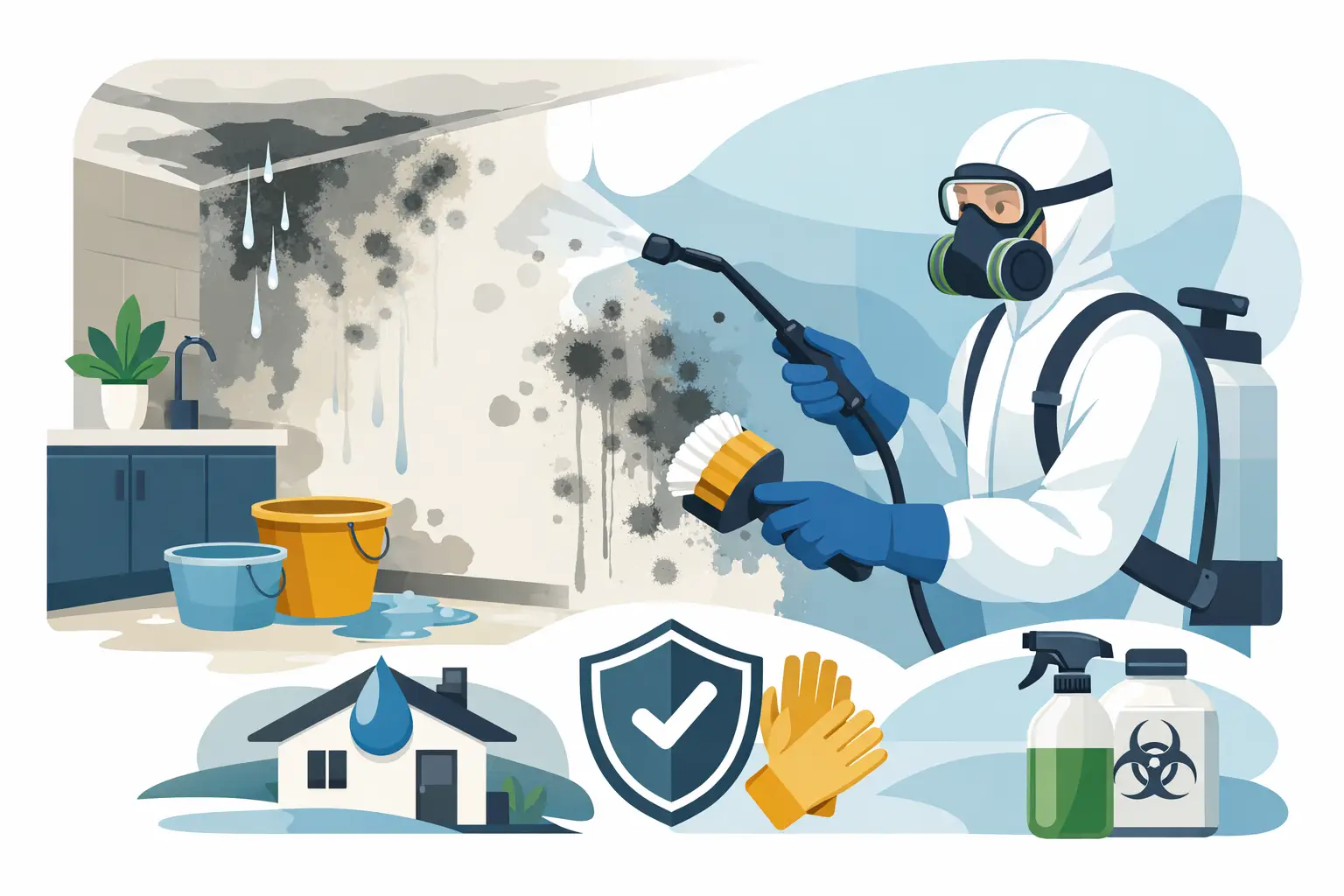
A small leak behind a wall can turn into a mold problem faster than most homeowners expect. If you need mold removal after water leak damage, the biggest mistake is waiting to see if the area will dry on its own. Once moisture gets into drywall, insulation, flooring, or framing, mold can begin growing quickly and keep spreading out of sight.
That is why the real issue is not just the visible stain on the ceiling or the damp spot near the baseboard. The problem is what stayed wet, how long it stayed wet, and whether the affected materials were dried the right way. For homeowners in Mason and nearby communities, fast action can mean the difference between a contained cleanup and a much larger remediation job.
Why mold removal after water leak damage becomes urgent
After a plumbing leak, appliance line break, roof leak, toilet overflow, or basement water intrusion, moisture does not stay where you can see it. It moves into porous materials and settles into cavities, subfloors, and insulation. Even when surfaces seem dry, hidden moisture can remain trapped.
Mold does not need a major flood to start growing. A slow leak under a sink, around a tub, behind a refrigerator line, or inside a wall can create the right conditions. In many homes, people first notice the smell before they see any actual growth. That musty odor is often the first sign that moisture has been sitting too long.
This is where professional restoration matters. Water cleanup and mold remediation are connected, but they are not the same thing. If the water is removed without proper structural drying and moisture checks, mold can return even after the area looks clean.
The signs homeowners should not ignore
Sometimes the warning signs are obvious. You may see black, green, or white spotting on drywall, wood, caulk, or trim. Other times, the signs are more subtle and easier to dismiss for a few days longer than you should.
A persistent musty smell, bubbling paint, warped flooring, soft drywall, staining on ceilings, or repeated allergy-like irritation in one part of the home can all point to hidden mold after a leak. In basements and bathrooms, the problem often develops behind finished walls or under flooring, where moisture lingers longer.
If the leak came from a drain backup, toilet overflow, or sewage-related source, the situation becomes even more serious. At that point, the concern is not only mold growth but also contaminated water and unsafe materials that may need removal.
Why DIY cleanup often falls short
Homeowners often try to wipe down visible mold with bleach or a store-bought spray and assume the issue is handled. That can work for a very small, surface-level spot caused by minor humidity, but it is rarely enough after actual water damage.
The reason is simple. Mold growth after a leak is usually tied to moisture inside materials, not just on top of them. If wet drywall, insulation, carpet pad, wood trim, or subflooring were not properly dried or removed when needed, mold can continue growing behind the cleaned surface.
There is also the issue of containment. Disturbing mold without the right process can spread spores into nearby rooms through the air. A cleanup attempt that seems cheaper at first can lead to a wider contamination problem and a more expensive repair later.
That is why trained restoration technicians use moisture detection, containment methods, air filtration, material removal when necessary, and proper drying equipment. The goal is not to make the area look better for the moment. The goal is to address the source, remove affected materials where needed, and return the space to a safe, dry condition.
What professional mold removal after water leak service usually involves
A proper response starts with finding the full extent of the water impact. That means identifying the leak source, stopping it, and checking where moisture migrated. In many cases, the visible damage is only part of the job.
Technicians typically inspect walls, flooring, trim, ceilings, and adjacent rooms with moisture meters and other equipment to locate hidden wet areas. If mold is already present, the next step is to isolate affected areas so spores are not spread during demolition or cleanup.
From there, the work depends on what materials were affected and how long they were wet. Some non-porous materials can be cleaned and treated. Porous materials such as drywall, insulation, carpet pad, and certain ceiling materials may need to be removed if mold growth is established or if they cannot be dried effectively.
Drying is a major part of the job. Air movers, dehumidifiers, and controlled drying methods are used to bring moisture levels down to acceptable ranges. Without that step, the problem is not truly resolved. Experienced crews follow industry-standard methods because guessing is what leads to recurring damage.
For homeowners dealing with a stressful mess, that process matters. A trained team can handle both the immediate water problem and the secondary mold issue, which saves time and reduces the chance of missing hidden damage.
When materials can be saved and when they cannot
This is one of the most common questions after a leak. The answer depends on the material, the category of water involved, and how long it has been wet.
Hard, non-porous surfaces often have a better chance of being cleaned and restored. Finished wood may sometimes be saved if the water exposure was limited and drying started quickly. Drywall, insulation, carpet padding, ceiling tile, and other porous materials are much less forgiving, especially if mold has already started growing or if the water was contaminated.
Basements are a good example. If water wicked up into finished walls, the lower sections of drywall and insulation often need removal to expose the cavity, dry the framing, and address any mold growth. Trying to leave compromised materials in place can trap moisture and odor behind a finished surface.
A professional assessment helps avoid two costly mistakes – tearing out more than necessary or not removing enough.
Why local response time matters
With mold and water damage, time is not on your side. A company that serves Mason, West Chester, Loveland, Maineville, Liberty Township, Blue Ash, Kenwood, Montgomery, and nearby areas can often respond faster than a distant provider juggling a larger region.
That matters because the first day or two often decides how much of the structure can be dried and how much may need replacement. Fast extraction, moisture mapping, and structural drying reduce the odds of mold growth taking hold in wall cavities, subfloors, and finished basement materials.
Local experience matters too. Homes in suburban Cincinnati communities often deal with basement moisture, sump issues, bathroom leaks, aging supply lines, and storm-related water intrusion. A company that works these jobs every week understands the patterns and knows where hidden moisture tends to collect.
What to expect when you call for help
If you are dealing with a recent leak and signs of mold, the best next step is a prompt inspection. A professional team should evaluate the source of the water, determine how far the damage spread, explain what can be dried versus removed, and lay out a clear remediation plan.
You should also expect straightforward communication. Homeowners want to know what is unsafe, what is salvageable, how the cleanup will be contained, and what the drying timeline looks like. Good restoration work is not about scare tactics. It is about solving the problem correctly so your home can get back to normal.
Kans Water Restoration handles both water damage cleanup and mold remediation, which is important when one problem leads directly to the other. That kind of combined response is often the most efficient path for homeowners who do not have time to coordinate multiple contractors during a home emergency.
Don’t wait for the smell to get worse
If you suspect mold after a leak, delaying the call usually does not make the job smaller or cheaper. Water damage has a way of moving beyond the original source, and mold follows the moisture. The sooner the affected area is inspected, dried, cleaned, and remediated if needed, the sooner your home can feel clean, safe, and under control again.
If something still smells off, looks stained, feels soft, or never dried the way it should have, trust that instinct and get it checked before a manageable repair turns into a larger restoration project.

