
A toilet that rises instead of flushes is not a problem to watch overnight. Toilet backup causes can range from a simple clog in one fixture to a sewer line failure affecting bathrooms, tubs, and floor drains throughout the house. The difference matters because contaminated water can spread quickly into flooring, walls, cabinets, and lower levels.
If water is approaching the rim, stop flushing immediately. Keep people and pets away from the affected area, especially when the water is discolored or has a sewage odor. Fast action can limit the damage, but a backup involving wastewater needs more than towels, a fan, and a bottle of cleaner.
The Most Common Toilet Backup Causes
A clog in the toilet trap or branch drain
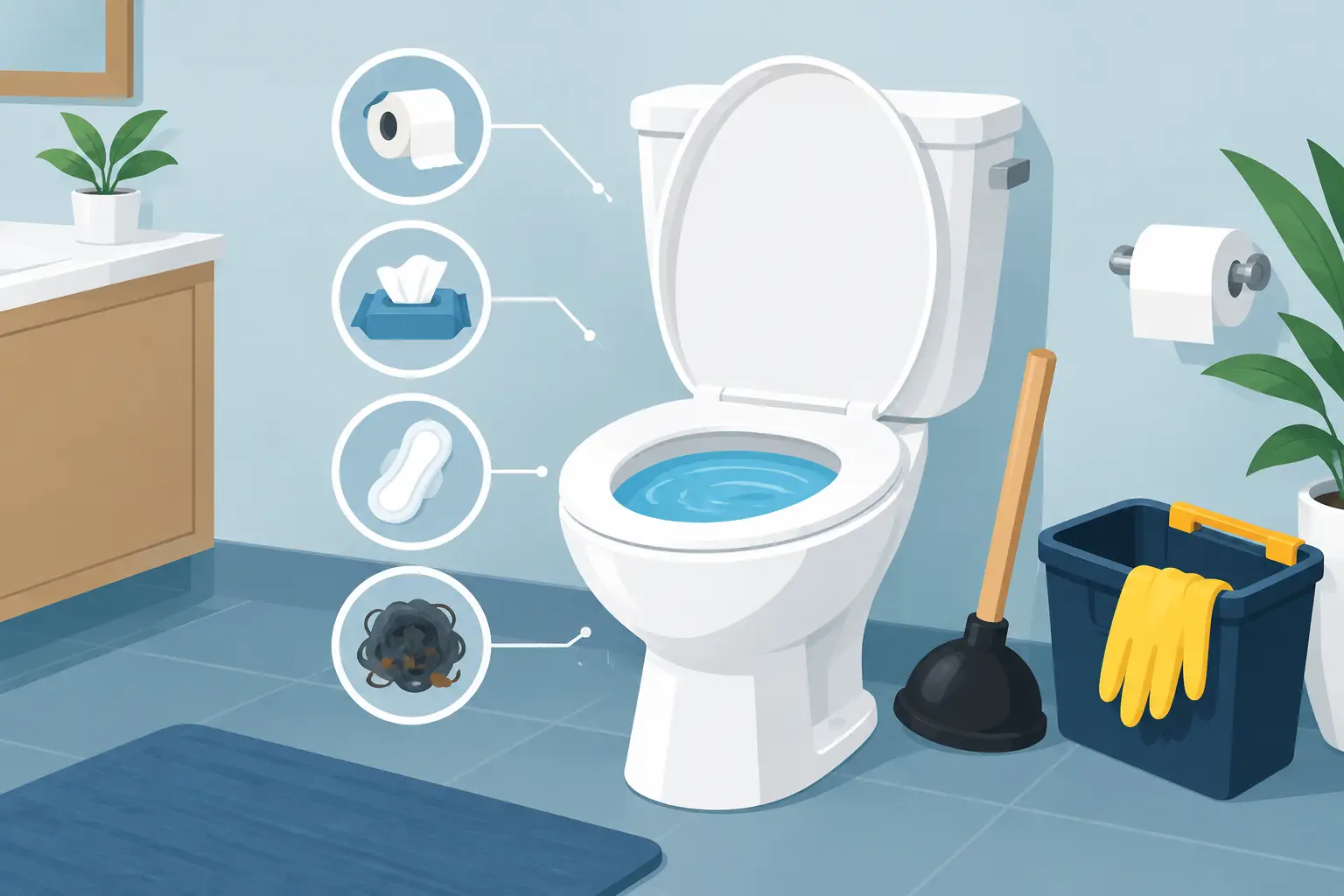
The toilet trap is the curved section built into the fixture. It holds water to block sewer gases, but it can also catch material that should never have been flushed. Excess toilet paper, wipes labeled “flushable,” paper towels, hygiene products, cotton swabs, toys, and small household objects are common causes of a localized backup.
When the clog is close to the toilet, one bathroom may be the only area affected. The bowl may fill when flushed, drain slowly, or remain high after the water supply is shut off. A plunger may clear a minor paper clog, but repeated overflows mean the obstruction may be farther down the drain line. Continuing to flush can force contaminated water across the bathroom floor.
A blockage deeper in the main sewer line
A main sewer line carries wastewater from the home to the municipal sewer connection or a septic system. When this line is blocked, water has nowhere to go. It often returns through the lowest open drain in the home, which may be a basement floor drain, shower, tub, or first-floor toilet.
This is one of the more serious toilet backup causes because several fixtures can be involved at once. You may notice a toilet bubbling when the washing machine drains, water rising in a shower after a flush, or a basement drain backing up during normal household use. These signs call for professional plumbing diagnosis and prompt cleanup if water has entered the home.
Tree roots in aging sewer pipes
Roots naturally seek moisture. Small cracks, loose joints, and older pipe connections can release enough moisture to attract roots from nearby trees and shrubs. Once roots enter a sewer line, they expand and trap paper, grease, and other debris until wastewater flow slows or stops.
Root intrusion is especially common in established neighborhoods with mature landscaping and older underground piping. The line may drain normally for a while, then back up again after heavy water use. Clearing the line can restore flow, but recurring root problems may require a camera inspection and repair recommendation from a qualified plumber.
Damaged, shifted, or collapsed sewer piping
Underground sewer lines can crack, sag, separate, or collapse over time. Soil movement, freeze-thaw cycles, construction activity, age, and failing pipe materials can all contribute. A low section in the pipe can collect solids repeatedly, while a collapse may create a sudden and complete blockage.
This type of failure is not a DIY repair. If backups keep returning after drain clearing, the underlying pipe condition needs to be evaluated. Cleanup still matters right away because standing wastewater can wick into materials long before the source of the problem is repaired.
Grease, scale, and improper disposal
Kitchen grease often contributes to sewer line blockages even though it does not enter through a toilet. Grease cools inside pipes, sticks to the walls, and catches debris moving through the line. Mineral scale, soap residue, and years of buildup can narrow older drain piping as well.
The practical rule is simple: toilets are for human waste and toilet paper only. Wipes, even those marketed as flushable, do not break down like toilet paper. Keeping grease, food scraps, and non-flushable products out of household drains reduces the chance of a costly backup.
Heavy rain and overwhelmed sewer systems
During intense rain, some municipal sewer systems can become overloaded. If a home has a vulnerable connection, damaged lateral line, or low-lying basement drain, wastewater may back up indoors. This can happen even when the plumbing inside the home is working correctly.
A storm-related backup should be treated seriously. Rainwater mixed with sewage can carry contaminants and spread beneath finished flooring or behind wall materials. Do not assume the area is clean because the visible water has receded.
How to Tell Whether It Is a Simple Clog or a Sewer Backup
One slow or overflowing toilet may point to a clog near that fixture. Multiple drains acting up at the same time point more strongly to a main line issue. Gurgling sounds, sewage odors, water coming up through a tub or floor drain, and backups that occur when appliances discharge water are all warning signs of a larger drainage problem.
The appearance of the water also matters. Clear water from a clean toilet bowl before use may still damage flooring and drywall, but water containing waste, dark debris, or sewage should be handled as contaminated. A bathroom backup can become a health and property damage issue within minutes when it travels beyond the immediate toilet area.
What to Do When a Toilet Backs Up
First, remove the tank lid and close the flapper if the toilet is still running. If needed, turn off the small water supply valve behind or below the toilet by turning it clockwise. Do not flush again to test whether the problem has cleared.
Then take these steps:
- Keep children, pets, and anyone without protective equipment out of the affected space.
- Avoid using nearby sinks, showers, washing machines, and other plumbing fixtures until the cause is identified.
- Move clean belongings away from the water if you can do so without walking through contamination.
- Call a plumber when drainage needs to be cleared, and call a restoration company if wastewater reached floors, walls, cabinets, carpeting, or a basement.
Do not use a household vacuum to remove toilet backup water. Do not rely on bleach alone, either. Bleach does not extract water from porous materials or dry framing, subfloors, insulation, and wall cavities. It can also create unpleasant fumes when used around other cleaners.
Why Sewage Cleanup Requires More Than Surface Cleaning
Sewage and drain backup water can contain bacteria, viruses, and other contaminants. Restoration professionals use appropriate protective equipment, controlled removal methods, moisture detection tools, commercial extraction equipment, and structural drying systems to address both visible water and hidden moisture.
Whether materials can be cleaned or need to be removed depends on the category of water, how long it remained, and what it contacted. Non-porous surfaces may often be cleaned and disinfected. Carpet padding, insulation, particleboard cabinets, and some drywall can absorb contaminated water and may not be safely salvageable. The goal is not just to make the room look dry. It is to remove contamination, dry the structure properly, and reduce the conditions that allow mold and mildew to develop.
For homeowners in Mason, West Chester, Loveland, Maineville, Liberty Township, Blue Ash, Kenwood, Montgomery, and nearby communities, a quick response can protect more of the home. Kans Water Restoration provides water extraction, sewage cleanup, structural drying, and mold remediation support after toilet overflows and drain backups. Our trained technicians use industry-standard restoration methods to help return affected spaces to a clean, safe condition.
Preventing the Next Backup
Prevention starts with what enters the plumbing system. Use toilet paper in reasonable amounts, keep wipes and hygiene products out of the toilet, and dispose of grease in the trash rather than the sink. If your home has mature trees, older sewer piping, or a history of recurring slow drains, consider having the sewer line inspected before a small warning becomes a full backup.
A clean, dry bathroom or basement is worth protecting. If toilet water has reached your floor, baseboards, drywall, or belongings, act quickly and get professional help before hidden moisture and contamination create a larger restoration problem.

