
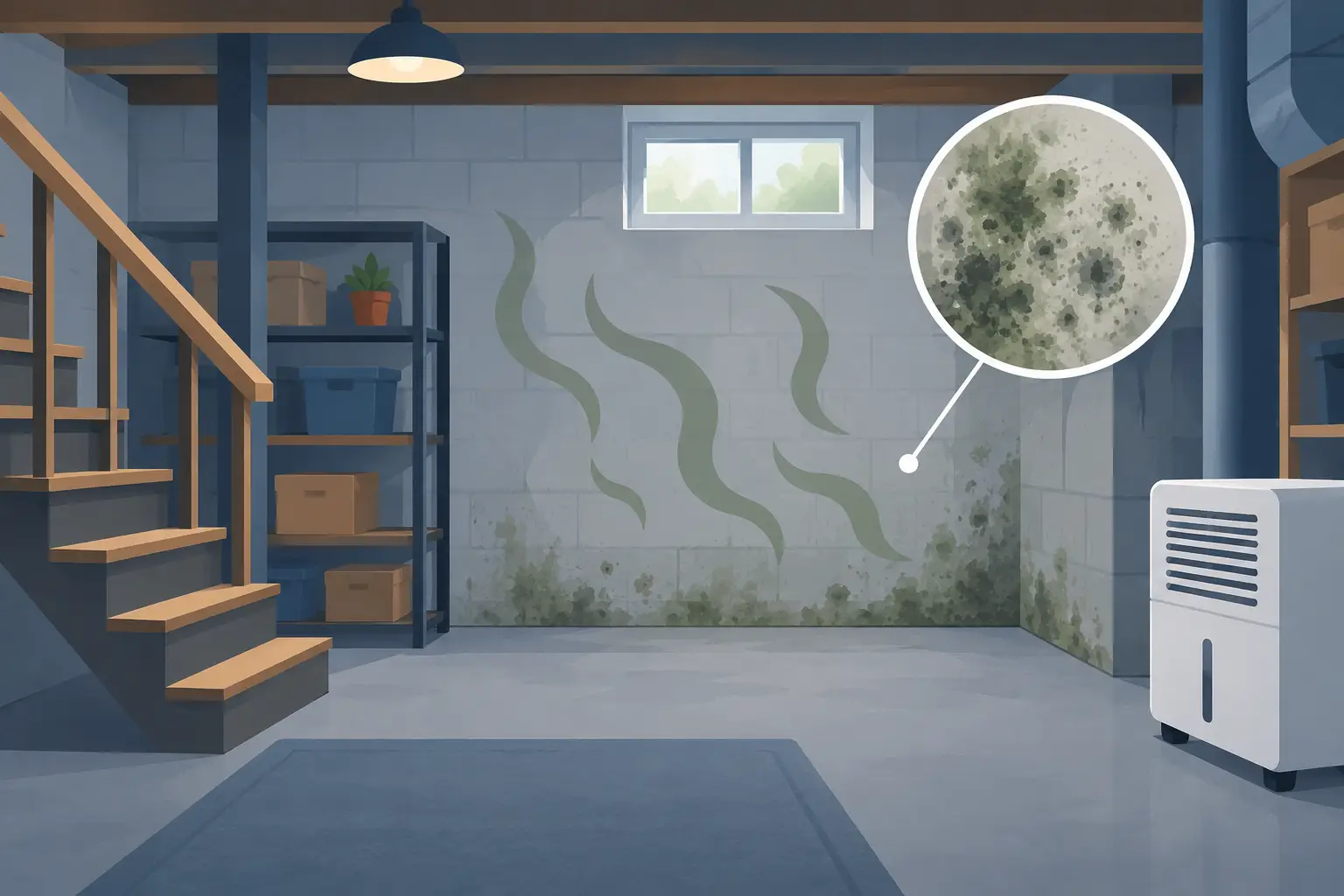
That damp, stale basement odor is often the first warning sign of a moisture problem. If you are asking, “why does basement smell musty,” the short answer is that moisture is getting trapped somewhere it should not be. The source may be obvious, such as a recent flood or plumbing leak. It can also be hidden behind finished walls, under flooring, around a foundation, or inside a damp crawlspace.
A musty smell is not something to cover up with air fresheners. It is a reason to look for water damage, elevated humidity, mildew, or mold growth before the problem spreads and becomes more costly to repair.
Why Does a Basement Smell Musty After Rain?
Basements sit below ground level, so they are naturally more exposed to moisture from the soil around the foundation. After heavy Ohio rain, water can move toward your home through poor grading, overflowing gutters, cracked foundation walls, window wells, or failing drain systems.
Even a small amount of seepage can create a noticeable odor. Concrete, framing, insulation, carpet, drywall, and stored boxes can absorb moisture. Once those materials remain damp, mold and mildew can begin growing on surfaces you may not be able to see.
The basement may smell worse on humid days or shortly after a storm because the air is holding more moisture. That does not always mean your basement is actively flooding, but it does mean the area needs closer attention.
The Most Common Sources of Musty Basement Odors
A musty odor usually comes from one of a few moisture-related conditions. Finding the right source matters because each one requires a different repair and drying approach.
Hidden Water Leaks
A slow plumbing leak can dampen wall cavities and flooring for weeks before it becomes visible. Check around water heaters, washing machines, utility sinks, exposed pipes, basement bathrooms, and refrigerator water lines. A small leak behind a finished wall can support mold growth without leaving a large puddle.
Previous Flooding That Was Not Fully Dried
After a flooded basement, removing standing water is only the first step. Moisture can stay in drywall, wood framing, subfloors, insulation, and carpet padding long after the surface feels dry. If those materials were not professionally dried, the odor may return weeks or months later.
This is especially common after sump pump failures, stormwater intrusion, toilet overflows, and drain backups. The basement may look clean, but residual moisture and contamination can remain in porous materials.
High Indoor Humidity
Not every musty basement has a leak. Some basements stay humid because outside air enters through gaps, the HVAC system is not controlling moisture well, or a dehumidifier is undersized or not running consistently. Condensation may form on pipes, windows, ductwork, and cool concrete walls.
High humidity creates the conditions mold needs to grow. A dehumidifier may help with mild, ongoing moisture, but it will not solve a drainage problem, concealed leak, or contaminated area after sewage or floodwater exposure.
Foundation Seepage and Poor Drainage
Water that collects near the foundation will eventually look for a path inside. Downspouts that discharge too close to the house, clogged gutters, low landscaping, damaged window wells, and cracked masonry can all contribute to basement seepage.
Look for white, chalky deposits on concrete walls, peeling paint, damp spots, warped baseboards, or staining near the floor line. Those are common signs that moisture is moving through the foundation.
Mold or Mildew Growth
Mildew and mold both thrive in damp, poorly ventilated areas. The smell often develops before homeowners see visible growth. Mold may be behind paneling, beneath carpet, inside insulation, under vinyl flooring, or around stored belongings placed against a cool foundation wall.
A visible spot does not always show the full extent of the issue. If water affected drywall, carpet padding, insulation, or other porous materials, surface cleaning alone may not address what is underneath.
When a Musty Smell Becomes a Restoration Problem
A basement odor deserves professional attention when it is persistent, gets stronger after rain, or returns after cleaning. You should also act quickly if you see visible mold, water staining, damp drywall, buckled flooring, or condensation that keeps coming back.
Call for help right away if the odor follows a sewer backup, toilet overflow, or drain backup. Sewage-contaminated water is not a normal cleaning project. It can carry bacteria and other contaminants into flooring, walls, belongings, and air spaces. A trained restoration team can remove affected materials when needed, clean contaminated areas, and dry the structure using appropriate equipment.
Health concerns are another reason not to wait. Musty air can be especially troubling for people with allergies, asthma, respiratory sensitivities, or weakened immune systems. While an odor alone cannot identify the exact type of mold or its health impact, it is a clear sign that the moisture source should be corrected.
What Professional Basement Drying Looks Like
The goal is not to make the basement smell better for a few days. The goal is to identify the moisture source, remove excess water, dry affected materials, and prevent secondary mold damage.
A proper restoration inspection may include moisture readings in walls and floors, checks around plumbing and foundation areas, and an assessment of carpet, padding, drywall, insulation, and contents. Specialized extraction equipment, air movers, dehumidifiers, and containment methods may be used depending on the source and extent of the damage.
There is a trade-off with waiting. A small leak caught early may only need targeted drying and a repair to stop the water. Water that sits for days can damage more materials and increase the chance that drywall, insulation, carpet, or wood components need removal. Fast action protects both the home and the budget.
Kans Water Restoration helps homeowners in Mason and nearby Cincinnati communities handle water cleanup, structural drying, mold remediation, and sewage cleanup when basement moisture has turned into a larger property problem.
What You Can Do While Waiting for Help
If there is active water, avoid walking through it when electrical outlets, appliances, or wiring may be affected. Shut off the water source if a plumbing leak is safe to access, and move dry belongings away from wet walls or floors.
Do not use household fans to blow air across a suspected sewage-contaminated area or significant mold growth. That can spread contamination to other parts of the basement. Avoid painting over stains, installing new flooring, or replacing drywall before the underlying moisture is found and dried.
For a mild humidity issue with no visible damage, keep basement doors and storage areas open enough for air movement, run an appropriate dehumidifier, and keep boxes and furniture away from exterior walls. Still, monitor the area closely. If the smell remains, there is likely more to investigate.
Do Not Let the Odor Be the Only Clue
A musty basement is your home telling you that dampness is lingering somewhere. The sooner the source is found, the better the chance of avoiding damaged finishes, mold growth, and a more disruptive repair. If the smell is persistent or follows water intrusion, treat it as a restoration issue and get the basement properly inspected, cleaned, and dried.

