
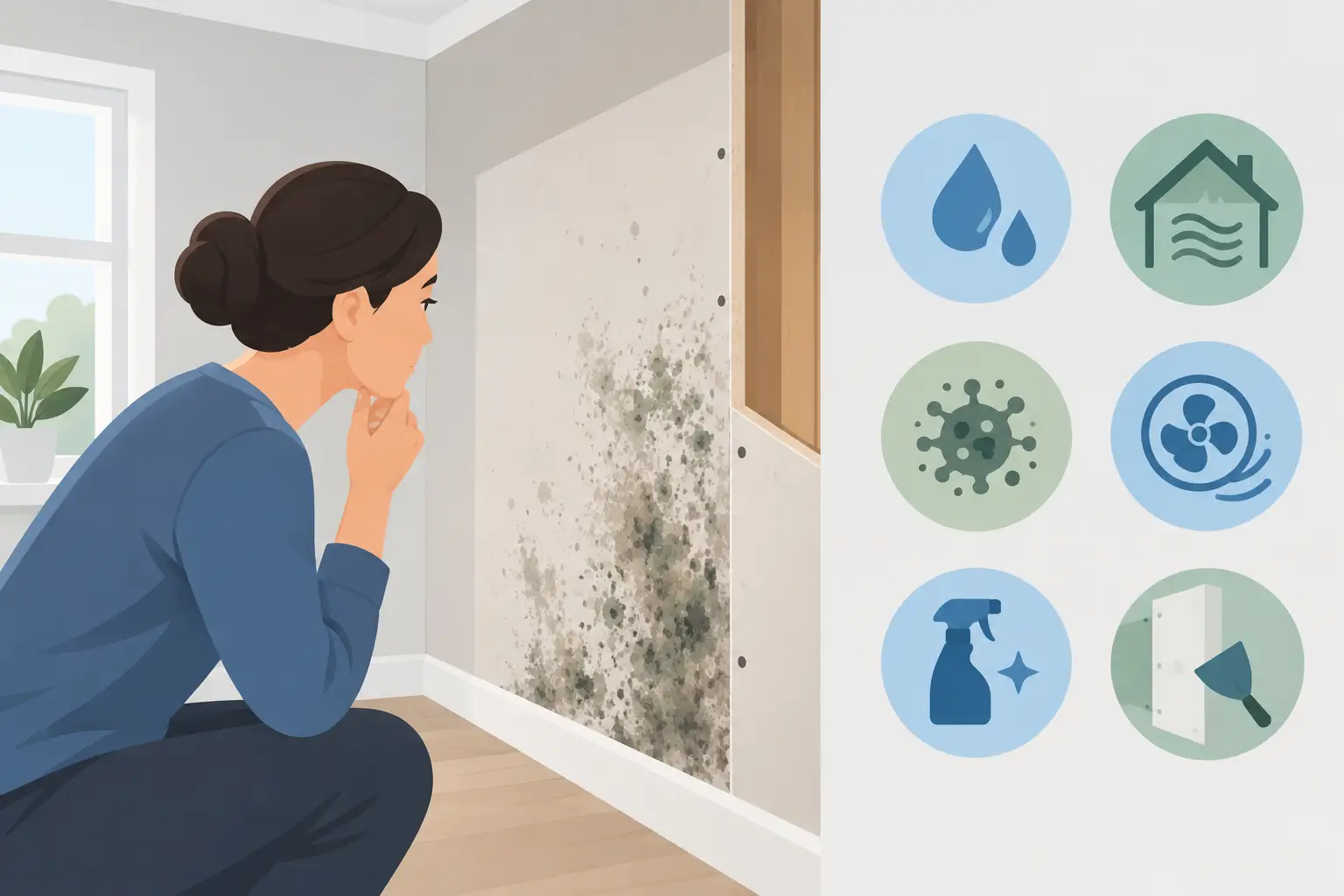
A musty wall is often the first warning sign homeowners notice after a basement leak, bathroom overflow, or slow plumbing problem. If you are asking, why does drywall smell musty, the short answer is usually trapped moisture. Drywall can absorb water quickly, and when it does not dry completely, it can hold odor-causing contamination behind a wall long after the visible water is gone.
That smell is not something to cover with air freshener or paint over. It is a reason to find the moisture source, determine how far the water traveled, and dry or remove damaged materials before a small issue becomes a larger mold and structural repair problem.
Why Does Drywall Smell Musty After Water Damage?
Drywall is made with a gypsum core covered by paper facing. The gypsum itself is not a food source for mold, but the paper surface, construction dust, paint residue, and organic debris around it can support microbial growth when moisture is present.
A musty odor may develop when water gets into the wall cavity from a pipe leak, roof leak, foundation seepage, appliance supply-line failure, overflowing toilet, or drain backup. The odor can also come from damp insulation, wet framing, carpet padding, or debris inside the wall rather than the drywall alone.
The tricky part is that the surface of the wall may feel dry. Water can wick upward from the floor, move behind baseboards, soak insulation, or remain trapped on the back side of drywall. A fan pointed at the room may dry the paint surface while leaving the materials inside the wall damp.
Musty drywall does not always mean there is visible mold growth, but it does mean the conditions that allow mold and mildew to develop may be present. The longer materials remain wet, the more likely odor and contamination problems become.
Common Reasons a Wall Starts Smelling Musty
A hidden plumbing leak
Small supply-line or drain leaks can go unnoticed for weeks. A loose toilet seal, leaking shower valve, pinhole pipe leak, or slow drain connection may release only a little water at a time, but that is enough to keep drywall damp. Bathrooms, laundry rooms, kitchens, and finished basements are common locations.
Watch for peeling paint, soft baseboards, warped flooring, stains, bubbling drywall, or a smell that becomes stronger after someone showers or runs an appliance. Even if there is no stain, moisture meters and thermal imaging can help locate hidden wet areas.
Basement moisture or foundation seepage
In Mason and nearby Cincinnati-area communities, basements can develop moisture problems after heavy rain, snowmelt, or drainage issues around the foundation. Water may enter through cracks, window wells, wall-floor joints, or a failed sump pump.
A finished basement can mask the problem. Moisture behind finished walls can affect drywall, insulation, wood framing, and stored contents before the homeowner sees standing water. The odor may be strongest near exterior walls, behind furniture, or in a closed lower-level room.
An old flood or overflow that was never fully dried
A previous water event can leave a lasting problem if the drying process was incomplete. This happens after appliance leaks, overflowing sinks, wet carpets, flooded basements, or toilet overflows that were cleaned on the surface but not properly assessed behind walls and under flooring.
Drywall often needs prompt, controlled drying after clean-water damage. If contaminated water from a sewage backup or toilet overflow reached the wall, affected porous materials may need to be removed rather than dried. The right response depends on the source of the water, how long it sat, and the materials involved.
Mold or mildew in the wall cavity
Mold growth can produce the earthy, stale smell many people describe as musty. It can grow on drywall paper, insulation, wood studs, and dust within the cavity. Growth may be hidden behind paint, wallpaper, cabinets, baseboards, or furniture.
Do not assume every musty odor is mold, and do not assume a small visible spot tells the whole story. A professional inspection helps determine whether the issue is limited to a small surface area or connected to a larger moisture source behind the wall.
High indoor humidity
High humidity alone can make a home smell damp, especially in basements and poorly ventilated bathrooms. Condensation can form on cool exterior walls, pipes, and windows. Over time, repeated condensation can dampen drywall and create conditions for odor and microbial growth.
Humidity control can help prevent future trouble, but it will not solve an active leak or water-damaged wall. If drywall is already wet, swollen, or musty, the source still needs to be addressed.
Signs the Problem May Be Behind the Drywall
A musty smell that returns after cleaning is a strong clue that the source is concealed. The odor may worsen after rain, after a shower, when the heat or air conditioning runs, or when a closed room is opened.
Other warning signs include discoloration near baseboards, drywall that feels soft or crumbly, nails that appear to be pushing out, loose trim, buckled flooring, or cold damp spots on the wall. In some cases, family members may notice irritation from stale indoor air. Odor alone cannot diagnose a health issue, but it should not be ignored when combined with known moisture damage.
If the wall was affected by a sewage backup, toilet overflow involving waste, or gray water from drains, avoid opening it yourself. Contaminated water can affect more than the drywall and calls for proper containment, removal, cleaning, and disinfection.
What Not to Do With Musty-Smelling Drywall
Painting over the area may hide a stain, but it does not remove trapped moisture or contamination. Bleach sprayed on a wall surface is also not a dependable answer for hidden growth, and excess liquid can add more moisture to the problem.
Avoid cutting into a wall without knowing what caused the odor or whether contaminated water was involved. Opening drywall can spread dust and expose wet insulation or microbial growth. It can also create an unnecessary repair if the real source is elsewhere, such as a leaking pipe below the floor or water entering from outside.
Running a household fan or dehumidifier may make the room feel better, but it is not a substitute for structural drying when water has reached wall cavities. Effective drying requires checking moisture levels in the affected materials and controlling airflow, humidity, and temperature until the structure reaches an acceptable dry standard.
How Professionals Find and Fix the Source
A proper water damage inspection starts with identifying where the moisture came from and whether it is still active. Restoration technicians inspect visible materials, check moisture in drywall and framing, and assess nearby flooring, baseboards, insulation, and contents. Specialized equipment can help locate moisture that cannot be seen from the room.
The next step depends on the conditions. Clean-water damage discovered quickly may allow some drywall to be dried in place if it remains structurally sound and accessible for drying. Wet insulation often requires removal because it holds water and restricts airflow. If drywall is swollen, deteriorated, contaminated, or supports mold growth, selective removal is usually the safer and more reliable option.
After damaged materials are removed when needed, the area is dried with professional air movers and dehumidifiers. Technicians monitor moisture levels rather than guessing based on how the wall feels. If mold contamination is present, the work should include appropriate containment and cleaning practices to avoid spreading debris into unaffected parts of the home.
Kans Water Restoration helps homeowners across Mason, West Chester, Loveland, Maineville, Liberty Township, and nearby communities respond to water damage, sewage cleanup, structural drying, and mold concerns. Fast action can often reduce the amount of drywall, flooring, and personal property that needs to be replaced.
When to Call for Help
Call for an inspection promptly if the musty odor follows a flood, backup, overflow, plumbing leak, roof leak, or repeated basement seepage. You should also call if the smell persists for more than a day or two, returns after cleaning, comes with staining or soft drywall, or appears near a bathroom, laundry room, or finished basement wall.
The sooner hidden moisture is found, the more options you have. A wall that smells musty is not asking for fragrance. It is asking for the water problem behind it to be found and handled before it spreads.

