
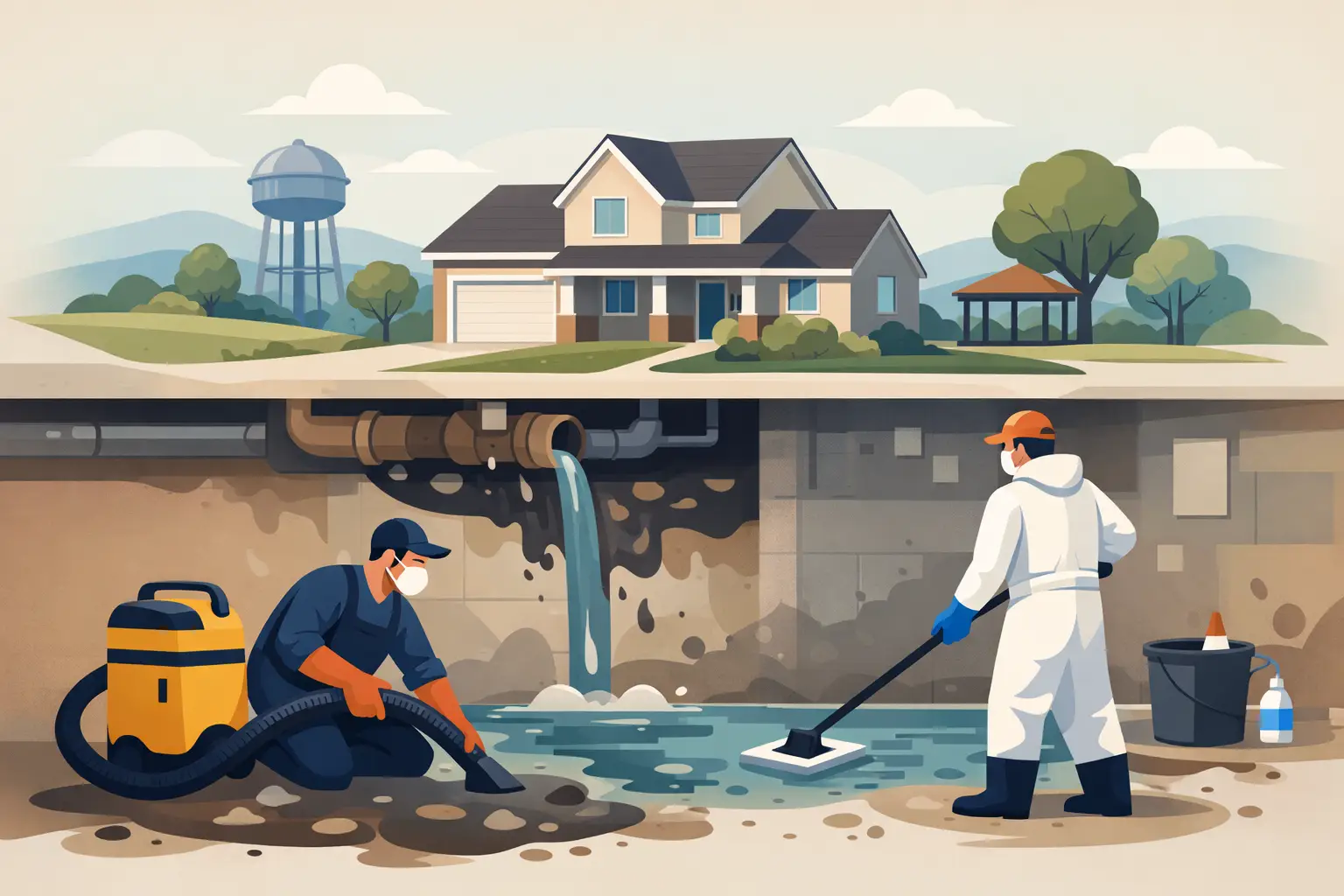
A sewage backup can turn a usable basement or bathroom into a serious health and property problem within minutes. A professional sewage cleanup service does more than remove visible water. It addresses contaminated materials, hidden moisture, odors, and the conditions that can lead to mold growth after the backup is gone.
For homeowners in Mason and nearby Cincinnati communities, the right response is simple: keep people and pets away from the affected area, stop the water source if it is safe to do so, and call trained restoration professionals right away. Sewage water is not a normal cleanup job, and waiting can make the damage spread farther through flooring, walls, and contents.
Why Sewage Backups Need Fast Professional Cleanup
Water from a toilet overflow, drain backup, septic issue, or broken sewer line may contain bacteria, viruses, and other harmful contaminants. Restoration professionals often classify this as Category 3 water, commonly called black water. Even a small amount can make porous materials unsafe to keep.
The visible mess is only part of the issue. Contaminated water can move beneath vinyl flooring, wick into drywall, soak insulation, enter baseboards, and collect in cracks around a basement floor. If moisture remains behind, mold and mildew may begin to grow, creating another problem after the sewage has been removed.
A fast response limits how much material must be removed and helps protect the structure of your home. It can also reduce lingering odors and make the insurance documentation process clearer if you plan to file a claim.
What a Sewage Cleanup Service Should Handle
Professional sewage cleanup is a controlled restoration process, not simply mopping, spraying disinfectant, and placing a few fans in the room. The work should begin with an assessment of the source, the affected areas, and the materials that came into contact with contaminated water.
Technicians use extraction equipment to remove standing water and waste, then determine what can be cleaned and what needs to be removed. Nonporous surfaces such as certain tile, metal, and sealed hard surfaces may be cleaned and disinfected when they are in good condition. Porous materials often require a different decision.
Carpet padding, insulation, unfinished drywall, particleboard furniture, cardboard boxes, and other absorbent materials may hold contamination that cannot be reliably cleaned. In many cases, removal is the safer choice. A qualified crew will explain what was affected and why particular materials need to come out.
After removal and detailed cleaning, structural drying begins. Air movers, dehumidifiers, moisture meters, and other specialized equipment are used to dry the affected building materials. Drying matters because disinfecting alone does not solve a moisture problem. The goal is a clean, dry area that is ready for repairs or restoration.
Common Causes of Sewage Damage in Homes
Sewage problems do not always start with a major sewer line break. A toilet can overflow because of a clog, an older drain line can back up during heavy rain, or tree roots can interfere with underground pipes. In some homes, a floor drain backs up first, sending contaminated water into the basement.
Bathroom overflows can spread quickly into hallways, under vanities, and through lower-level ceilings. Basement backups can affect stored belongings, finished rooms, utility areas, and flooring. The longer contaminated water sits, the more likely it is to travel into surrounding materials.
If the problem came from a plumbing or sewer system failure, the source should be corrected before final repairs begin. Cleanup and plumbing repair are related but separate needs. The restoration team handles the contamination, extraction, drying, and affected materials, while a qualified plumber can identify and repair the cause of the backup.
What to Do Before Help Arrives
Your first priority is safety. Do not walk through sewage water unless absolutely necessary, and keep children and pets out of the area. If water is near electrical outlets, appliances, or the electrical panel, avoid the space and contact the appropriate professional for guidance.
If you can safely stop a toilet overflow by shutting off its water supply valve, do so. For a broader drain or sewer backup, avoid using toilets, showers, washing machines, dishwashers, and sinks until the issue has been evaluated. Adding more water to the system can make the backup worse.
Do not use a household vacuum, shop vacuum, or ordinary mop to remove sewage. These tools are not designed for contaminated water, and improper cleanup can spread contaminants to other areas of the home. Avoid running fans before contaminated materials have been properly addressed, since airflow can move particles and odors around the space.
If it is safe, take a few photos for your records before cleanup begins. Then leave the affected materials in place for the restoration team to inspect. Throwing everything away immediately can make it harder to document the extent of damage or determine what may be salvageable.
Why Drying and Moisture Checks Matter
A room can look dry while moisture remains behind walls, beneath floors, or inside structural cavities. That is why professional restoration crews use moisture detection equipment instead of relying only on what they can see or feel.
In a finished basement, for example, sewage water can travel behind baseboards and into the bottom edge of drywall. In a bathroom, it may move below flooring or into the subfloor around a toilet. If those areas are not evaluated and dried correctly, the home can develop musty odors, damaged materials, or mold growth later.
The right drying plan depends on the construction of the home, how long water was present, the type of flooring, and the materials affected. There is no one-size-fits-all answer. A small toilet overflow on tile may require a much different scope of work than a sewage backup across a finished basement with carpet and drywall.
Local Help for Sewage Cleanup in Mason and Nearby Areas
When sewage enters your home, you need a company that understands both the urgency and the cleanup standards involved. Kans Water Restoration provides sewage cleanup, water extraction, structural drying, and mold remediation support for homeowners and businesses in Mason, West Chester, Loveland, Maineville, Liberty Township, Blue Ash, Kenwood, Montgomery, and surrounding communities.
With 15 years of industry experience, trained technicians use industry-standard methods and specialized drying equipment to address the immediate mess and the moisture left behind. Experience with IICRC water damage restoration and applied microbial remediation principles matters when the job involves contaminated water and possible secondary mold issues.
The focus is practical: remove the contamination, identify affected materials, dry the structure, and help move your property toward safe, usable condition again. You should receive clear communication about what happened, what needs to be done, and what comes next.
Do Not Wait for Odors or Mold to Appear
A sewage backup does not become safe simply because the water has drained away. Contamination and moisture can remain in places you cannot see, especially around flooring edges, wall cavities, insulation, and stored belongings. Delaying cleanup can increase the amount of demolition and restoration needed.
If you have a toilet overflow, sewer backup, or contaminated water in your basement or bathroom, get professional help as soon as possible. A prompt sewage cleanup service can protect your home, reduce disruption, and give you a clear path forward when the situation feels overwhelming.
Call for an estimate and let trained local technicians take the cleanup burden off your hands.

