
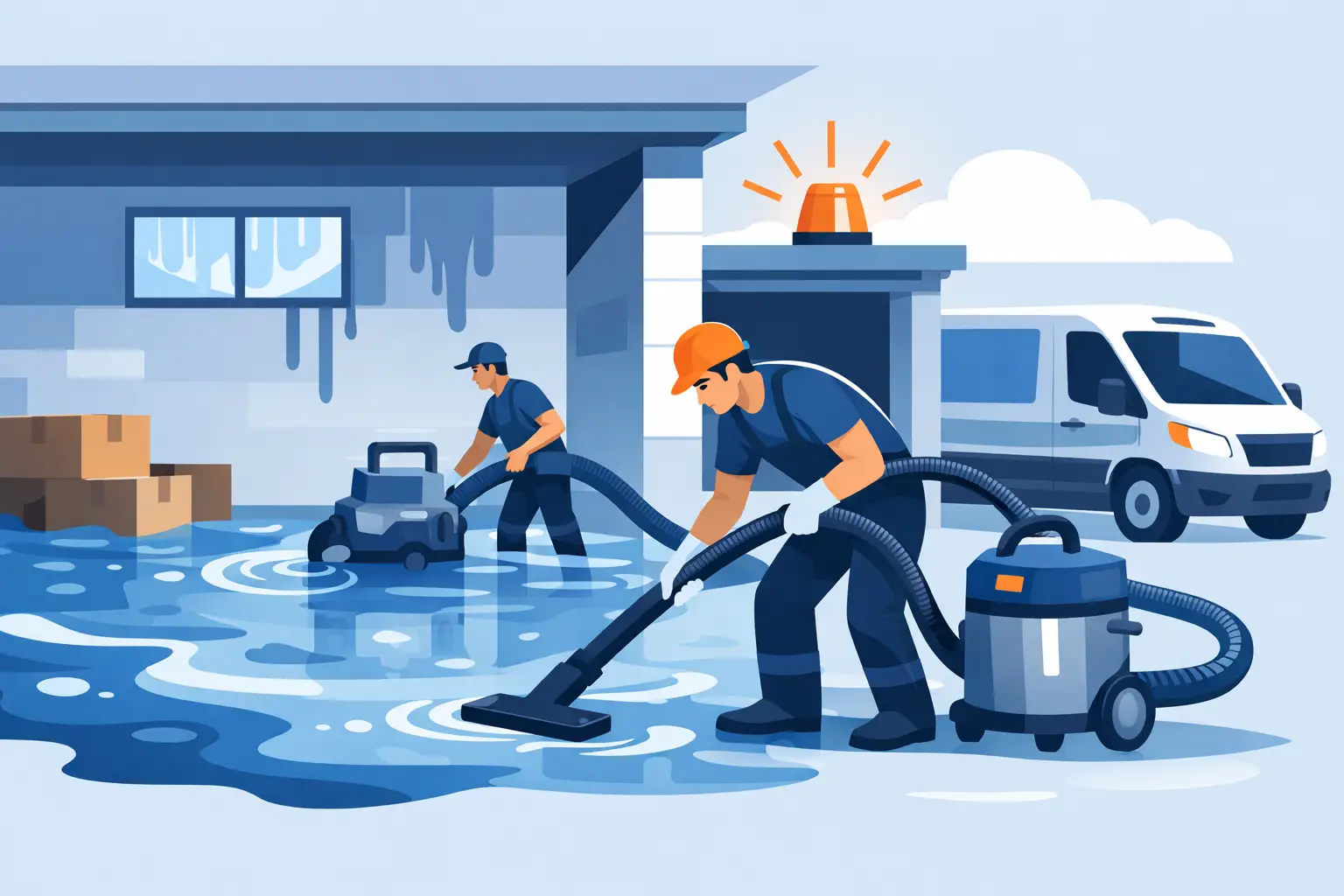
A wet basement changes the whole feel of a house fast. One minute everything is normal, and the next you are standing in water, moving boxes, checking the furnace, and wondering how much damage is spreading under your floors and behind your walls. That is when an emergency basement water extraction service matters most – not tomorrow, not after the weekend, but right now.
When water gets into a basement, the problem is rarely limited to what you can see on the surface. Carpet padding holds moisture. Drywall wicks it upward. Wood framing absorbs it. If the source was a drain backup, sewage issue, or toilet overflow, there may also be contamination concerns that change how the cleanup needs to be handled. Speed matters, but so does doing the job the right way.
What an emergency basement water extraction service actually does
Most homeowners hear the word extraction and think it only means vacuuming up standing water. That is part of the job, but it is not the full picture. A real emergency response starts with finding the source, stopping active intrusion when possible, assessing the affected materials, and removing water with equipment built for serious indoor flooding.
After that, the work shifts to moisture control. This is where many smaller cleanup efforts fall short. Water can stay trapped in subfloors, wall cavities, baseboards, insulation, and stored contents long after the floor looks dry. Professional drying equipment, moisture readings, and a clear drying plan help prevent the next wave of problems, especially mold growth and structural deterioration.
For homeowners in Mason and nearby communities, this kind of service is less about convenience and more about protecting the house from escalating damage. A basement flood that sits for even a short time can affect air quality, electrical safety, and the usability of the entire lower level.
Why fast basement water extraction makes a real difference
There is a small window between water intrusion and secondary damage. Once that window starts closing, cleanup becomes more expensive, more invasive, and more disruptive.
The first issue is material damage. Drywall softens, trim swells, carpet backing separates, and furniture begins to stain or warp. The second issue is hidden moisture. Even if standing water is removed quickly, damp materials can stay wet for days without proper drying equipment. The third issue is microbial growth. In a basement, where ventilation is often limited, that risk increases fast.
That does not mean every flooded basement turns into a major tear-out. It depends on how much water entered, how long it sat, what materials were affected, and whether the water was clean, gray, or contaminated. But the longer water remains, the fewer options you usually have for saving materials.
Common reasons homeowners need emergency basement water extraction service
Some basement floods are dramatic, and some start quietly. A sump pump fails during heavy rain. A water heater lets go overnight. A supply line bursts behind a finished wall. Floor drains back up during a storm. In older homes, foundation seepage may not look severe at first, but repeated intrusion can still soak flooring, drywall, and stored belongings.
Finished basements often suffer the most because there is more to lose. Carpet, pad, trim, insulation, and lower drywall all hold moisture. Unfinished basements may look simpler, but they are not risk-free. Water around mechanical systems, stored household items, or wood framing still needs immediate attention.
This is also where the source of the water matters. Clean water from a fresh supply line is handled differently than water from a drain backup or sewage-related event. When contamination is involved, extraction alone is not enough. The affected area may need containment, removal of unsalvageable materials, cleaning, sanitizing, and targeted antimicrobial treatment.
What to expect when professionals arrive
The first priority is control. Technicians assess the source, identify any immediate hazards, and determine how far the water has traveled. If the basement has finished walls, adjoining rooms, or layered flooring, the wet area may extend farther than expected.
Next comes extraction with high-powered pumps or vacuums, depending on the water depth and layout. After standing water is removed, the drying phase begins. Air movers, dehumidifiers, and moisture-monitoring tools are used to pull water out of materials and the surrounding air. In some cases, baseboards or sections of drywall may need to be removed so the structure can dry properly.
This is where training matters. Water restoration is not guesswork. IICRC-based water damage restoration methods help guide how materials are evaluated, what can be saved, and when a more controlled remediation process is needed. If mold or sewage exposure is part of the loss, applied microbial remediation knowledge becomes just as important as extraction equipment.
Emergency basement water extraction service for finished basements
Finished basements need a more careful approach because the damage is often layered. Water may soak carpet and pad first, then move into trim, drywall, framing, and built-in cabinetry. Homeowners sometimes assume the floor is the only issue because that is where the water is visible. In reality, the lower wall system may already be saturated.
The goal is to remove as much water as possible, dry what can be dried, and avoid unnecessary demolition. But there is always a balance. Saving materials is ideal when conditions allow, yet trying to preserve wet materials too long can create bigger issues later. A good restoration team knows when drying is realistic and when removal is the safer path.
For families using the basement as a living space, playroom, office, or guest area, quick recovery also matters for daily life. The faster the moisture is controlled, the sooner the space can move toward safe use again.
Why local response matters in a basement flooding emergency
When your basement is filling with water, you do not want a company that treats your call like a ticket in a regional queue. You want a local team that knows the housing stock, weather patterns, storm impacts, and drainage problems common in Mason, West Chester, Loveland, Maineville, Liberty Township, Blue Ash, Kenwood, Montgomery, and nearby areas.
That local familiarity helps in practical ways. A nearby crew can respond faster. They understand the basement layouts common in suburban Ohio homes. They have likely seen the same sump failures, storm-driven seepage, drain backups, and humidity-related moisture issues many times before.
Kans Water Restoration is built around that kind of local emergency response. With 15 years of restoration experience, the focus is straightforward: extract the water, dry the structure, address contamination if needed, and help homeowners stop a stressful situation from getting worse.
Choosing the right emergency basement water extraction service
In an emergency, most people are not comparison shopping for long. Still, a few things matter. You want a company that handles both immediate extraction and the drying process that follows. You want trained technicians, not just someone with a wet vac and a fan. You also want a team that can address secondary issues like mold, mildew, and contaminated water when the job calls for it.
Clear communication matters too. Homeowners should understand what was affected, what can be saved, what may need removal, and what the next step looks like. The best service calls bring relief because they replace panic with a plan.
Price is part of the decision, but the cheapest response is not always the least expensive outcome. If moisture is missed, the cost can show up later in repairs, odor issues, material failure, or mold remediation. Good emergency service is about thoroughness as much as speed.
When to call
If there is standing water in the basement, wet carpet, soaked drywall, a drain backup, or a leak that has spread beyond a small isolated spot, it is time to call. The same goes for any situation involving sewage, strong odors, visible mold, or water that reached finished materials and stored contents.
Waiting to see if it dries on its own usually works against you. Basements dry slowly, and hidden moisture does not announce itself until damage becomes harder to ignore. Quick action gives you the best chance to limit repairs and get your home back under control.
If your basement has taken on water, the best next step is simple: get trained help on site, get the water out, and get the drying started before a bad day turns into a much bigger repair.

