
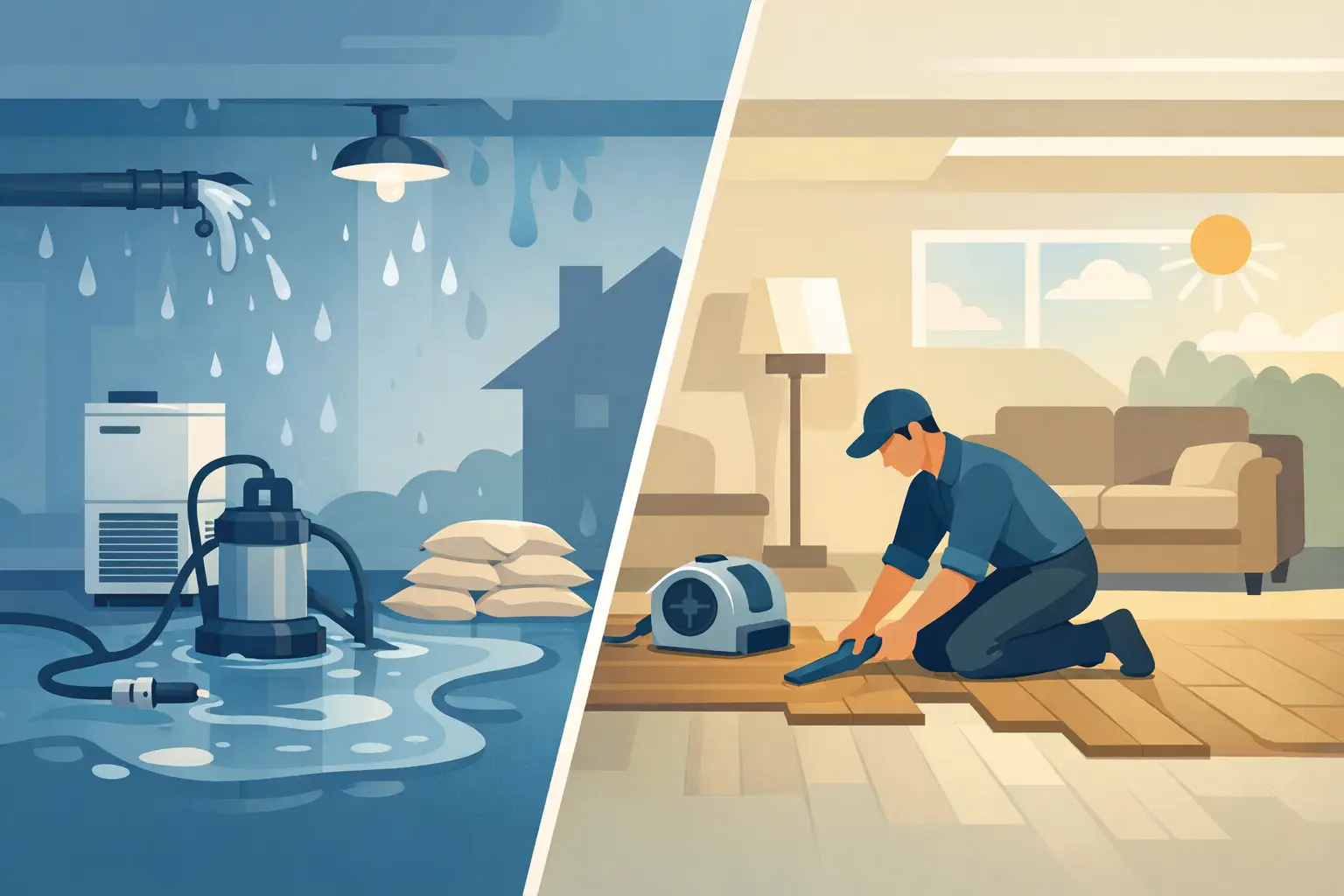
A soaked basement floor, leaking bathroom, or backed-up drain creates more than one problem. Understanding water mitigation vs restoration helps you know why a professional may begin with pumps, air movers, and moisture testing before discussing drywall, flooring, or repairs. The first job is to stop damage from spreading. The next is to put your home back together safely.
For homeowners in Mason and nearby communities, the difference matters because water moves fast. It can travel beneath flooring, behind baseboards, into wall cavities, and through insulation long before the visible puddle is gone.
What Is Water Mitigation?
Water mitigation is the emergency work performed to reduce further damage after a leak, flood, overflow, or backup. Its purpose is not to make the room look finished. Its purpose is to control the water, dry the structure, and protect the property from bigger problems such as warped materials, mold growth, and contamination.
Mitigation often begins as soon as the source of water has been stopped or isolated. If a supply line is leaking, that may mean shutting off the water. If a toilet has overflowed or a drain has backed up, the affected area may need to be contained to keep contaminated water from spreading into clean areas of the home.
A trained water mitigation crew typically removes standing water, identifies wet materials, sets drying equipment, and monitors moisture levels until the affected structure reaches a safe drying goal. This can include carpets, pad, drywall, subflooring, cabinets, insulation, and framing. What can be dried safely may be dried. Materials that are too damaged or contaminated may need to be removed.
Why fast mitigation matters
Water damage is not always obvious. A small amount of water under vinyl flooring or behind a vanity can stay trapped for days. That moisture can damage adhesives, swell wood products, stain ceilings below, and create conditions that support mold and mildew.
The timing also affects cost. A clean-water leak caught quickly may require extraction and structural drying with limited material removal. The same leak left unattended can turn into a larger repair project. With sewage backups or other contaminated water, the response must be even more careful because porous materials may not be safe to keep.
Mitigation is hands-on emergency work. It focuses on getting control of the situation when the damage is still active.
What Is Water Damage Restoration?
Water damage restoration is the broader recovery process that follows mitigation. Once the property is clean, dry, and stable, restoration addresses the repairs needed to return the affected area to its pre-loss condition.
Depending on the damage, restoration may involve replacing drywall, insulation, baseboards, flooring, trim, cabinets, or ceiling materials. It can also include painting, repairs to finished spaces, and rebuilding sections that were removed during safe drying or cleanup.
Some projects need only modest restoration. For example, a laundry-room leak may be dried before any major materials are damaged. Other losses require more extensive work, especially when water has soaked a finished basement, spread through several rooms, or remained hidden behind walls.
Restoration should not begin just because the surface looks dry. Rebuilding over wet materials can trap moisture where it cannot be seen. Professional moisture inspection and drying verification help make sure the structure is ready before repairs begin.
Water Mitigation vs Restoration: The Main Difference
The easiest way to separate water mitigation vs restoration is to think of mitigation as stopping the loss from getting worse and restoration as repairing what the loss left behind.
Mitigation deals with immediate conditions: water extraction, emergency cleanup, containment, removal of unsalvageable materials, structural drying, dehumidification, and moisture monitoring. Restoration deals with the finished repair work after drying and cleanup are complete.
Both services may be part of the same water damage job, but they do not always happen at the same time. A reliable restoration company will not rush into rebuilding while moisture remains in walls, floors, or framing. Drying comes first because it protects the quality of the repair and helps prevent secondary damage.
This is also why a homeowner should be cautious about treating water removal as the complete solution. Towels, fans, and a shop vacuum may remove visible water, but they cannot confirm whether moisture remains in concealed spaces. Professional equipment and moisture readings provide a clearer picture of what happened inside the structure.
What Happens During a Professional Water Loss Response?
Every loss is different, but the process usually starts with an inspection of the source, affected rooms, visible damage, and areas where water may have migrated. Technicians use moisture-detection tools to check materials that may appear dry on the surface.
The next step is water extraction and cleanup. Powerful extraction equipment removes standing water more efficiently than household equipment, which helps reduce the time materials remain saturated. If the water is from a toilet overflow, drain backup, or sewage event, sanitation and removal of contaminated materials become part of the immediate response.
Then comes structural drying. Air movers direct airflow across wet surfaces, while dehumidifiers pull moisture from the air and materials. Containment may be used when needed to control the drying environment or isolate affected areas. Technicians return to monitor progress, adjust equipment, and document moisture levels.
After dry standards are reached, the restoration phase can be planned. This sequence may feel slower than simply replacing damaged materials right away, but skipping the drying process can create future headaches. The goal is not just a room that looks normal. It is a home that is dry, clean, and safe to rebuild.
When Mold Remediation Becomes Part of the Job
Mold is a secondary issue, not an automatic result of every water loss. Quick extraction and proper drying can often prevent it. But when moisture has been present for an extended period, or when a hidden leak has been feeding a wall or basement area, mold growth may need to be addressed separately.
Mold remediation involves more than spraying a product on a visible spot. The affected area may need containment, removal of damaged porous materials, detailed cleaning, and moisture correction so the problem does not return. Applied microbial remediation practices are especially important when contamination is involved or when a property has experienced repeated moisture issues.
If you notice a musty odor, visible discoloration, peeling paint, soft drywall, or recurring dampness after a leak, do not assume the problem ended when the water disappeared. Those signs are worth a professional inspection.
Does Insurance Cover Mitigation and Restoration?
Coverage depends on the cause of the loss and the details of your policy. Sudden and accidental water damage, such as a burst pipe or appliance supply-line failure, may be covered under many policies. Long-term leaks, poor maintenance, groundwater intrusion, and some sewer or drain backups may have exclusions or require separate coverage.
Even when coverage is available, mitigation documentation matters. Photos, moisture records, equipment logs, and a clear description of affected materials can help show why emergency drying and cleanup were necessary. A professional company can provide the work documentation you need while you communicate with your insurance carrier.
Do not delay emergency mitigation while waiting for every insurance question to be answered. Preventing additional damage is usually the right first move, and waiting can increase both the repair scope and the stress of the claim.
Call for Help Before Water Damage Spreads
If you have standing water, wet carpet, a leaking ceiling, a toilet overflow, or a damp basement that will not dry out, treat it as an active property issue. Move valuables out of the affected area if it is safe, avoid electrical hazards, and do not walk through sewage-contaminated water.
Kans Water Restoration provides professional water cleanup, structural drying, mold remediation, and sewage cleanup for homeowners and businesses throughout Mason and surrounding Ohio communities. With experienced technicians and industry-standard water damage restoration methods, the focus is on getting the water out, finding hidden moisture, and helping you move forward with a clean, dry property.
The most helpful step is usually the earliest one: get the water assessed and drying started before a manageable leak becomes a larger restoration project.

