
A wall can look dry long before it actually is. After a supply-line leak, roof leak, toilet overflow, or basement seepage, moisture can stay trapped behind paint, inside insulation, and along the framing. If you are wondering how to dry walls after a leak, the first priority is stopping the water source and finding out how far the moisture traveled.
A fan pointed at a wet wall may help the surface feel better, but it does not confirm the wall cavity is dry. That is where hidden damage begins. Wet drywall and insulation can support mold growth, lose structural strength, and leave a musty odor that returns weeks later. Fast, measured drying is the safest way to protect your home.
Start by Stopping the Leak and Protecting the Area
Before any drying can work, the water source must be under control. Shut off the water if a plumbing line is leaking, place containers under an active drip, and contact a plumber when the repair is beyond a simple shutoff. If water came from a toilet overflow, drain backup, or sewage line, keep people and pets away from the affected area. That water may contain contaminants and should not be handled as a standard clean-water leak.
Move furniture, rugs, boxes, and other belongings away from the wall if it is safe to do so. Do not pull soaked carpet or remove baseboards if there is a chance of electrical exposure. Turn off power to affected rooms at the breaker when water is near outlets, switches, appliances, or wiring. Safety comes first, especially in basements and bathrooms where moisture can travel along floors and behind finished walls.
The type of water matters. A small leak from a clean supply line may be manageable if it was caught immediately. Water from an appliance discharge, exterior flooding, a backed-up drain, or sewage overflow requires a more cautious response. Contaminated water can make porous materials, including drywall and insulation, unsafe to save.
Why Walls Are Harder to Dry Than They Look
Drywall acts like a sponge. It can wick water upward from a wet floor and hold that moisture behind its painted surface. Insulation inside an exterior or interior wall can remain wet even after the drywall feels dry to the touch. Wood framing also absorbs moisture, although it can often be dried and saved when addressed quickly.
This is why visible water stains are only part of the picture. A leak from an upstairs bathroom may affect the ceiling below, wall cavities, flooring, baseboards, and insulation. A slow pipe leak can create damage in a narrow area for months before a stain appears.
Professional restoration technicians use moisture meters and thermal imaging tools to locate wet materials that cannot be identified by sight alone. These readings help determine whether drying equipment is working and whether portions of drywall, insulation, or trim need to be removed. Guessing can leave moisture sealed into the wall.
How to Dry Walls After a Leak the Right Way
Drying walls after a leak usually involves more than opening windows and running household fans. The proper process depends on the amount of water, how long materials were wet, the source of the water, and whether the wall contains insulation.
For a very small, clean-water leak caught within a few hours, drying may be possible without opening the wall. Air movement, dehumidification, and controlled indoor temperatures can reduce moisture while the area is monitored. However, the wall should still be checked for softness, swelling, discoloration, bubbling paint, or a continuing musty smell.
When drywall is saturated, swollen, or soft near the bottom, removing the damaged section is often the better choice. Wet drywall can break down quickly, and wet insulation loses its ability to dry effectively inside a closed cavity. Opening the wall allows air to reach framing and prevents a hidden moisture pocket from remaining behind a fresh coat of paint.
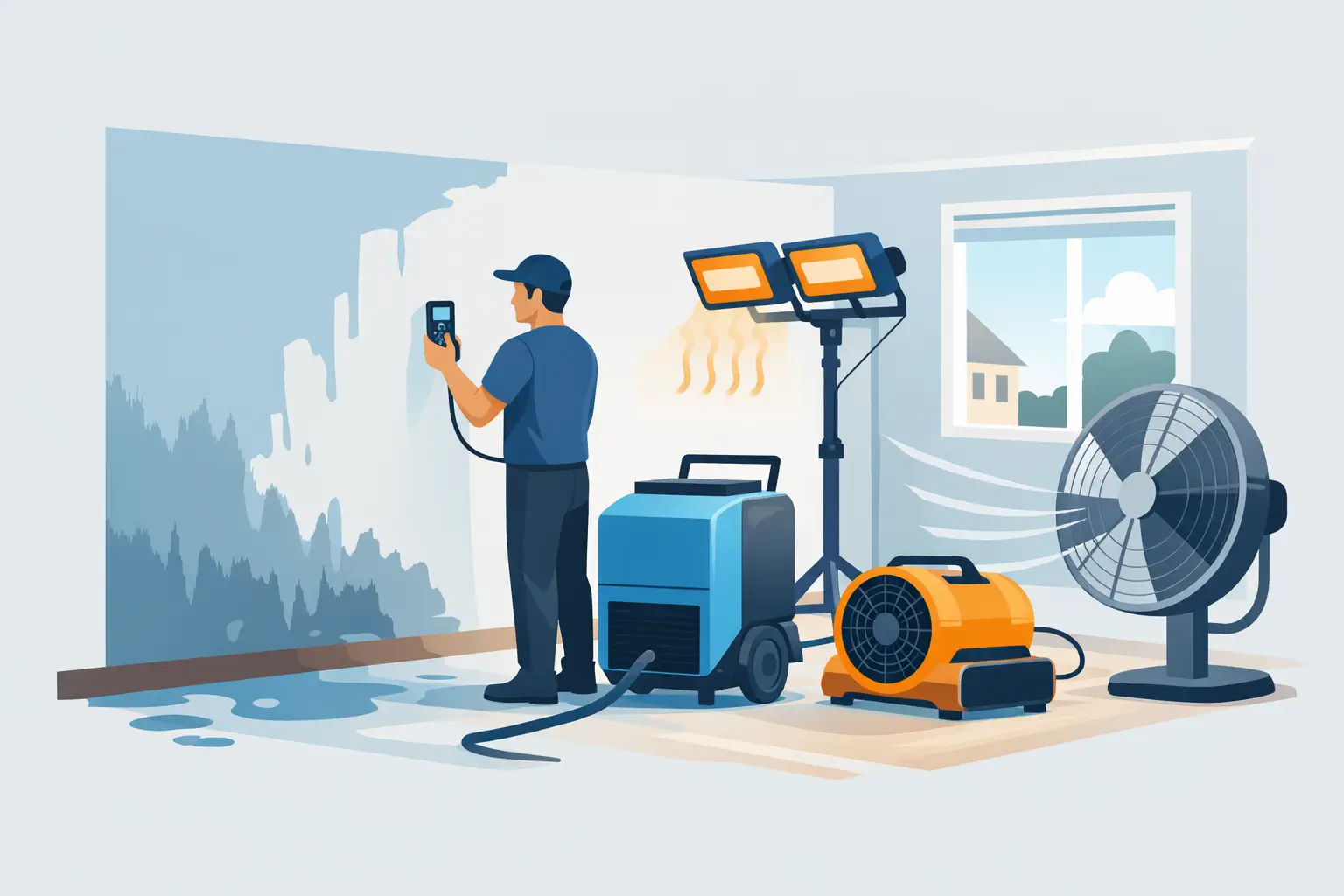
A professional structural drying setup may include high-volume air movers, commercial dehumidifiers, containment when needed, and specialty drying equipment for wall cavities. The goal is not simply to make the room feel dry. It is to bring affected materials back to an acceptable moisture level and verify the result with readings.
Do Not Cover Up Water Damage Too Soon
One of the most expensive mistakes after a leak is repainting, patching, or reinstalling trim before the wall is dry. New paint can trap moisture. New baseboards can hide swelling drywall and microbial growth. Flooring installed against damp walls may absorb moisture from below and create a second repair problem.
Watch for warning signs that drying is incomplete: paint that bubbles or peels, drywall that feels soft, baseboards that swell, stains that grow darker, recurring odors, or condensation in the room. These symptoms do not always appear immediately. Mold can begin growing in as little as 24 to 48 hours when moisture and organic material are present.
If the leak affected a wall shared with a bathroom, laundry room, kitchen, or basement, be especially careful. These areas often have enclosed plumbing, insulation, cabinets, or flooring that can make moisture harder to detect and dry.
When to Call a Water Restoration Company
A homeowner can often wipe up a small spill. A leak that wets drywall, flooring, insulation, or a ceiling is different. Calling for professional help is the practical choice when water has been present for more than a few hours, the affected area is larger than a small spot, the source is unknown, or there is any possibility of contaminated water.
You should also call if the wall is bulging, crumbling, or visibly wet; if water reached electrical components; if there is a moldy or musty smell; or if the leak happened in a finished basement, bathroom, or room with carpet and insulation. These are situations where hidden moisture is common and delays can increase the repair cost.
Kans Water Restoration provides water cleanup, structural drying, mold remediation, and sewage cleanup for homeowners in Mason and nearby communities. Our trained technicians assess the damage, extract water, identify moisture behind walls and floors, and dry the structure using industry-standard equipment and methods. With 15 years of restoration experience, we know that quick action can make the difference between a focused repair and a larger rebuild.
What Professional Drying Looks Like
A proper restoration visit begins with an inspection of the affected room and nearby areas. Technicians identify the likely water source, classify the type of water, inspect walls and floors, and document moisture readings. This creates a drying plan based on the actual conditions in your home rather than a one-size-fits-all approach.
Water extraction comes next when standing water, wet carpet, or saturated materials are present. Removing liquid water quickly lowers the drying time. Technicians may remove damaged baseboards, drill small access points, or make controlled drywall cuts when needed to reach wet wall cavities. These steps can feel disruptive, but they may prevent mold and preserve more of the surrounding structure.
Air movers and dehumidifiers are then placed to create controlled airflow and remove moisture from the air. Equipment is monitored and adjusted as materials dry. Final moisture readings help confirm that walls, framing, and other affected materials have reached drying goals before repairs move forward.
Protect Your Home Before Mold Gets a Foothold
The best time to deal with wet walls is immediately after the leak is found. Do not wait for a stain to spread or an odor to develop. If you cannot tell whether the wall is dry inside, treat that uncertainty seriously.
A fast inspection and professional drying plan can protect your home, your belongings, and your peace of mind. When water gets behind the walls, getting it dry the right way is the repair that helps everything else go back to normal.

