
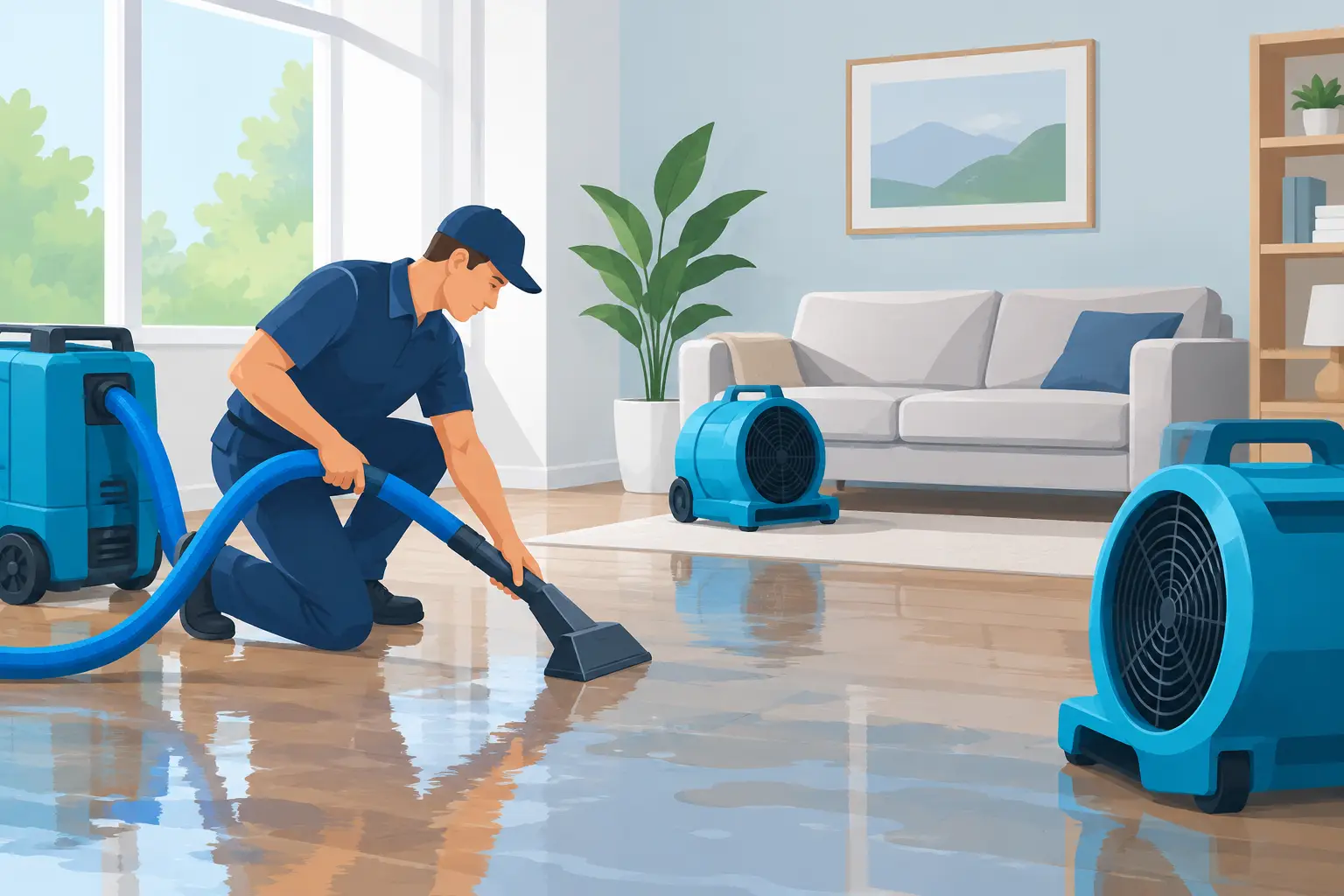
Water can move from a basement floor into framing, drywall, insulation, and flooring long before it looks like a major problem. This guide to emergency property drying explains what should happen after a flood, pipe leak, toilet overflow, or drain backup – and why getting qualified help quickly can protect your home from larger repairs and mold growth.
For homeowners in Mason and nearby Cincinnati communities, the first hours matter. The goal is not simply to remove visible water. It is to find where moisture traveled, dry affected materials correctly, and make sure the home is safe to occupy.
What Emergency Property Drying Really Means
Emergency drying is a controlled restoration process that begins with stopping the water source and removing standing water. From there, trained technicians assess the affected rooms, measure moisture in building materials, set drying equipment, and monitor conditions until the structure reaches an acceptable dry standard.
A wet carpet may be obvious. Damp drywall behind a baseboard, water under vinyl flooring, soaked insulation, and moisture in a subfloor are easier to miss. Those hidden areas are often where odor, staining, material failure, and mold problems begin.
The right approach depends on the source of the water, how long it sat, the materials affected, and whether contamination is present. A clean supply-line leak is handled differently from a sewage backup or toilet overflow. Both need prompt action, but contaminated water may require removal of affected porous materials and more detailed cleaning.
The First Steps After Water Gets Into Your Home
Start by protecting people before protecting property. If water is near outlets, appliances, electrical panels, or sagging ceilings, stay out of the area until it can be evaluated safely. Do not walk through sewage-contaminated water, and keep children and pets away from the affected space.
If it is safe to do so, stop the source. Shut off a leaking valve, turn off the main water supply for a burst pipe, or stop using a toilet or drain that has backed up. For a roof leak, place a container under the drip only if doing so does not put you near electrical hazards or a weak ceiling.
Then call a local restoration professional as soon as possible. A shop vacuum, towels, and household fans may remove a small amount of water from a hard surface, but they do not confirm whether walls, floors, or insulation are dry. In a basement flood, bathroom overflow, or leak that reached finished materials, professional extraction and moisture inspection are usually the safer call.
Before moving items, take photos and video for your insurance claim. Document the source if you can do so safely, the standing water, damaged belongings, and affected rooms. Avoid throwing away damaged materials until your insurer and restoration provider have had the opportunity to document them, unless they create an immediate safety or sanitation concern.
Why Fast Drying Prevents Bigger Damage
Water damage does not pause after the visible puddle is gone. Wood can swell, engineered flooring can separate, drywall can soften, and wet insulation can hold moisture against framing. In a humid Ohio summer, conditions inside a wet room can support microbial growth surprisingly quickly.
Speed matters, but drying must also be deliberate. Turning up the heat or placing a few fans in a room can sometimes make conditions worse by pushing humid air into other parts of the house. Professional drying uses the right combination of air movement, dehumidification, temperature control, and containment when needed.
Technicians also look for moisture migration. Water follows gravity, but it can also wick upward through drywall, move beneath flooring, and travel through wall cavities. A leak from an upstairs bathroom may show up as a stain below, while the larger wet area sits behind the ceiling or under the bathroom floor.
A Guide to Emergency Property Drying: What Professionals Do
A proper water-damage response starts with an inspection, not a guess. Restoration technicians identify the category of water involved, locate affected materials, and determine what can be dried versus what should be removed. Industry-standard moisture meters, thermal imaging tools, and hygrometers help reveal moisture that cannot be seen from the surface.
The next priority is extraction. Removing standing water and excess moisture from carpet, pads, floors, and other materials shortens the drying time and reduces secondary damage. In many cases, carpet padding needs to be removed because it retains water and does not dry reliably after significant saturation.
After extraction, technicians place commercial air movers and dehumidifiers based on the size of the space, the wet materials, and current humidity conditions. Equipment is not simply dropped off and left running. It must be positioned to create effective drying conditions without spreading contaminated dust or moisture to unaffected rooms.
Daily or scheduled monitoring is a major part of the process. Technicians check moisture readings in drywall, wood framing, subfloors, and other affected materials. They adjust equipment as conditions change and document progress. Drying is complete when materials meet appropriate dry goals, not when the room merely feels dry to the touch.
Kans Water Restoration brings 15 years of hands-on experience to emergency extraction, structural drying, and cleanup for homeowners and businesses in the Mason area. Trained technicians use IICRC-informed water restoration and microbial remediation practices to address both the immediate water problem and the conditions that can lead to mold.
When Water Damage May Need Mold or Sewage Cleanup
Not every water event calls for mold remediation, but delayed drying can create conditions where mold develops. A musty smell, visible spotting, warped baseboards, recurring condensation, or a leak that went unnoticed behind a wall are reasons to have the area inspected. Spraying a household cleaner on visible spots does not solve moisture trapped inside porous materials.
Sewage backups and overflows require a different level of care. Wastewater can contain bacteria and other contaminants that make cleanup unsafe for homeowners. Porous items such as carpet padding, insulation, and some drywall may need to be removed, while hard surfaces require detailed cleaning and disinfection. Do not rely on fans alone after a sewage event, since they can spread contaminants beyond the original area.
The same caution applies to floodwater that entered from outside. Its condition can change quickly, particularly if it has traveled through soil, drains, or other contaminated areas. The source determines the cleanup plan.
Common Mistakes That Delay Recovery
Homeowners often do their best to act quickly, but a few understandable choices can add time and cost to the restoration. Waiting to see if the area dries on its own is one. By the time a wet wall smells musty or flooring starts to buckle, water may have already affected materials that are harder to save.
Another mistake is closing up the room too soon. Reinstalling baseboards, replacing flooring, or painting over a water stain before moisture readings confirm dry conditions can trap moisture in the assembly. The repair may look finished for a while, then fail later.
Be careful about moving wet belongings into a garage, spare bedroom, or unfinished basement without considering airflow and contamination. Contents may be salvageable, but they should be evaluated and dried in a way that does not create a second problem elsewhere in the home.
What to Expect From Your Restoration Visit
A professional emergency response should give you a clear picture of the problem and the plan. You should understand where water was found, which materials are affected, what equipment is needed, and whether any demolition or specialty cleaning is recommended.
The timeline varies. A small, clean-water leak caught quickly may dry in a few days. A finished basement with wet carpet, drywall, insulation, and cabinetry can take longer, especially if materials need removal. Contaminated water, hidden leaks, and older moisture damage may add cleanup steps before rebuilding can begin.
Ask for documentation of moisture readings and drying progress, especially if you are working with an insurance carrier. Good records help show the scope of the loss and support decisions about repairs. Most of all, do not let uncertainty keep you from making the call. A quick inspection can tell you whether you have a minor cleanup or moisture that needs immediate attention.
When water enters your home, the best next step is a fast, professional evaluation. Getting the structure dry now can spare your family the disruption of mold, odors, damaged finishes, and avoidable repairs later.

