
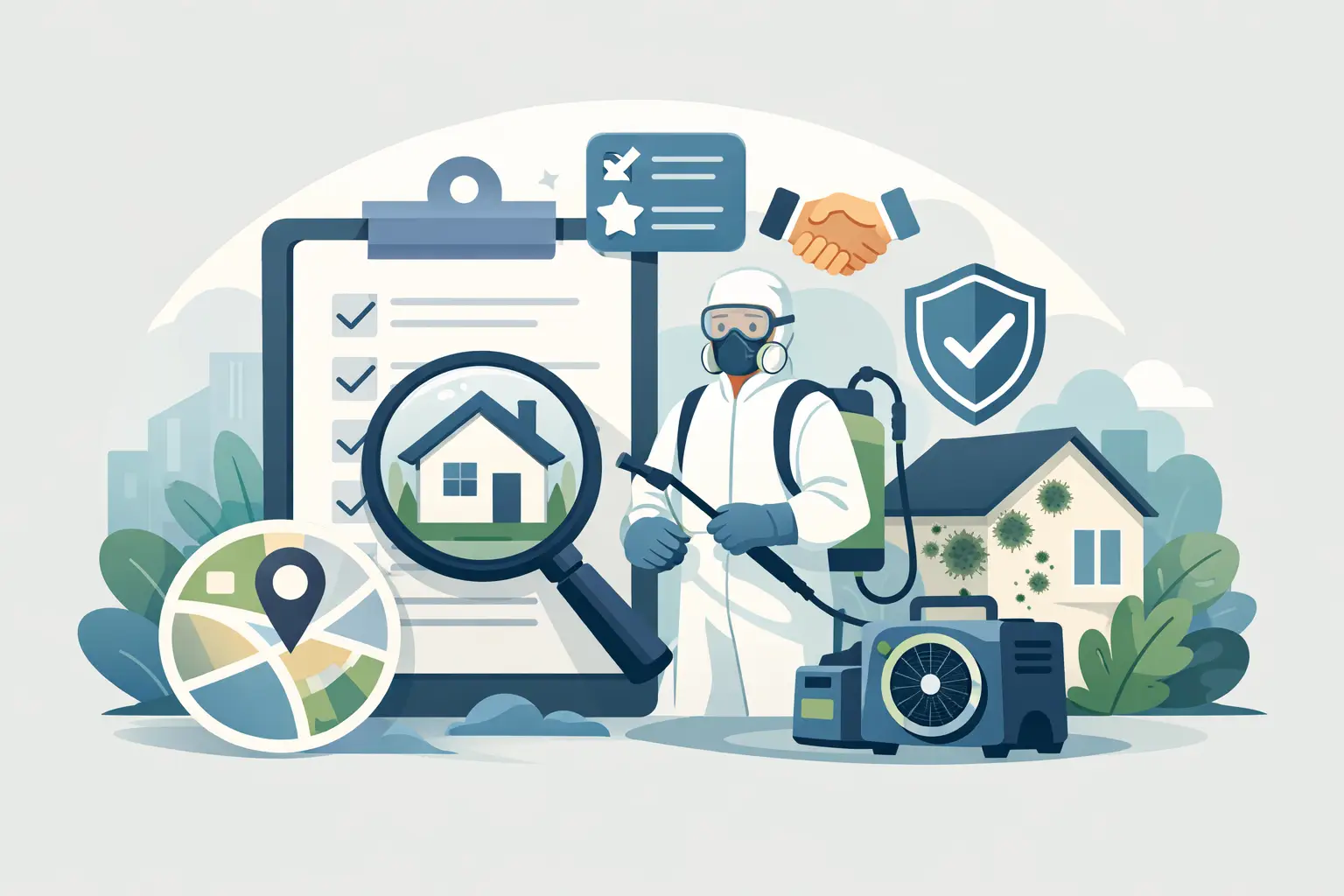
That dark patch behind a bathroom vanity or the musty smell coming from the basement usually means the problem is already bigger than it looks. If you are searching for mold remediation near me, you probably do not need a science lesson. You need a local company that can find the moisture source, stop the spread, and get your home back to normal as quickly as possible.
Mold problems rarely show up by themselves. In most homes, they follow a leak, a drain backup, a sump issue, a toilet overflow, or water that sat too long in drywall, flooring, or framing. That is why the right mold company is not just cleaning visible spots. They are dealing with the moisture conditions that allowed mold to grow in the first place.
What mold remediation near me should actually include
A lot of homeowners assume mold removal means spraying a product on the wall and wiping the surface clean. In real homes, especially after water damage, that is usually not enough. Mold can grow inside drywall, under flooring, behind trim, around insulation, and in the air space inside wall cavities.
A professional remediation job starts with inspection and moisture detection. The goal is to identify where the mold is, how far it has spread, and what wet materials are still feeding it. If that moisture source is left alone, the mold often comes right back.
From there, proper work may include containment, air filtration, removal of damaged materials, antimicrobial treatment where appropriate, and structural drying. It depends on the condition of the home and how long the moisture has been present. A small issue under one sink is very different from a basement affected by repeated seepage or a hidden leak behind several walls.
Why local response matters
When people search for mold remediation near me, they are usually trying to solve two problems at once. One is the mold itself. The other is time.
The longer moisture stays in a building, the more damage it can cause. Drywall softens, wood absorbs water, insulation loses effectiveness, and mold has more time to spread. A local company can often respond faster, which matters when there is still active moisture in the home or when the contamination is getting worse by the day.
Local service matters for another reason too. Homes in Mason, West Chester, Loveland, Maineville, Liberty Township, Blue Ash, Kenwood, Montgomery, and nearby communities often deal with similar issues – humid basements, bathroom moisture, storm-related water intrusion, and plumbing failures in finished living spaces. A company that works in these neighborhoods regularly is more likely to recognize the patterns and know how to address them efficiently.
Signs you should call now, not next week
Sometimes mold is obvious. More often, homeowners notice a few warning signs and hope they can wait. In many cases, waiting only increases the cleanup and repair work.
If you smell a persistent musty odor, see staining that keeps coming back, notice peeling paint near damp areas, or have had recent water damage that was not fully dried, it is time to get it checked. The same goes for visible growth around baseboards, ceiling corners, under sinks, behind toilets, near showers, or along basement walls.
You should also call quickly if the mold showed up after a flood, drain backup, or appliance leak. Those events can push water farther into materials than you realize. By the time the surface looks dry, the wall cavity or subfloor may still be holding moisture.
What to look for in a remediation company
Not every contractor handles mold issues the same way. If you are hiring someone into your home, especially during a stressful situation, you want clear answers and practical experience.
Start with whether they handle both moisture and mold. That is a major advantage, because mold cleanup without proper drying is only half the job. A company experienced in water extraction, structural drying, and microbial remediation can usually address the full situation instead of just the visible symptom.
Training matters too. Homeowners do not need every technical detail, but they should know whether the crew follows recognized restoration practices. Experience with IICRC water damage restoration and applied microbial remediation is a strong sign that the work is based on industry-standard methods rather than guesswork.
You also want a company that explains the plan in plain language. They should tell you what is affected, what needs to come out, what can likely be saved, how they plan to contain the area, and what the drying process will involve. If the explanation is vague, rushed, or focused only on spraying chemicals, keep looking.
The difference between cleanup and real remediation
This is where many homeowners get burned. Surface cleanup is not the same as remediation.
If mold is limited to a very small, accessible area with no hidden moisture, the solution may be fairly straightforward. But when mold has spread into porous materials like drywall, insulation, carpeting, or wood trim, simple cleaning often does not solve the problem. Damaged materials may need to be removed so the area can be cleaned, treated where appropriate, and dried correctly.
Real remediation is focused on source control and safe removal. It aims to reduce contamination, prevent cross-contamination to other parts of the home, and create dry conditions that do not support future growth. That takes more than a bottle of cleaner and a fan.
How water damage and mold go together
In our line of work, mold is often the second problem, not the first. A homeowner may call about a flooded basement, a toilet overflow, a failed supply line, or a slow leak behind a wall. The water gets cleaned up, but if materials are not dried thoroughly and quickly, mold can begin to develop.
That is why fast response matters so much. Removing standing water is only the beginning. Floors, wall cavities, trim, insulation, and structural materials need to be assessed and dried with the right equipment. If not, the visible damage may be only part of what is going on.
This is also why a restoration company is often a better fit than a basic cleaning service. A restoration team is built to deal with wet materials, moisture mapping, air movement, dehumidification, and removal of damaged building components. Mold remediation works best when it is tied directly to that broader recovery process.
What homeowners can expect during the job
A good remediation job should feel organized, not chaotic. The crew should inspect the affected areas, explain the findings, and outline the next steps before major work begins. If the contamination is more than minor, they may isolate the area to help keep spores from moving into unaffected rooms.
Depending on the damage, the process can include removing compromised drywall, insulation, trim, or flooring, cleaning and treating exposed structural surfaces as needed, and setting drying equipment to bring moisture levels down. The exact plan depends on where the mold is located, how widespread it is, and whether the original water issue is still active.
There is always a balance between speed and thoroughness. Homeowners want the job done fast, and that is reasonable. But cutting corners usually creates repeat problems. The best companies move quickly while still following a process that protects the rest of the home.
Choosing a company you can trust nearby
When your house smells off, walls look suspicious, or a recent leak has turned into something worse, you do not want a company that treats your call like a routine appointment. You want responsive service, straightforward communication, and technicians who know how to deal with both the mess you can see and the moisture you cannot.
That is what local homeowners look for when they call Kans Water Restoration. They want someone nearby who understands emergency response, knows how to handle water and mold problems together, and shows up ready to work.
If you are comparing companies, pay attention to how they talk to you on the phone. Do they ask good questions? Do they understand the urgency? Do they sound prepared to inspect, contain, dry, and remediate, not just wipe down a surface? Those early conversations usually tell you a lot.
Mold issues have a way of getting more expensive, more invasive, and more disruptive the longer they sit. If something in your home looks wrong or smells wrong, trust that instinct and get it checked before a small moisture problem turns into a bigger restoration job.

