
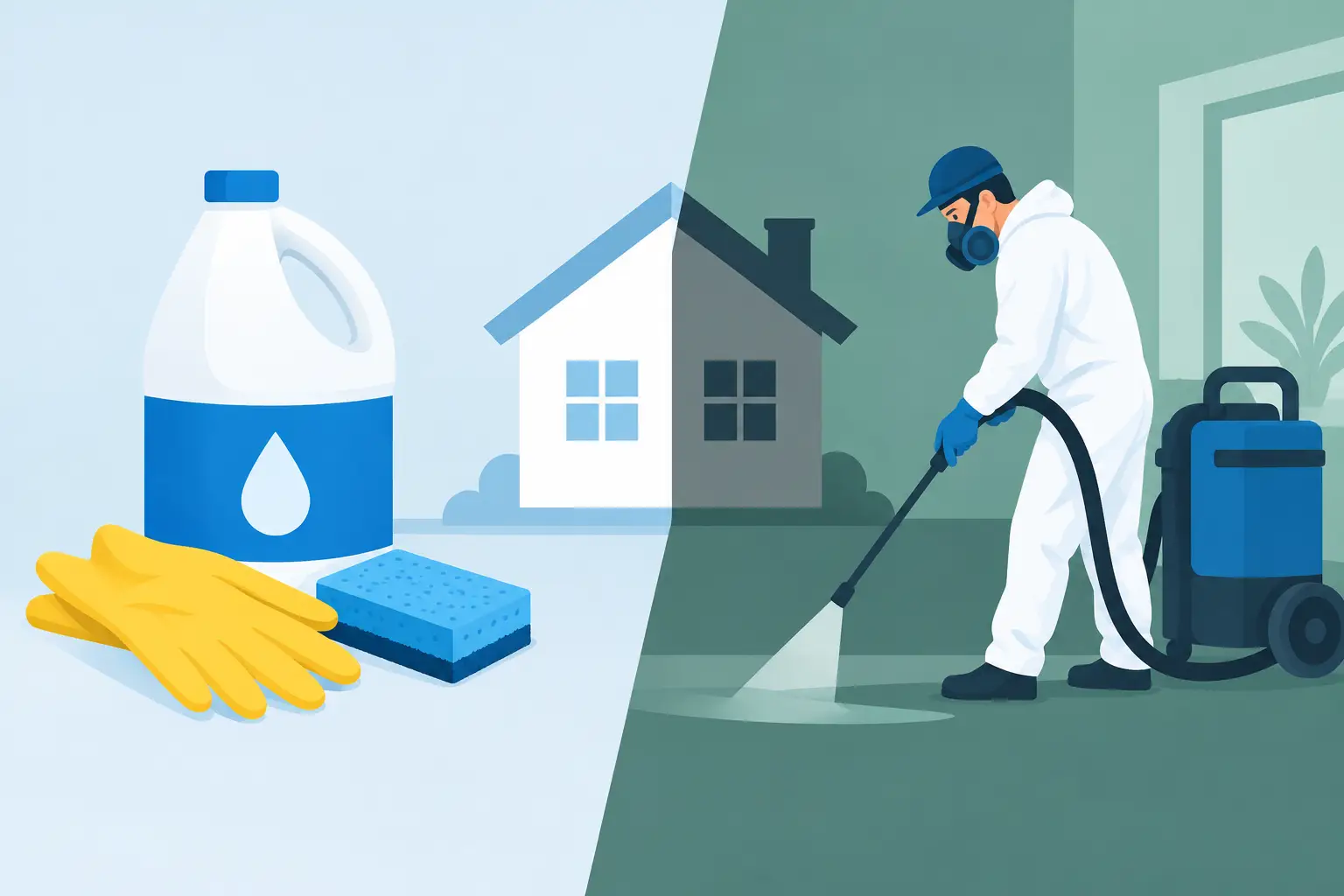
A dark spot on a basement wall or a musty smell after a bathroom leak can make bleach look like the fastest answer. But bleach versus professional remediation is not really a question of which product is stronger. It is the difference between wiping what you can see and finding the moisture, contamination, and damaged materials that may still be affecting your home.
For a small, surface-level mark on a nonporous item, cleaning may be reasonable. When water has entered drywall, insulation, carpeting, subflooring, or framing, bleach is not a restoration plan. The right response depends on where the water went, how long it sat, and whether mold or sewage is involved.
Why Bleach Is Not a Mold Remediation Plan
Bleach is a household cleaner. It may lighten discoloration on hard, nonporous surfaces such as tile, glass, or certain sealed materials. That does not mean it removes an established mold problem from a house.
Mold needs moisture and a material it can use for food. Drywall paper, wood framing, carpet backing, insulation, ceiling tiles, and dust all provide places for mold to grow. These porous or semi-porous materials can hold moisture below the surface. Spraying bleach on the visible area may change its appearance while leaving the damp material and mold growth behind it.
That is why a spot may seem gone for a few days or weeks, then return. The underlying issue was never corrected. A slow plumbing leak, wet foundation wall, poorly dried flood, condensation problem, or drain backup may still be feeding the growth.
Bleach can also create a false sense of security. If the stain fades, a homeowner may assume the area is dry and safe. Meanwhile, moisture can remain inside a wall cavity, beneath flooring, or in basement materials where it continues to cause damage.
There is also a safety concern. Bleach fumes can be irritating in enclosed spaces, and bleach should never be mixed with ammonia, acids, or other cleaning products. Mixing household chemicals can produce dangerous gases. If you are dealing with visible mold across a large area, contaminated water, or a strong ongoing odor, spraying more chemicals is not the next step.
Bleach Versus Professional Remediation: What Is Different?
Professional remediation starts with the cause, not the stain. A trained restoration crew looks for the source of moisture, identifies affected materials, and determines how far water or microbial growth may have traveled. The work is built around removing the conditions that allow damage to continue.
After a pipe break, toilet overflow, appliance leak, or basement flood, water often moves farther than expected. It can wick up drywall, spread beneath laminate or vinyl flooring, soak insulation, and collect along baseboards. A room may feel dry at the surface while building materials remain wet behind it.
Professional equipment helps locate and address that hidden moisture. Moisture meters, thermal imaging, air movers, dehumidifiers, and controlled drying methods allow technicians to dry structural materials properly instead of relying on open windows, fans, or guesswork. Drying is documented and monitored so the home is not put back together while moisture is still present.
When mold contamination is found, professional remediation may include containment to keep particles from spreading to clean areas of the home. Affected porous materials may need to be removed when they cannot be cleaned and dried effectively. Technicians then clean remaining structural surfaces using methods suited to the material and condition, rather than treating every situation like a bathroom countertop.
This is especially important in occupied homes. A rushed cleanup can spread dust and mold particles into hallways, bedrooms, HVAC pathways, or other rooms. Proper containment, careful removal, and cleanup are intended to limit that unnecessary spread.
Water Type Changes the Job
Not all water damage is equal. Clean water from a supply line may be less contaminated at the start, but it can still create a mold problem if it is not extracted and dried quickly. Water from a washing machine overflow, leaking refrigerator line, or rain intrusion still deserves attention when it reaches building materials.
Gray water from sources such as a dishwasher discharge or some appliance overflows can carry contaminants. Black water, including sewage backups and toilet overflows involving waste, requires far more caution. It can contain harmful bacteria and other contaminants that should not be handled with a bottle of bleach and a towel.
Carpet, padding, drywall, insulation, and personal contents exposed to sewage may need specialized cleaning, removal, or disposal based on the level of contamination. The goal is not simply to make the room smell better. It is to remove contaminated materials, clean affected surfaces, dry the structure, and return the area to a safe condition.
If sewage has entered a basement, bathroom, or finished living area, keep children and pets out of the affected space. Avoid running fans that could spread contamination, and do not try to save soaked porous materials before the area has been properly assessed.
When Surface Cleaning May Be Enough
There are situations where a homeowner can clean a minor issue without a full remediation project. A small amount of mildew on shower tile, a hard plastic storage bin, or a sealed surface can often be cleaned if there is no water-damaged material behind it and the source of humidity has been corrected.
The key is that the surface must be nonporous, the affected area must be small, and the problem must not be recurring. Improve ventilation, repair drips, and dry wet surfaces promptly. If the same staining or odor keeps coming back, assume there is a moisture issue worth investigating.
A professional assessment is the safer choice when you notice any of the following:
- A musty odor that remains after cleaning or appears in a closed room
- Visible mold on drywall, wood, carpet, ceiling materials, or insulation
- Water stains, bubbling paint, warped flooring, or soft drywall
- A leak, flood, or backup that was not professionally dried
- Mold growth returning after bleach or household cleaning
- Any sewage contamination or water that has soaked finished materials
These signs do not always mean a major demolition project is required. They do mean the problem should be evaluated before hidden damage gets worse.
The Cost of Delaying the Right Work
Homeowners often reach for bleach because they want to keep a small problem from becoming an expensive one. That instinct makes sense. The trouble is that covering up visible growth can delay the drying and repair work that actually prevents larger damage.
A damp wall can lead to damaged insulation, deteriorating drywall, peeling paint, warped trim, and a larger mold area. Wet carpet padding can hold water long after the top of the carpet feels dry. A slow bathroom leak can affect flooring, the subfloor, and the ceiling below before anyone sees a major stain.
Early remediation is often more controlled than waiting until the damage is obvious. Quick water extraction, targeted drying, moisture monitoring, and removal of unsalvageable materials can protect more of the home. It can also reduce the disruption of a larger repair later.
For commercial properties, delay can create additional concerns. Moisture and mold can interrupt operations, affect tenant spaces, damage inventory, and create avoidable cleanup costs. The same principle applies: find the source, control the spread, and dry the structure correctly.
What a Professional Restoration Team Should Address
A reliable restoration response is practical and methodical. The crew should identify the water source, inspect the affected area, extract standing water when needed, and measure moisture in materials that may have been impacted. If mold is present, the work should focus on containment, safe removal or cleaning, and correction of the moisture condition.
Technicians trained in IICRC water damage restoration and applied microbial remediation practices understand that every loss has different conditions. A clean-water pipe leak caught within hours is not handled the same way as a week-old basement flood. A small bathroom moisture issue is not handled the same way as sewage in a finished basement.
At Kans Water Restoration, the priority is to help homeowners in Mason and nearby communities move from a wet, stressful situation to a clean and properly dried home. That means addressing the water and the materials it affected, not simply treating the visible symptom.
Do Not Let a Clean Smell Make the Decision
Bleach has a place as a household cleaner, but it cannot tell you whether drywall is dry, whether insulation is contaminated, or whether mold is growing behind a wall. A fresh chemical smell is not proof that the source of damage is gone.
If water has entered your home, you see recurring mold, or you are dealing with a backup or leak, act while the affected area is still manageable. A prompt professional inspection can give you a clear picture of what needs to be dried, cleaned, removed, or restored – and let you get back to using your home with confidence.

