
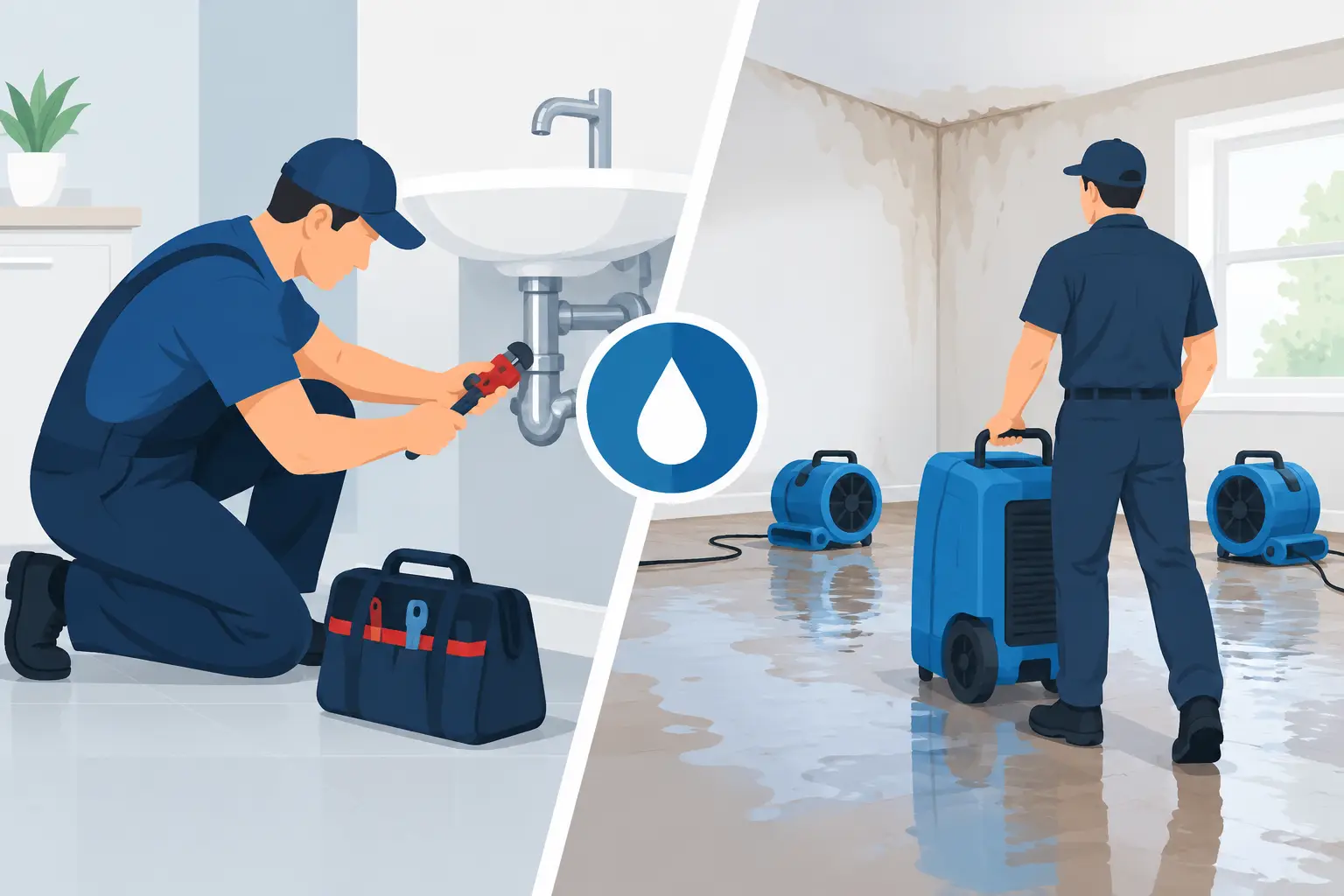
A toilet overflows at 11 p.m., water spreads across the bathroom floor, and the ceiling below starts to stain. In a plumber versus restoration company situation, the right answer is often not one or the other. You may need a plumber to stop the source and a restoration team to protect the home from the damage already underway.
That distinction matters. A pipe can be repaired in an hour while water remains trapped under flooring, inside walls, or beneath a vanity. If that moisture is not removed and dried correctly, a straightforward plumbing problem can turn into damaged materials, odors, mold growth, and a much larger repair bill.
Plumber Versus Restoration Company: The Key Difference
A plumber fixes the mechanical problem. They repair broken supply lines, clear clogged drains, replace failed fixtures, address sewer line issues, and restore water flow. Their job is to stop water from coming in or backing up.
A restoration company handles what the water did to the property. That includes water extraction, moisture inspection, structural drying, removal of unsalvageable materials, sewage cleanup, odor control, and mold remediation when contamination or prolonged moisture is involved.
Think of it this way: the plumber repairs the cause. The restoration company manages the consequences.
For a small leak caught quickly on a hard, dry surface, a plumber may be all you need. For water that reached carpet, baseboards, drywall, cabinets, insulation, subflooring, or a finished basement, restoration service should be part of the response. The longer moisture sits in building materials, the less likely those materials are to dry without damage.
Call a Plumber When the Water Source Is Still Active
If water is actively flowing from a pipe, appliance connection, fixture, or drain, stop it if you safely can. Shut off the local supply valve or the home’s main water valve when necessary. Then call a plumber to diagnose and repair the failure.
Plumbers are the first call for a burst pipe, failed water heater connection, leaking toilet supply line, persistent drain clog, broken garbage disposal line, or a sewer issue that needs repair. They have the tools and licensing needed to address the plumbing system itself.
Do not assume the repair ends the emergency. Once the source is stopped, look at where the water traveled. Water follows gravity, runs behind baseboards, wicks into drywall, and collects below finished surfaces. A bathroom overflow may affect the room below even when the bathroom floor looks mostly dry.
When water has reached more than a small, easily dried area, arrange for a restoration assessment right away. Fast action can reduce the amount of demolition and replacement needed later.
Call a Restoration Company When Water Has Reached Materials
Water damage restoration is about finding and removing hidden moisture, not simply vacuuming visible water. Professional technicians use moisture meters, thermal imaging when appropriate, air movers, dehumidifiers, and commercial extraction equipment to dry affected areas based on actual conditions.
Call a restoration company when you have standing water in a basement, soaked carpeting, wet drywall, buckled flooring, ceiling stains, water under cabinets, or a leak that may have been present for days or weeks. These are signs that moisture may be inside the structure.
A restoration team can also document affected areas, set up drying equipment, monitor moisture levels, and help determine whether materials can be saved. Drywall, carpet padding, insulation, and engineered flooring do not all react to water the same way. The proper response depends on the water source, how long the area was wet, and what materials were affected.
Kans Water Restoration provides emergency water cleanup and structural drying for homeowners and businesses in Mason and nearby communities, with trained technicians focused on getting moisture out before secondary damage takes hold.
Sewer Backups and Toilet Overflows Often Require Both
A drain backup or overflowing toilet is one of the clearest cases where calling only a plumber can leave an unfinished job. The plumber may clear the blockage or repair the failed line. But if wastewater reached flooring, walls, personal items, or HVAC areas, the property needs professional cleaning and remediation.
Sewage-contaminated water can carry bacteria and other contaminants. It should not be treated like clean water from a broken supply line. Porous materials such as carpet padding, insulation, and some drywall may need to be removed because they cannot be reliably cleaned after contamination.
Keep people and pets out of the affected area. Avoid using fans from around the house, which can spread contaminants or push moisture into other spaces. If the backup is ongoing, do not keep flushing or running water into the plumbing system.
A proper response addresses both sides of the problem: repair the drain or sewer issue, then clean, disinfect, remove contaminated materials where needed, and dry the structure. Technicians trained in IICRC water damage restoration and applied microbial remediation practices can help make sure the cleanup is handled with the right level of care.
What Happens If You Only Call a Plumber?
There is nothing wrong with calling a plumber first when a plumbing failure is active. The mistake is assuming a repaired pipe means the home is dry.
Water can remain under vinyl flooring, inside a wall cavity, beneath a shower pan, or behind kitchen cabinets without obvious puddles. A musty smell, peeling paint, swollen trim, soft drywall, warped flooring, or recurring stains can all point to moisture that was never fully addressed.
Mold can begin growing when damp conditions persist. It does not always appear as a large, visible patch right away. Sometimes the first signs are odors, discolored caulk, bubbling wall paint, or allergy-like irritation when using a particular room. If you suspect a hidden leak or mold, a restoration inspection can identify whether drying, removal, and remediation are needed.
Waiting to see if an area dries on its own is a gamble, especially in finished basements and bathrooms. Those rooms contain layers of materials and tight spaces where air does not circulate well. Professional drying is not just about running fans. It is about controlling humidity, moving air correctly, checking material moisture, and confirming the area has returned to an acceptable dry condition.
What Happens If You Call Restoration Before a Plumber?
A restoration company can begin evaluating damage, extracting water, and taking steps to limit spread, but an active plumbing failure still needs repair. If water continues entering the home, drying efforts cannot solve the root problem.
In many emergencies, the best approach is to make the calls at the same time. Contact a plumber to stop the leak, clear the backup, or repair the failed component. Contact a restoration company to begin water removal and assess the affected structure. This is especially helpful after a burst pipe, major appliance leak, toilet overflow, or basement flood.
If the cause is already resolved, such as a washing machine overflow that has been shut off, restoration can begin immediately. Do not delay extraction while waiting for every detail about the cause. Removing standing water and starting controlled drying quickly can make a meaningful difference.
How to Protect Your Home While Help Is On the Way
Your first priority is safety. Turn off electricity to affected areas only if you can do so without entering standing water. Stay away from water near outlets, electrical panels, or appliances. Do not walk through sewage-contaminated water, and keep children and pets away from the area.
If the water is clean and the area is safe, move furniture, boxes, rugs, and valuables out of the wet area. Take photos and video of the damage before moving items if you may file an insurance claim. Save damaged materials until your insurer or restoration provider advises otherwise.
Avoid pulling up flooring, opening walls, or using household fans on your own unless a professional directs you to do so. Well-intended cleanup can spread contamination, damage materials that could have been saved, or make an insurance claim harder to document. The goal is not to make the room look dry. The goal is to get the structure truly dry and safe.
The Right Call Depends on the Damage, Not Just the Leak
A plumber is essential when the plumbing system has failed. A restoration company is essential when that failure has affected the home. For many water emergencies in Mason, West Chester, Loveland, Maineville, Liberty Township, Blue Ash, Kenwood, and Montgomery, calling both is the fastest path back to a clean, dry home.
If you are unsure whether the water reached behind walls, under floors, or into a lower level, it is worth having it checked. A quick professional assessment can give you a clear next step while the damage is still manageable.

