
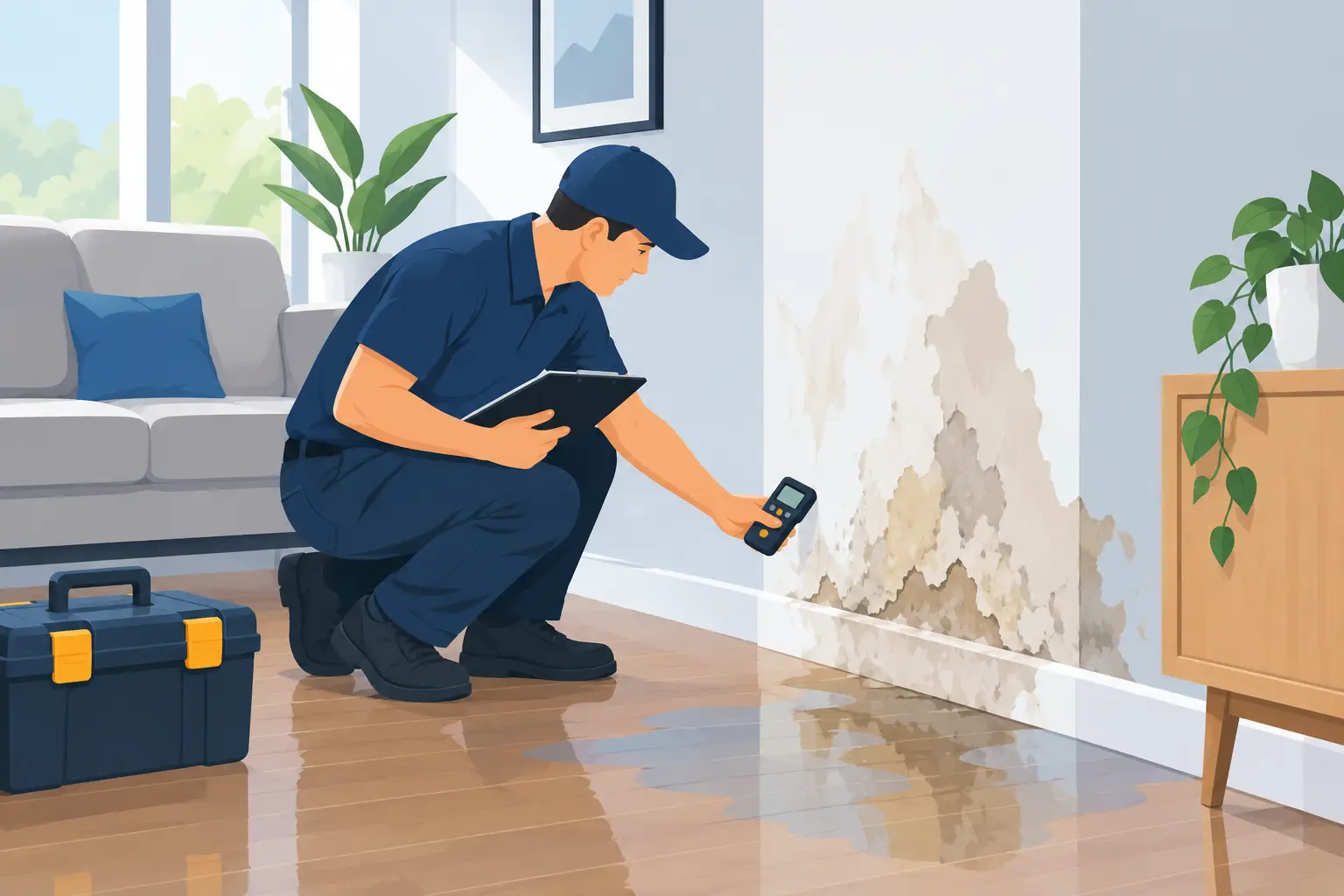
A wet basement floor or overflowing toilet can look like a simple cleanup job. The problem is that visible water is rarely the full picture. Knowing how professionals assess water damage helps explain why a trained restoration crew checks walls, flooring, contents, and air conditions before deciding what can be dried, cleaned, or removed.
For homeowners in Mason and nearby communities, a fast assessment protects more than the room where water first appeared. It can prevent swelling wood, ruined drywall, odors, mold growth, and damage that reaches the level below or behind finished surfaces.
The assessment starts with safety and the water source
Before extraction equipment comes in, technicians identify where the water came from and whether the area is safe to enter. A clean supply-line leak is handled differently than a washing machine overflow, drain backup, or toilet overflow. The source affects the cleaning process, the materials that may be saved, and the protective equipment needed.
Electricity is also a concern. Water near outlets, appliances, electrical panels, or finished basement wiring may require power to be shut off before work begins. If a ceiling is sagging, flooring is buckled, or drywall feels soft, technicians also look for structural risks before moving through the area.
Stopping the source is the first practical step. A restoration team may shut off a supply valve, recommend a plumber for an active leak, or help isolate the affected area while cleanup begins. Drying a room without addressing the cause only invites the same problem back.
How professionals assess water damage beyond what you can see
A professional inspection is not based on appearance alone. Water moves through gravity, capillary action, seams, insulation, and building materials. A small leak in an upstairs bathroom may show up as a stain downstairs, while moisture spreads far beyond that stain inside the ceiling cavity.
Technicians use moisture meters and other specialized tools to compare wet areas with dry, unaffected materials. These readings help establish how far moisture has traveled into drywall, framing, subfloors, baseboards, cabinets, carpet padding, and insulation. Thermal imaging can help locate temperature differences that suggest hidden moisture, but readings are confirmed with moisture testing rather than guessed from a camera image alone.
This is why a wall can look dry and still need attention. Drywall may wick water upward from a flooded floor. Carpet can feel dry on top while its padding and the subfloor remain wet. Water under vinyl flooring or behind baseboards can stay trapped long enough to damage materials and support microbial growth.
Mapping the affected area
Once testing begins, the crew creates a moisture map of the loss. That map identifies the source, the affected rooms, materials involved, moisture levels, and areas that require monitoring. It also provides a starting point for the drying plan.
A proper map matters for insurance documentation and for the work itself. Without clear measurements, it is easy to miss a wet closet wall, a section of insulation, or flooring that has absorbed water outside the obvious flood line. It also allows technicians to show progress as materials return toward normal moisture levels.
Water category changes the cleanup plan
Not all water carries the same health risk. Restoration professionals classify water based on its source and potential contamination. This is especially important after sewage backups, toilet overflows involving waste, appliance discharge, or outside flooding.
Category 1 water comes from a sanitary source, such as a broken water line or sink overflow with no contaminants. Category 2 water may contain chemicals, microorganisms, or other contaminants that can cause discomfort or illness. Category 3 water is grossly contaminated and may contain sewage, pathogens, or other harmful materials.
The category can change as water sits, travels through dirty materials, or mixes with contaminants. A clean pipe break that remains untreated in a finished basement for several days is not automatically a clean-water loss anymore. That is one reason quick response matters.
With contaminated water, the goal is not simply to dry everything. Porous materials such as carpet padding, insulation, particleboard cabinets, and some drywall may need removal because they cannot be reliably cleaned and restored. Hard, nonporous surfaces can often be cleaned, disinfected when appropriate, and dried. The correct choice depends on the contamination level, how long materials were wet, and the condition of the materials themselves.
Technicians evaluate the materials, not just the room
Every building material reacts to water differently. Solid wood framing may often be dried successfully if addressed quickly. Laminate flooring can swell at the seams and may not return to its original condition. Hardwood can cup or buckle but sometimes can be saved with controlled drying. Drywall may dry in place after a small clean-water loss, yet it may require selective removal if it is saturated, contaminated, or damaged.
Technicians inspect flooring, walls, trim, cabinets, ceilings, insulation, and contents separately. They look for delamination, warping, staining, odor, corrosion, swelling, and loss of structural integrity. The question is not whether an item is wet. The question is whether it can be safely and effectively restored.
This is where experience makes a real difference. Removing too much material creates unnecessary cost and disruption. Removing too little can leave damp areas behind walls or under floors, leading to odors, mold, and repeat repairs. Industry-standard water restoration methods focus on making measured decisions, not taking shortcuts.
Drying is planned, measured, and adjusted
After extraction, professionals calculate how to dry the affected structure. The equipment may include air movers, dehumidifiers, floor drying systems, air scrubbers, and specialty tools for wall cavities or hardwood floors. Equipment is chosen based on the size of the affected area, material types, humidity, temperature, and amount of moisture present.
More equipment is not always better. Too much airflow in the wrong place can create uneven drying or move contaminants. Too little dehumidification can slow the process and leave moisture trapped in materials. A trained crew sets up equipment with a purpose, then monitors conditions and adjusts the plan as drying progresses.
Daily or scheduled moisture checks are part of professional structural drying. Technicians compare readings to dry standards and verify that materials are reaching acceptable moisture levels. Drying should not be considered complete just because the surface feels dry or the equipment has been running for a few days.
Mold risk is part of every water damage inspection
Mold does not need a major flood to become a problem. A slow leak behind a vanity, wet basement carpet, damp insulation, or moisture inside a wall can provide the conditions it needs. In many cases, mold can begin growing within 24 to 48 hours when materials remain wet.
During an assessment, technicians look for visible growth, musty odors, staining, elevated moisture, and materials that have stayed damp too long. If mold contamination is present, the restoration plan may include containment, controlled removal of affected materials, cleaning, and drying according to applied microbial remediation practices.
Homeowners should be cautious about tearing into suspect mold areas without understanding what is behind the surface. Disturbing contaminated drywall or insulation can spread particles into other rooms. A professional evaluation helps determine whether the issue is limited or whether it has reached concealed areas.
What homeowners should do while waiting for help
If it is safe, stop the water source and move valuables away from the wet area. Avoid using a household vacuum on standing water, and do not enter water near electrical hazards. For a sewage backup or contaminated toilet overflow, keep people and pets away from the area and avoid trying to clean porous materials yourself.
Take a few photos for your records, but do not delay cleanup to document every detail. The sooner water is extracted and moisture is measured, the better the chance of saving materials and avoiding larger repairs.
Kans Water Restoration provides trained water damage assessment, extraction, structural drying, sewage cleanup, and mold remediation for homeowners and businesses in Mason and surrounding Ohio communities. When water gets where it does not belong, a careful inspection is the step that turns a stressful mess into a clear recovery plan.
If you see staining, smell a musty odor, find wet flooring, or discover a leak that may have been there longer than you thought, treat it as a reason to act. A professional assessment can reveal what is happening behind the surfaces and help protect the home you rely on every day.

