
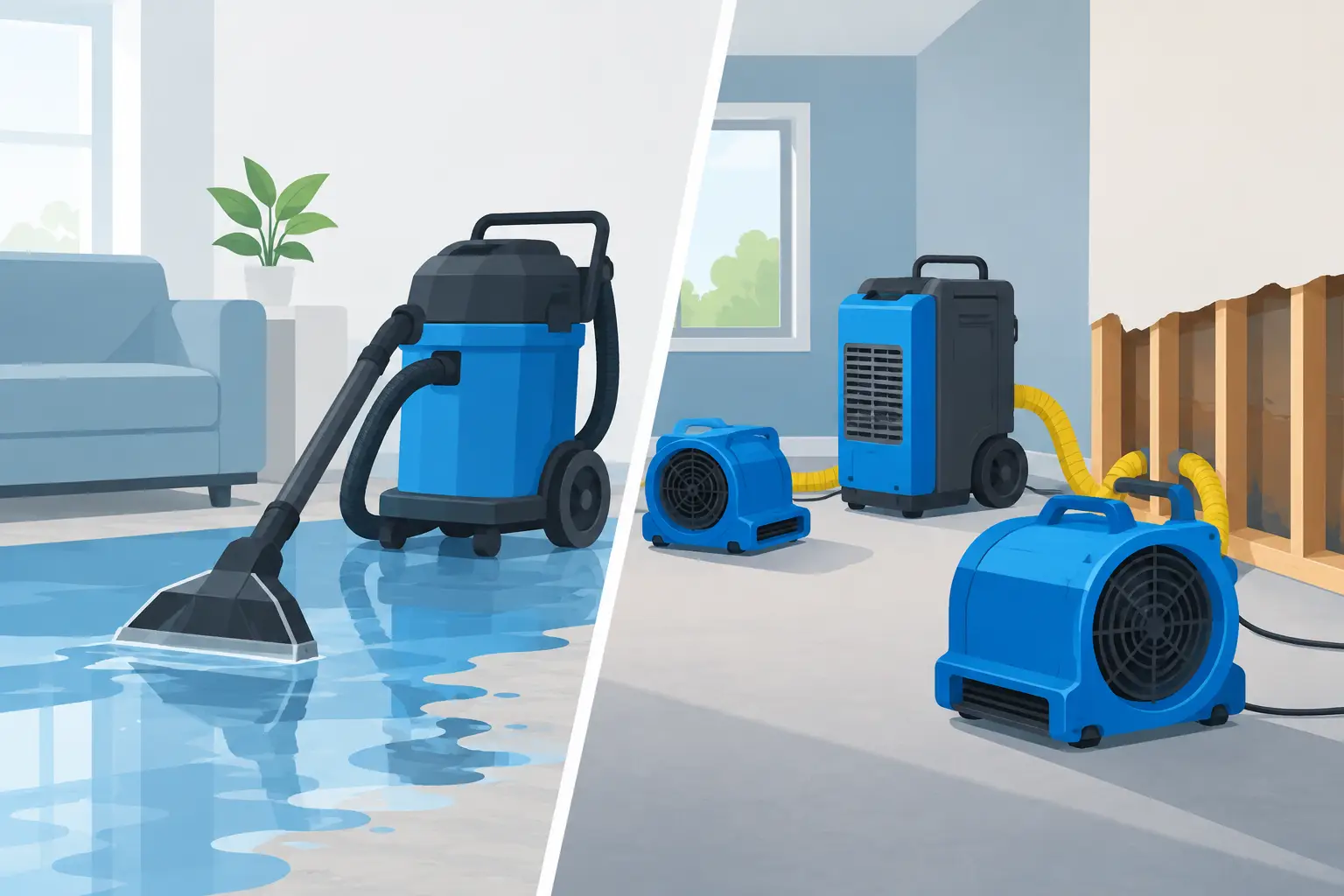
A basement floor can look dry within an hour of a cleanup, while the carpet pad, drywall, framing, and insulation behind it are still holding water. That is the real issue behind water extraction versus structural drying. They are different parts of the same recovery job, and skipping either one can leave a Mason-area home at risk for odors, warped materials, mold growth, and ongoing damage.
When water enters your home after a burst pipe, toilet overflow, appliance leak, storm flooding, or drain backup, the priority is not simply removing what you can see. The goal is to return affected materials to a safe, dry condition as quickly as possible. That takes trained assessment, the right equipment, and a clear plan for the type of water and materials involved.
What Water Extraction Does
Water extraction is the immediate removal of standing water and excess moisture from surfaces and materials. A restoration crew may use truck-mounted extractors, portable extraction units, submersible pumps, and specialized tools for carpet, padding, and hard flooring.
This is the first urgent step because standing water spreads. It can move under baseboards, wick into drywall, soak carpet backing, enter floor cavities, and travel from one room to another. The longer it remains, the more likely materials are to break down or become contaminated.
For a clean-water leak caught early, extraction may involve removing water from carpet and flooring, then evaluating how far the moisture traveled. For a flooded basement or sewage backup, the job may also require removal of contaminated materials, cleaning, and disinfection before drying can begin.
Fast extraction matters, but it does not mean the structure is dry. Think of it as removing the bulk of the water. Even a powerful extractor cannot pull all moisture out of wall cavities, wood framing, subflooring, insulation, or concrete.
When extraction needs to happen right away
Any visible pooling water should be addressed promptly. This is especially true when water is near electrical outlets, furnace equipment, finished basement walls, hardwood flooring, or stored belongings. If the source is still active, such as a leaking supply line or overflowing fixture, stop the water if it is safe to do so and call for professional help.
Water from toilets, drain backups, and outside flooding needs extra caution. It may contain contaminants that make DIY cleanup unsafe and can require more than standard water removal.
What Structural Drying Does
Structural drying is the controlled process of removing the moisture left inside building materials after extraction. It focuses on the parts of your home you cannot fully inspect with your eyes alone: wall cavities, subfloors, framing, ceilings, insulation, and the space beneath flooring.
Professional technicians use moisture meters, thermal imaging, and other testing methods to locate wet materials and establish drying goals. They then set air movers, dehumidifiers, and, when appropriate, drying systems designed for wood floors, wall cavities, or other difficult areas.
Air movers increase evaporation by moving air across wet surfaces. Dehumidifiers remove that moisture from the air so it does not settle back into materials. The equipment works together, but it must be placed and monitored correctly. Simply putting a few household fans in a damp room can move air around without actually bringing moisture levels down where they need to be.
Drying is not guesswork. Technicians should check moisture readings during the process and adjust equipment as conditions change. Materials are considered dry based on measurable standards, not because a room feels less humid or a wall feels dry to the touch.
Why hidden moisture causes bigger problems
Drywall can absorb water several inches or more above the visible water line. Carpet padding can remain saturated even after the carpet surface seems dry. Wood subfloors may hold moisture long enough to swell, cup, or weaken adhesives. In a finished basement, water can also get behind trim, beneath laminate flooring, and into insulation.
That leftover moisture creates the conditions mold and mildew need to grow. It can also cause musty odors, peeling paint, stained ceilings, loose flooring, and damage that shows up weeks after the original emergency. Proper structural drying helps prevent a small leak from becoming a larger restoration project.
Water Extraction Versus Structural Drying: Why You Usually Need Both
The difference is straightforward: extraction removes liquid water, while structural drying removes the remaining moisture trapped in your home. One step handles the emergency. The other protects the building from secondary damage.
A minor spill on a sealed tile floor may only need cleanup and basic drying. A supply-line leak that soaked carpet, baseboards, and drywall is different. That job may require extraction, moisture testing, equipment setup, daily monitoring, and selective removal of materials that cannot be dried safely.
The right approach also depends on the water category. Clean water from a broken pipe can become more contaminated the longer it sits. Gray water from appliances or overflowing fixtures may contain contaminants. Sewage and other black water events require careful containment, removal, cleaning, and disinfection before normal drying and restoration can move forward.
This is why a quick surface cleanup is not always enough. Water damage restoration is about identifying what got wet, determining what can be saved, and making sure affected areas are truly dry before repairs are closed up.
What a Professional Drying Plan Looks Like
A professional restoration team starts by identifying the water source and stopping further intrusion when possible. Next comes an inspection of the affected area, including moisture checks around floors, walls, cabinets, and nearby rooms.
Standing water is extracted, damaged contents are evaluated, and contaminated materials are handled according to the conditions of the loss. Technicians then create a drying plan based on the size of the area, the materials involved, the amount of moisture present, and indoor conditions.
During drying, equipment is monitored and moisture readings are documented. If wet insulation, swollen drywall, or contaminated carpet cannot be restored safely, those materials may need to be removed. This can feel frustrating, but selective removal is often the practical choice when it prevents mold and protects the parts of the home that can be saved.
Kans Water Restoration brings 15 years of local experience to these decisions, using industry-standard methods informed by IICRC water damage restoration practices. The focus is simple: remove the water, dry the structure, address contamination when present, and help get your home back to a clean, livable condition.
Signs Your Home May Still Need Structural Drying
Visible water is only one warning sign. You may need professional moisture assessment if you notice a musty smell after a leak, damp or soft drywall, bubbling paint, buckling floors, stained baseboards, damp carpet edges, or persistent indoor humidity in one part of the home.
Pay close attention to basements, bathrooms, laundry rooms, kitchens, and areas below a second-floor leak. Water follows gravity, but it also travels sideways through flooring layers and wall assemblies. A bathroom overflow can affect the ceiling below it. A refrigerator line leak can soak cabinets and subflooring long before it reaches the open floor.
If you had an overflow or flood and the area was cleaned but never checked with moisture-detection equipment, it is reasonable to have it evaluated. Finding hidden moisture early is usually easier and less disruptive than dealing with mold or major material damage later.
Do Not Wait for Odor or Mold
Homeowners often call after the visible water is gone but a basement starts to smell stale or drywall begins to discolor. By then, moisture may have been present for days or weeks. A fast response after a leak or backup gives drying equipment the best chance to protect your floors, walls, and belongings.
If water has entered your home in Mason, West Chester, Loveland, Maineville, Liberty Township, Blue Ash, Kenwood, Montgomery, or nearby communities, treat it as more than a cleaning problem. Get the water removed, get the structure tested, and make sure the drying process is complete before hidden moisture has time to create a second emergency.

