
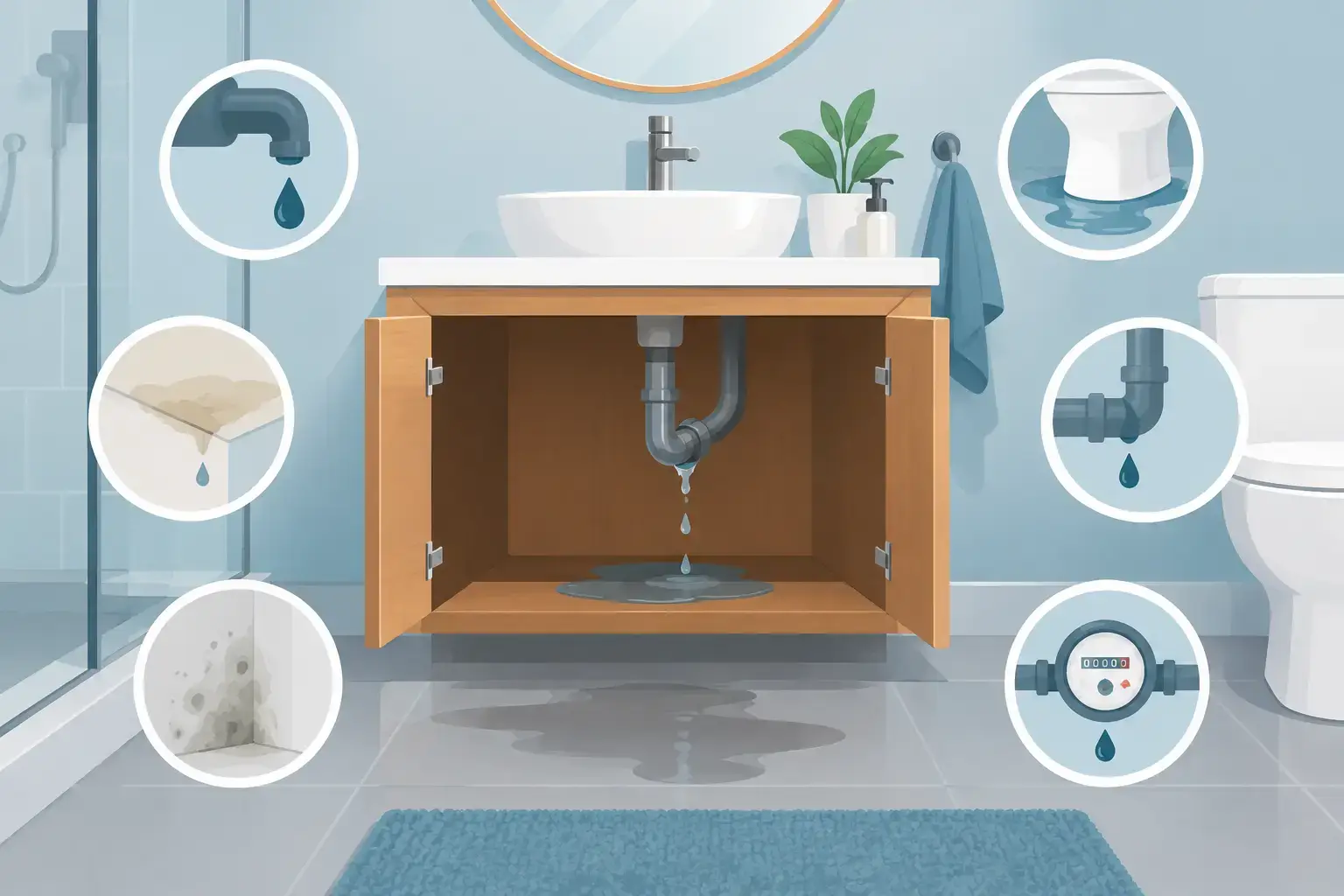
A bathroom leak rarely starts with water pouring across the floor. More often, it begins with a faint musty smell, a soft spot near the toilet, or paint that suddenly bubbles near the shower. These bathroom leak warning signs can point to moisture trapped behind walls, beneath tile, or under flooring – places where damage can grow long before it becomes obvious.
For homeowners in Mason and nearby communities, acting early can mean the difference between a targeted repair and a larger water damage and mold cleanup project. If you notice a change in your bathroom that does not look or feel right, treat it seriously.
8 Bathroom Leak Warning Signs to Watch For
1. A persistent musty odor
A bathroom should smell clean once it has aired out. If a damp, earthy, or musty odor remains after cleaning, moisture may be sitting where it cannot properly dry. Common hidden sources include a leaking shower valve, a failed toilet wax ring, a slow drain leak, or water that has worked behind tile.
Air fresheners may cover the smell for a while, but they do not address the problem. Musty odors are especially concerning when they return quickly or become stronger after a shower. That pattern can signal wet building materials and possible mold growth.
2. Soft, warped, or stained flooring
Bathroom floors take a lot of wear, but they should not feel soft, spongy, lifted, or uneven. A soft area around the toilet, vanity, tub, or shower can mean water has soaked into the subfloor. Vinyl may curl at the edges, tile grout may crack, and wood flooring can cup or discolor.
A toilet leak is one of the most common causes. Water can escape slowly from the base with each flush, travel under the finished floor, and damage the wood beneath it. By the time the flooring feels soft, the leak may have been active for some time.
3. Peeling paint or bubbling walls
Humidity from normal showers can affect paint over time, especially in a poorly ventilated bathroom. But peeling paint, bubbles, blisters, or patches that feel damp are not normal wear. They may indicate water is getting into the wall from a plumbing line, shower surround, tub overflow, or upstairs bathroom fixture.
Pay close attention to walls shared with a shower or located below a second-floor bathroom. A small visible stain can be the outer sign of a much larger wet area inside the wall cavity.
4. Discolored ceilings below the bathroom
A yellow, brown, or gray ceiling stain below a bathroom calls for quick action. Water may be leaking from a drain, supply line, toilet, tub, shower pan, or failed seal upstairs. Even if the stain looks dry, the source may still be active whenever someone showers, flushes, or runs the sink.
Ceiling drywall can hold moisture and eventually sag or collapse. It can also trap conditions that support mold. Avoid poking, cutting, or removing stained ceiling material until the water source has been identified and the area has been evaluated safely.
5. Water collecting around the toilet
Water around a toilet is never something to ignore. It may come from condensation on the tank, a loose supply connection, a cracked tank or bowl, a malfunctioning fill valve, or a failing wax seal at the base. The location and timing matter.
If water appears behind the toilet, the supply line or tank may be involved. If it appears around the base after flushing, the seal underneath may be failing. If the water is dirty, has an odor, or follows a backup, keep people and pets away from the area. A sewage-related overflow needs more than surface cleaning because contamination can spread into flooring and surrounding materials.
6. Loose tile, failing caulk, or cracked grout
Caulk and grout are part of the bathroom’s water barrier, not just cosmetic finishing details. Cracked grout, gaps around a tub, loose tile, or missing caulk where the wall meets the shower can allow water behind the surface. Repeated exposure can damage drywall, framing, insulation, and subflooring.
Recaulking can be appropriate when the issue is limited and the wall behind the surface is dry. It is not enough if tiles are loose, the wall feels soft, or a musty odor is present. Those signs can mean water has already moved beyond the surface.
7. A sudden increase in your water bill
A higher water bill without a change in household use may point to a hidden plumbing leak. Toilets are frequent culprits. A running toilet can waste a surprising amount of water, while a slow leak behind a vanity or inside a wall may cause damage without creating a visible puddle.
Check for an actively running toilet and look for water under sink cabinets. If you cannot identify the cause, a plumber can locate and repair the leak. When water has reached drywall, flooring, or other structural materials, professional drying and restoration may also be needed.
8. Mold spots or recurring mildew
A small amount of mildew on shower grout is common and often responds to routine cleaning. Mold that keeps returning, spreads beyond the shower area, appears on ceilings or walls, or grows inside cabinets is different. It can indicate an ongoing moisture problem rather than a cleaning issue.
Do not assume that visible mold is the full extent of the damage. Mold can grow behind baseboards, under flooring, and inside wall cavities where moisture has been trapped. The priority is to stop the leak, dry affected materials thoroughly, and determine whether contaminated materials need professional remediation.
What to Do When You Spot Bathroom Leak Warning Signs
First, stop the water if you can do so safely. Turn off the fixture shutoff valve under the sink or behind the toilet, or use the home’s main water shutoff if a supply line has failed. Avoid using the affected shower, tub, sink, or toilet until the source is clear. Continuing to use a leaking fixture can send more water into concealed areas with every use.
Next, remove standing water from accessible hard surfaces and move rugs, towels, toiletries, and other items away from the wet area. Do not rely on a bathroom fan, household fan, or open window to dry a significant leak. Those steps may help with surface moisture, but they cannot confirm that subfloors, wall cavities, insulation, or framing are dry.
For a toilet overflow or drain backup, avoid direct contact with the water. Do not run other fixtures connected to the same drain line, as this can worsen the backup. These situations can involve bacteria and other contaminants, so professional cleanup and disinfection are the safer choice.
When Professional Drying Is Worth It
A minor drip caught immediately may only require a plumbing repair and careful cleaning. It depends on how long the water was present, where it traveled, and what materials it reached. Water that has gone below flooring, behind a vanity, into drywall, or through the ceiling should be treated as a restoration issue, not just a plumbing repair.
Professional restoration crews use moisture meters, thermal imaging, extraction equipment, air movers, and dehumidifiers to find and dry moisture that is not visible. Proper drying helps limit swelling, warping, odors, mold growth, and avoidable demolition. An IICRC-trained team also understands how to handle water damage based on the type of water involved and the affected materials.
Kans Water Restoration helps homeowners in Mason, West Chester, Loveland, Maineville, Liberty Township, Blue Ash, Kenwood, Montgomery, and surrounding areas respond to bathroom water damage, sewage backups, hidden moisture, and mold concerns. Fast action can protect the parts of your home you cannot see.
If your bathroom has a stain that is spreading, flooring that feels soft, a recurring musty odor, or water around a fixture, do not wait for a larger failure. Shut off the source when possible, keep the area from being used, and get the moisture checked before a small leak becomes a major repair.

