
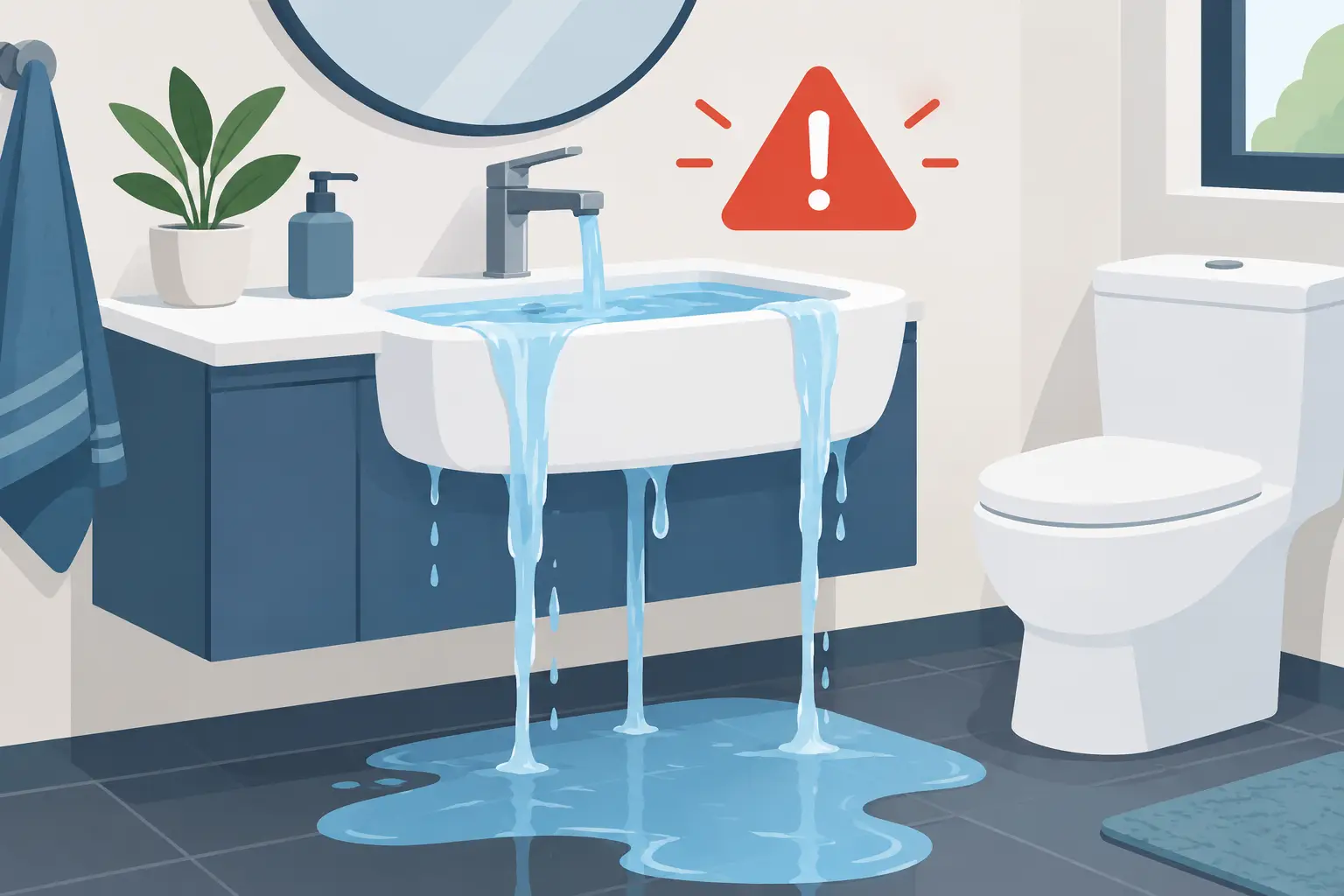
A bathroom floor can go from slightly damp to seriously damaged faster than most homeowners expect. Bathroom overflow warning signs often show up before standing water reaches the hallway, but they are easy to overlook when a toilet still flushes or a sink eventually drains. Catching the problem early can protect flooring, walls, cabinets, and the rooms below.
A recurring backup, slow drain, or damp spot is not something to watch for another week. It may be a localized clog, a failing toilet seal, a supply-line leak, or a larger drain-line problem. The right response depends on the source, but continued use of the bathroom can turn a contained issue into a water damage emergency.
Bathroom Overflow Warning Signs You Should Not Ignore
The toilet water rises before going down
A toilet bowl that fills unusually high after flushing is one of the clearest warnings of a developing blockage. If the water level pauses near the rim, drains slowly, or requires more than one flush to clear, stop flushing it. Repeated flushing is a common reason a minor clog becomes an overflow across the bathroom floor.
This can happen when paper or another item blocks the toilet trap. It can also point to a blockage farther down the drain line. If other fixtures are draining slowly too, the problem may not be limited to the toilet.
Water bubbles up in another fixture
A flushing toilet should not make water rise in the tub, shower, or nearby sink. Gurgling sounds, air bubbles, or dirty water appearing in a tub after a flush can mean the drain system is struggling to move wastewater out of the home.
Treat this as a serious warning, especially if a basement drain, laundry drain, or another bathroom is also affected. A main sewer or drain backup can spread contaminated water quickly, and using more water only adds pressure to the line.
Drains are slow in more than one place
One slow sink may be caused by hair, soap buildup, or debris close to that fixture. A slow sink, shower, and toilet in the same bathroom suggests a shared drain issue. Slow drainage throughout the house can signal a more extensive backup.
Do not assume harsh chemical drain cleaners will solve the problem. They may not reach the blockage, can damage some plumbing materials, and create a safety concern for anyone working on the line afterward. If drainage is getting worse, it is time to stop using the affected fixtures and arrange professional help.
You notice sewer odors or a persistent musty smell
A sewage odor near a toilet, tub, floor drain, or vanity can indicate a drain problem, a damaged seal, or wastewater sitting where it should not be. A musty smell may point to a slower leak behind a wall, beneath flooring, or around the toilet base.
Odors are not always caused by a major backup. A dry floor-drain trap or an unused bathroom can sometimes produce a sewer smell. Still, an odor paired with dampness, slow drains, staining, or gurgling deserves prompt attention.
The floor near the toilet feels soft or stays damp
Water around the base of a toilet is never normal. It may be from condensation or a missed splash, but it can also come from a failed wax ring, cracked toilet base, loose supply connection, or overflow that traveled under the flooring.
Watch for peeling vinyl, loose tile, warped baseboards, darkened grout, or a floor that feels soft underfoot. Those conditions can mean water has reached the subfloor. The visible water may be small while the hidden damage is much larger.
Stains appear on the ceiling below the bathroom
A brown ring, bubbling paint, sagging drywall, or damp ceiling below an upstairs bathroom is a warning that water has already escaped the room. The source could be a shower pan, toilet seal, leaking pipe, tub drain, or an overflow that reached an opening around the plumbing.
Do not wait for the ceiling to drip. Wet drywall can weaken, insulation can hold moisture, and mold can begin growing in damp materials. Quick moisture detection and structural drying can reduce how much needs to be removed and rebuilt.
When a Bathroom Overflow Is an Emergency
A clean-water supply leak and a toilet overflow do not carry the same health risk, but both can damage a home. A toilet or drain backup involving wastewater should be treated as an emergency. Keep children and pets away from the affected area, avoid contact with the water, and do not use towels, fans, or a household vacuum to handle contamination.
Call for help right away when water is spreading beyond the bathroom, sewage is present, the toilet has overflowed more than once, or water is coming through a ceiling. The same applies when multiple drains are backing up at once. These problems can worsen with every shower, flush, dishwasher cycle, or load of laundry.
What to Do Before Help Arrives
Your first job is to limit additional water, not to diagnose the entire plumbing system. Take these practical steps:
- Stop using the toilet, shower, sink, and nearby fixtures if water is backing up.
- Turn off the toilet’s shutoff valve if the toilet will not stop running or water is actively leaking from its supply line.
- Shut off the home’s main water supply for a major clean-water leak that cannot be controlled at the fixture.
- Keep people and pets out of sewage-contaminated water, and avoid touching affected items without proper protection.
- Move dry belongings away from the water path only if it is safe to do so, then take a few photos for documentation.
Do not keep flushing to see whether the toilet has improved. Do not run the shower to test a slow drain. Those small tests can add gallons of water to an already stressed line.
Why Fast Cleanup Matters After an Overflow
Water rarely stays where it first appears. It can move beneath vinyl flooring, soak into the subfloor, travel under walls, and wick up drywall. In a downstairs bathroom, it may reach adjacent rooms. In an upstairs bathroom, it may affect the ceiling, insulation, and electrical fixtures below.
The longer wet materials remain in place, the harder they are to dry. Clean water that sits too long can also become contaminated, while wastewater requires careful removal and cleaning from the start. Mold and mildew can follow when hidden moisture is left behind after the visible puddle is gone.
A surface mopping may make the bathroom look normal, but it does not confirm that the structure is dry. Professional restoration work focuses on water extraction, moisture inspection, controlled drying, cleaning, and documentation of affected materials. The goal is to prevent the secondary damage homeowners often discover weeks later.
Professional Help for Bathroom Water Damage
After the plumbing issue is stopped or contained, a trained restoration team can assess how far the water traveled. This may include checking flooring edges, walls, cabinets, ceilings below, and other concealed areas with moisture-detection equipment. The cleanup plan should match the type of water involved and the materials affected.
For sewage backups and toilet overflows, proper cleanup is about more than drying. Contaminated water may require removal of porous materials, detailed cleaning and disinfection, and applied microbial remediation methods to restore safe conditions. Industry-standard IICRC water restoration practices help guide that process.
Kans Water Restoration provides fast water extraction, structural drying, sewage cleanup, and mold remediation for homeowners in Mason, West Chester, Loveland, Maineville, Liberty Township, Blue Ash, Kenwood, Montgomery, and nearby communities. With 15 years of hands-on experience, the team can help identify hidden moisture and get the affected space moving toward a clean, dry recovery.
If you see water rising where it should be draining, treat that bathroom as off-limits until the cause is addressed. Acting early can be the difference between a quick cleanup and repairs that spread far beyond the bathroom.

