
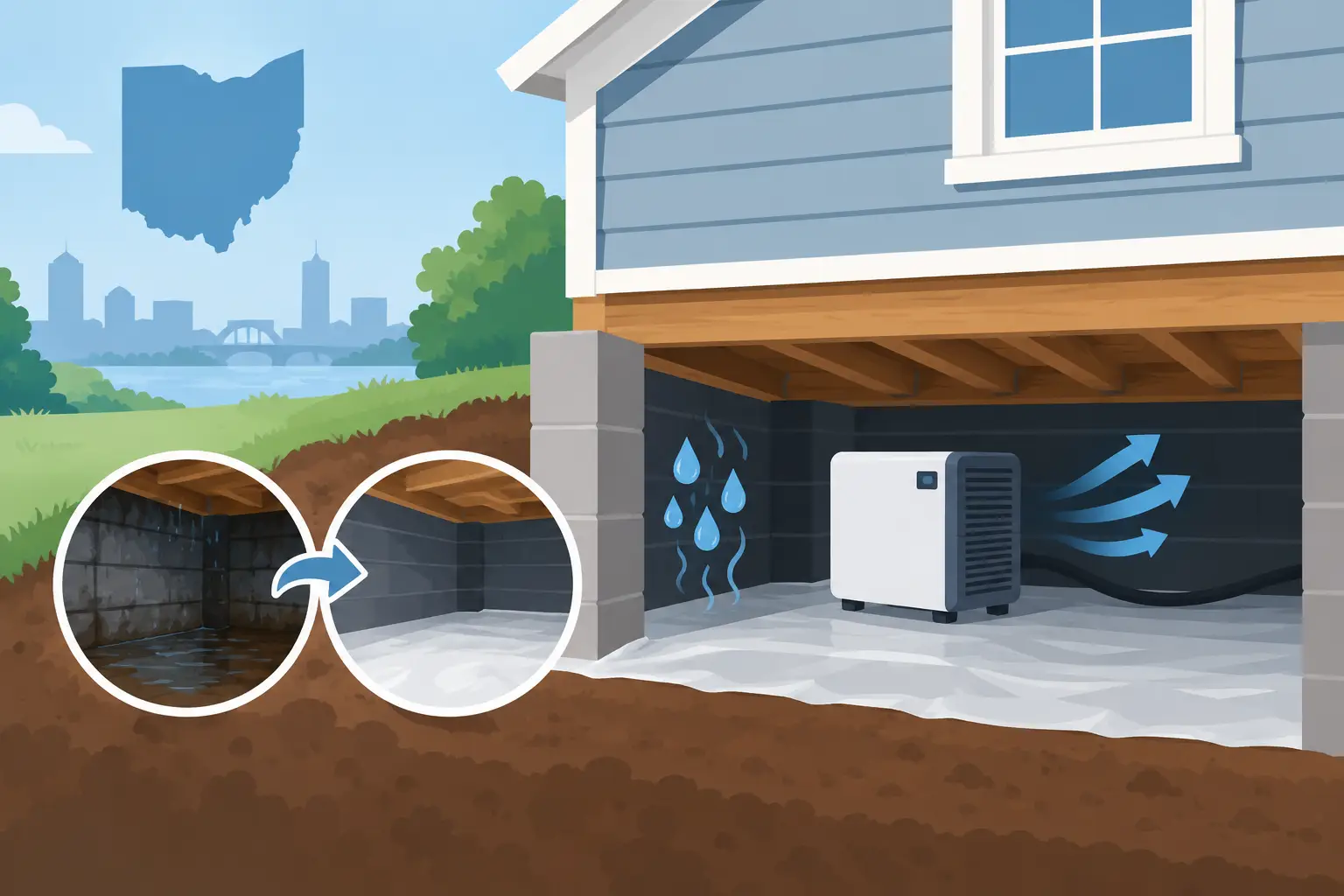
A damp crawl space rarely stays a crawl-space-only problem. Moisture below your floors can feed mold, create musty odors, attract pests, and slowly damage wood framing and insulation. Professional crawl space moisture removal addresses the water source, removes excess moisture, and helps protect the parts of your Ohio home you cannot easily see.
For homeowners in Mason and nearby communities, the warning signs often show up upstairs first: a persistent damp smell, cupping hardwood floors, cold floors in winter, higher indoor humidity, or mold around baseboards. Waiting for the odor to go away on its own can allow the underlying problem to spread.
Why Crawl Spaces Hold Moisture
Crawl spaces are naturally prone to damp conditions. They are low to the ground, often poorly ventilated, and exposed to wet soil, seasonal rain, plumbing lines, and humid summer air. In southwestern Ohio, repeated rainstorms and changing temperatures can make a small moisture issue worse over time.
Water may enter through foundation cracks, poor grading, clogged gutters, leaking exterior spigots, damaged downspouts, or groundwater pressure. A plumbing leak beneath the home can also soak insulation and subflooring before anyone notices it. In some homes, humid outdoor air enters the crawl space and condenses on cool pipes, ductwork, and framing.
The right solution depends on where the moisture is coming from. Drying a crawl space without correcting an active leak or drainage issue may provide temporary relief, but the dampness will return.
Signs You Need Crawl Space Moisture Removal
You do not need standing water to have a serious crawl space moisture problem. Damp soil, wet insulation, dark staining on wood, or visible condensation can create the conditions mold needs to grow.
Homeowners should take action when they notice musty odors that return after cleaning, soft or sagging floors, elevated indoor humidity, peeling paint, or signs of mold near floor-level walls. A dehumidifier running constantly inside the living area may also be working against moisture rising from below the home.
If there has been a toilet overflow, drain backup, burst pipe, or flood that reached the crawl space, the concern is more urgent. Water can carry contaminants into porous materials and leave hidden moisture behind. Sewage-contaminated water requires proper cleanup procedures, removal of affected materials when necessary, and careful drying.
What Professional Moisture Removal Involves
Crawl space cleanup is not simply placing a fan near an access door. Effective drying requires access, moisture measurement, air movement, dehumidification, and attention to the source of water intrusion.
A trained restoration team starts by inspecting the crawl space and surrounding areas. Technicians look for standing water, wet insulation, damaged vapor barriers, visible microbial growth, plumbing leaks, foundation seepage, and signs that moisture has reached subflooring or structural framing. Moisture meters and thermal imaging can help identify damp materials that do not look wet on the surface.
When water is present, extraction comes first. Depending on the conditions, this may involve pumps, wet vacuum extraction, or other specialized equipment. Saturated insulation, damaged vapor barriers, and contaminated debris may need to be removed so the space can dry properly.
Industrial air movers and dehumidifiers are then positioned to lower moisture levels in the air and materials. The goal is not to make the crawl space feel dry for an afternoon. It is to dry affected structural components to appropriate levels and reduce the conditions that support mold and mildew.
Mold Risks Below the Floor
A crawl space can be an ideal place for mold growth because it is dark, humid, and often left undisturbed. Mold can develop on floor joists, subflooring, insulation paper, stored materials, and debris. Even when growth remains below the home, airborne particles and odors can move into living spaces through gaps around plumbing, ductwork, and flooring.
Not every dark mark on framing is active mold, and not every damp crawl space needs the same scope of work. That is why an inspection matters. If mold is found, proper remediation focuses on containing the affected area, removing or cleaning impacted materials as appropriate, and correcting the moisture condition that allowed growth in the first place.
Painting over stained wood or spraying a fragrance into the crawl space does not solve a moisture problem. Neither does installing a dehumidifier while leaving a leak, drainage failure, or soaked insulation untreated.
When Encapsulation May Make Sense
Some crawl spaces benefit from a new vapor barrier or full encapsulation after water removal and drying. Encapsulation can reduce moisture moving up from the soil and can help create a more controlled environment below the home.
However, it is not the first answer for every property. A vapor barrier installed over wet ground or damp framing can trap a problem rather than resolve it. The crawl space should be inspected, cleaned, and dried first. Any active water entry issue should be addressed before the space is sealed.
For homes with recurring humidity, exposed soil, or a history of water intrusion, a restoration professional can help determine whether drying alone is enough or whether a more permanent moisture-control plan is needed. The best approach depends on drainage, foundation condition, insulation, ventilation, and the extent of damage.
Why Fast Drying Protects Your Home
Moisture moves quickly through porous materials. Wood framing can absorb water, insulation can lose effectiveness, and damp conditions can weaken flooring systems over time. The longer moisture remains in place, the greater the chance of mold growth, odors, and more expensive repairs.
Fast response also matters after a plumbing failure or storm event. What starts as a wet crawl space can affect subfloors, walls, ductwork, and indoor air quality if it is not handled correctly. Professional equipment and monitoring make it possible to dry areas that ordinary household fans cannot reach effectively.
Kans Water Restoration provides practical water cleanup, structural drying, and mold remediation support for homeowners facing crawl space moisture and other hidden water damage concerns. With trained technicians and industry-standard restoration methods, the focus is on getting the affected area clean, dry, and safe to move forward.
What to Do Before Help Arrives
If you can safely access the area, avoid walking through standing water, especially if electrical wiring, appliances, or sewage may be involved. Do not enter a crawl space with a strong odor, visible mold growth, or contaminated water without proper protective equipment.
Turn off the water supply if a leaking pipe is the cause and you can do so safely. Move belongings away from affected areas above the crawl space if moisture has begun to impact flooring or walls. Avoid using bleach, household fans, or store-bought moisture absorbers as a substitute for professional drying when there is visible water, contamination, or suspected mold.
Taking a few photos from a safe location can be useful for documentation, but do not delay cleanup to investigate the problem yourself. Hidden water damage gets harder to correct as time passes.
Get Help With a Damp or Flooded Crawl Space
A musty smell, wet insulation, or damp floor framing is your home telling you something needs attention. Whether the issue came from a slow leak, heavy rain, a backed-up drain, or high humidity, the priority is finding the moisture source and drying the structure correctly.
If your crawl space is damp, flooded, or showing signs of mold, call for professional assessment before a hidden problem turns into damaged floors or unhealthy indoor conditions. A prompt inspection can give you a clear path forward and help you protect your home from the ground up.

