
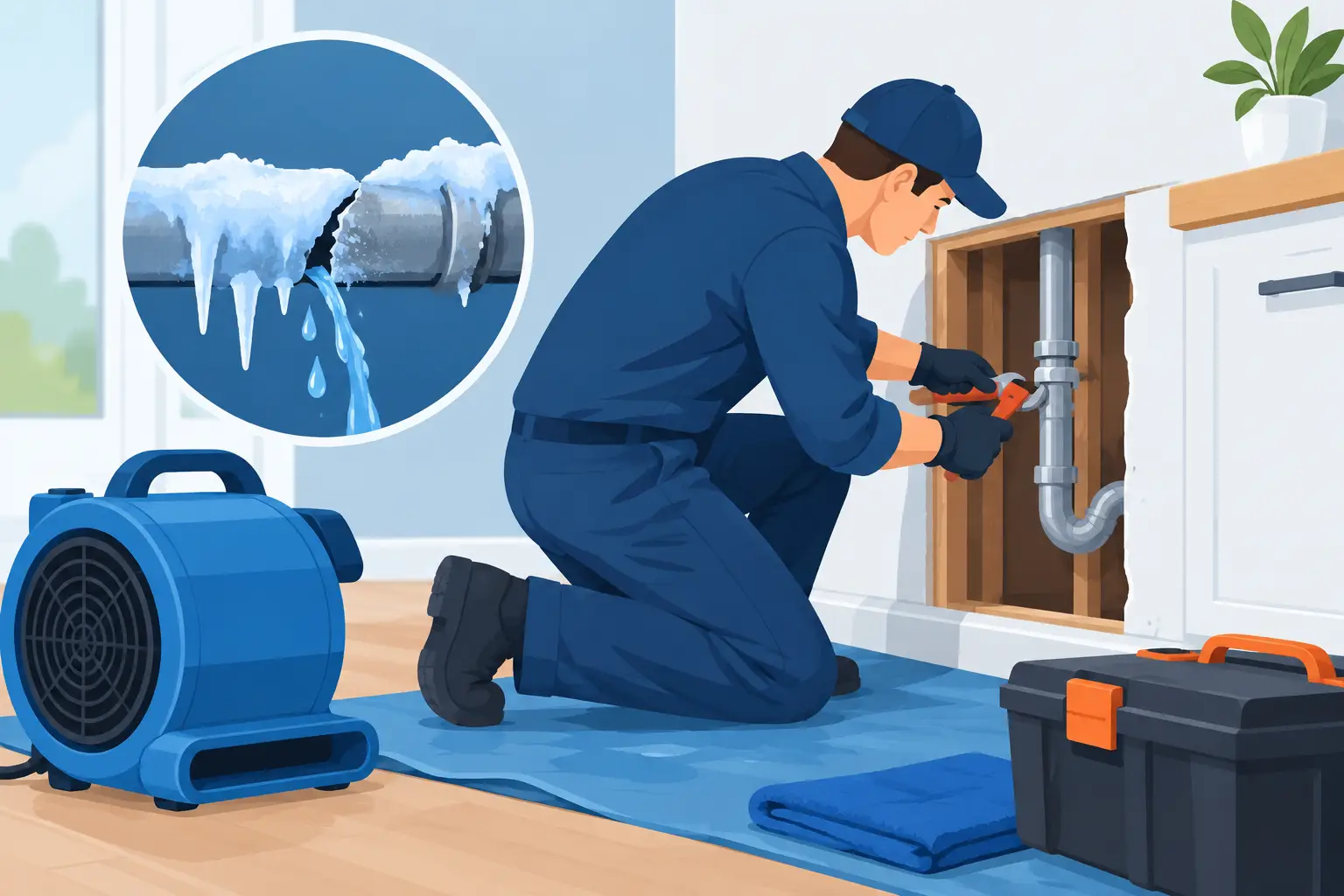
A frozen pipe can turn into a major water emergency the moment temperatures rise. What looks like a small split in a supply line can release gallons of water into a basement, bathroom, kitchen, wall cavity, or ceiling before anyone notices. Fast frozen pipe water damage repair is about more than removing standing water. It means stopping the source, drying the structure, and preventing mold from taking hold behind finished surfaces.
For homeowners in Mason and nearby Cincinnati communities, winter pipe breaks often happen in the areas that are hardest to inspect: unfinished basements, exterior walls, crawl spaces, garages, utility rooms, and vacant rooms. The faster the response, the better the chance of saving flooring, drywall, cabinets, insulation, and personal belongings.
What to Do When a Frozen Pipe Bursts
First, shut off the main water supply to the home if it is safe to do so. If water is near electrical outlets, appliances, the electrical panel, or ceiling fixtures, stay clear of the area and turn off power only if you can do it safely. Do not step into standing water where electrical hazards may be present.
Move furniture, rugs, boxes, and other belongings away from the wet area when possible. Take a few photos or videos for your insurance records before cleanup begins, but do not delay the drying process just to document every detail. Water continues moving into drywall, subfloors, insulation, and framing as long as it remains in place.
Then call a qualified plumber to repair the failed pipe and a water restoration company to address the damage left behind. These are two different jobs. The plumber stops the leak. The restoration team extracts water, measures moisture, dries affected materials, and determines whether any damaged building materials need to be removed.
Why Frozen Pipe Damage Gets Worse After the Leak Stops
A visible puddle is only part of the problem. Water from a burst pipe can travel under flooring, wick up drywall, soak insulation, and settle in wall cavities. In a finished basement, water may spread beneath carpet padding or luxury vinyl flooring without leaving obvious signs at the surface.
Drywall is especially vulnerable. It absorbs moisture quickly, and wet insulation behind it can hold that moisture against framing for days. Even after the floor appears dry, the materials inside the wall may still be wet enough to support mold and mildew growth.
There is also a timing issue. Mold can begin growing on wet building materials in as little as 24 to 48 hours under the right conditions. That does not mean every pipe break requires mold remediation, but it does mean drying cannot be treated as an afterthought. Proper moisture testing helps determine whether walls, floors, and contents are actually dry or simply dry to the touch.
Professional Frozen Pipe Water Damage Repair
Professional restoration starts with an inspection of the affected area and nearby materials. Technicians look for where the water originated, how far it traveled, and what materials were exposed. Moisture meters, thermal imaging, and other specialized equipment can help identify water hidden behind walls or beneath flooring.
The first priority is water extraction. Powerful extraction equipment removes standing water from floors, carpet, padding, and other surfaces far more effectively than household towels or a wet vacuum. Quick extraction limits the amount of water that can soak deeper into the building.
Next comes structural drying. Air movers and commercial dehumidifiers are placed strategically to dry wet materials and control indoor humidity. This is not a matter of setting out a few fans. Effective drying depends on the material involved, the amount of water present, the temperature, and the condition of the space. Technicians monitor moisture levels throughout the process and adjust equipment as needed.
Some materials can be dried and saved. Hardwood flooring, cabinets, drywall, and trim may be recoverable when addressed quickly. Other materials, including saturated carpet padding, heavily swollen drywall, or wet insulation, may need to be removed to allow the structure behind them to dry properly. The right approach depends on the extent of water intrusion, how long the water sat, and whether contamination is involved.
When Water Damage Becomes a Mold Concern
Clean water from a broken supply line is generally less hazardous at the start than sewage or drain backup water. Still, clean water does not stay clean forever. Once it sits in a building, contacts dirty surfaces, or allows microbial growth to develop, the cleanup requirements can change.
Musty odors, staining, bubbling paint, warped baseboards, and damp drywall are all signs that moisture may still be trapped. Mold is not always visible, especially when it develops behind baseboards, inside wall cavities, or under flooring. Trying to cover the odor with air freshener or paint over a stain does not solve the source of the problem.
If mold growth is found, affected materials may need controlled removal and cleaning. Kans Water Restoration uses trained technicians and industry-standard methods for water damage restoration, structural drying, and applied microbial remediation. The goal is to return the affected area to a clean, dry condition without leaving hidden moisture behind.
Common Areas at Risk in Ohio Homes
Frozen pipes are not limited to old homes. Newer homes can have vulnerable plumbing too, particularly where pipes run through poorly insulated exterior walls, attic spaces, garages, crawl spaces, or unheated basements. A sudden cold snap can expose a weak point that has gone unnoticed for years.
Basements are a frequent trouble spot because they often contain exposed supply lines, water heaters, laundry connections, and utility plumbing. A pipe break there can saturate finished walls, carpet, stored belongings, and framing. In bathrooms and kitchens, water may run through cabinet bases and into lower-level ceilings before the homeowner sees a drip.
Vacant or rarely used rooms also deserve attention. Closed doors can reduce warm air circulation, allowing pipes along exterior walls to freeze more easily. If you leave town during freezing weather, keep the heat on, open sink cabinet doors where plumbing is exposed, and have someone check the home if possible.
What Not to Do After a Pipe Break
Do not assume a room is dry because the standing water is gone. Surface drying and structural drying are not the same thing. Do not rely on household fans alone for a large loss, especially if water reached drywall, insulation, flooring, or cabinetry.
Avoid using a standard vacuum on standing water. Do not use a space heater near wet materials, and do not attempt to remove wet ceiling sections if the ceiling is sagging or water is near electrical wiring. A water-damaged ceiling can collapse without much warning.
It is also wise not to tear out large sections of drywall before the area is assessed. Some removal may be necessary, but unnecessary demolition can increase repair costs. A professional moisture inspection helps identify what can be dried, what must be removed, and where the water actually traveled.
Get Help Before Hidden Moisture Spreads
A burst frozen pipe is stressful, but the damage does not have to define the rest of your winter. Fast extraction, measured drying, and careful inspection can protect the parts of your home you cannot see from the surface.
If your Mason-area home has water from a frozen or burst pipe, act quickly. Shut off the water, protect your family from electrical hazards, and get experienced restoration help on site before hidden moisture has time to become a larger repair. A prompt call today can save walls, floors, and peace of mind tomorrow.

