
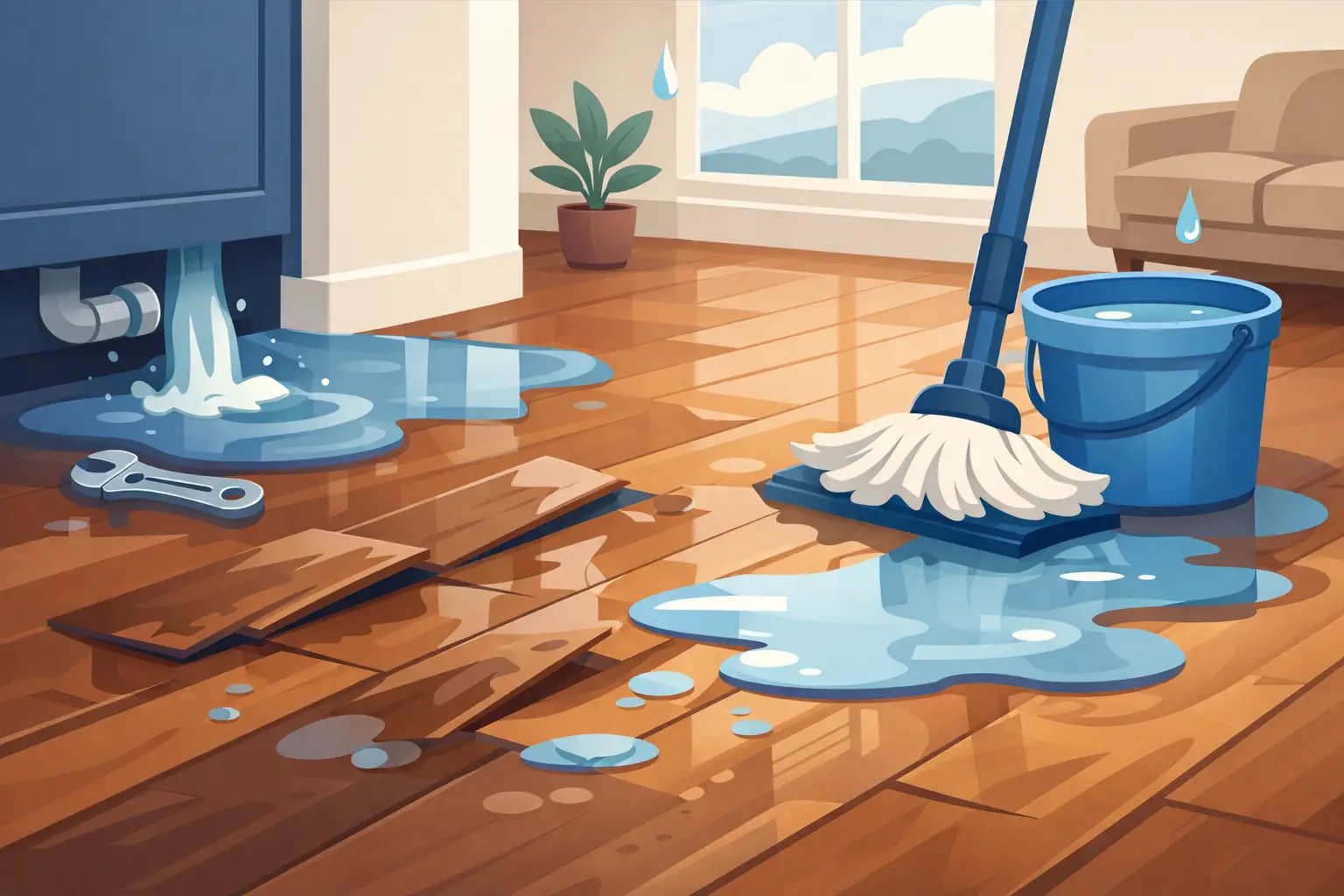
A small puddle beside the dishwasher can become a much bigger problem by morning. Hardwood floor water damage does not always stay visible on the surface. Water can work through seams, under baseboards, and into the subfloor, where it causes warping, staining, odors, and mold growth.
When water reaches a hardwood floor, time matters. The right response is not simply mopping up what you can see. Your home may need professional water extraction and structural drying to stop damage from spreading below the boards.
What Water Does to Hardwood Floors
Hardwood is durable, but it is still a natural material. As wood absorbs moisture, it expands. If the moisture remains, boards can push against one another and change shape. The results may show up within hours or take several days to become obvious.
Early signs include darkened edges, raised grain, gaps between boards, or a damp, musty smell. In more serious cases, boards can cup, crown, buckle, or pull away from the subfloor. Cupping happens when the edges of a board rise higher than its center. Buckling is more severe – boards lift upward and may detach from the floor.
The condition of the floor depends on several factors: how much water entered the area, how long it sat, where it traveled, the type of wood, and whether the floor was properly sealed. A brief spill cleaned immediately is different from a toilet overflow, burst pipe, appliance leak, or flooded basement.
Hardwood Floor Water Damage Often Starts Below the Surface
A dry-looking floor is not always a dry floor. Water can become trapped under planks, under vapor barriers, inside subfloor materials, and behind baseboards. That hidden moisture is why homeowners sometimes believe the problem is over, only to find warped flooring or mildew days later.
A trained restoration team uses moisture meters and other specialized equipment to locate water where it cannot be seen. This helps determine whether the floor can be dried in place, whether certain boards need to be removed, and whether the subfloor has been affected.
Trying to dry a floor only with fans can create an uneven result. The top surface may dry while moisture remains underneath. In some cases, drying too aggressively without measuring moisture can cause additional stress to the wood. Professional structural drying is designed to remove moisture in a controlled way while monitoring conditions throughout the process.
What to Do Right After Water Reaches Your Floor
First, stop the water source if it is safe to do so. Shut off the appliance, close the valve for a leaking line, or turn off the main water supply if a pipe has broken. If water is near electrical outlets, appliances, or wiring, avoid the area and contact qualified help.
Move furniture, rugs, and loose items off the wet floor when possible. Wet rugs can hold water against the wood and leave discoloration behind. Do not leave heavy furniture sitting on soaked boards, since it can trap moisture and make drying uneven.
Use towels or a wet vacuum to remove standing water from the surface, but do not assume the job is complete once the visible water is gone. Avoid using a household heater to blast the area with hot air. Extreme heat can dry wood too quickly at the surface and contribute to cracking or distortion.
If the water came from a toilet overflow, drain backup, sewage issue, or other contaminated source, keep people and pets away from the affected area. That water may contain bacteria and other contaminants. It requires more than drying – it needs proper cleanup, disinfection, and sometimes removal of affected materials.
When Can a Hardwood Floor Be Saved?
Many hardwood floors can be saved when the water is addressed quickly. Solid hardwood may tolerate restoration better than some engineered products, but every floor and water event is different. A restoration professional should assess the moisture level, wood condition, contamination level, and damage underneath the flooring before making promises.
Floors are more likely to be recoverable when the water was clean, the source was stopped quickly, and drying begins within the first day or two. Professional extraction and drying can limit swelling and reduce the chance of permanent damage.
Replacement becomes more likely when boards have buckled badly, the subfloor has swollen or deteriorated, water remained for an extended period, or the source was contaminated. Engineered wood floors may also delaminate when water reaches the layers beneath the veneer. In that situation, sanding and refinishing will not solve the underlying problem.
Even if a floor looks better after it dries, do not rush into refinishing. Wood can continue to shift as it returns to its normal moisture level. Refinishing too early may lock in a problem or leave an uneven result. The floor needs to be properly dried and evaluated first.
Common Sources of Water Damage in Ohio Homes
In Mason and nearby communities, hardwood floor damage often begins with an everyday household issue rather than a major flood. A refrigerator line can leak slowly for weeks. A washing machine hose can fail without warning. A bathroom overflow can run under the threshold into a hallway.
Basements can also affect flooring on the main level when moisture rises through structural materials or a plumbing line leaks inside a wall. Heavy rain, sump pump problems, roof leaks, and frozen pipes can create fast-moving water problems during different seasons.
Watch for these warning signs around wood floors: recurring dampness near appliances, loose baseboards, peeling finish, dark stains, soft areas, sudden gaps, warped boards, and persistent odors. These symptoms are worth checking promptly, especially if you have recently had a leak or overflow.
Why Fast Professional Drying Matters
The longer moisture stays in the home, the more difficult and expensive the restoration can become. Water can affect flooring, drywall, trim, cabinets, insulation, and framing. It can also create conditions where mold and mildew begin to grow, often in hidden areas that are not part of the initial cleanup.
Professional water damage restoration starts with finding the full extent of the affected area. Technicians extract water, measure moisture, place drying equipment where it is needed, and monitor the drying process. If damaged materials need to be removed, that work is handled in a way that helps protect unaffected parts of the home.
This is especially important after sewage backups or contaminated water events. Hardwood, padding, subfloors, and nearby building materials may need a different response depending on the category of water involved. A proper assessment protects your home and helps you make informed decisions about cleanup and repairs.
Kans Water Restoration provides local water cleanup, structural drying, and mold remediation support for homeowners dealing with leaks, overflows, floods, and moisture damage in Mason and surrounding Cincinnati communities. With trained technicians and industry-standard restoration methods, the focus is on getting moisture out and helping prevent secondary damage.
Do Not Wait for Warping to Get Worse
Hardwood floors are a major investment, and water does not wait for a convenient time to cause damage. If your floor is wet, stained, lifting, or has a musty smell after a leak or flood, getting the area checked early can make a real difference.
A quick call for professional help can give you a clear picture of what is wet, what can be saved, and what needs attention now. The sooner drying begins, the better the chance of protecting your flooring and getting your home back to normal.

