
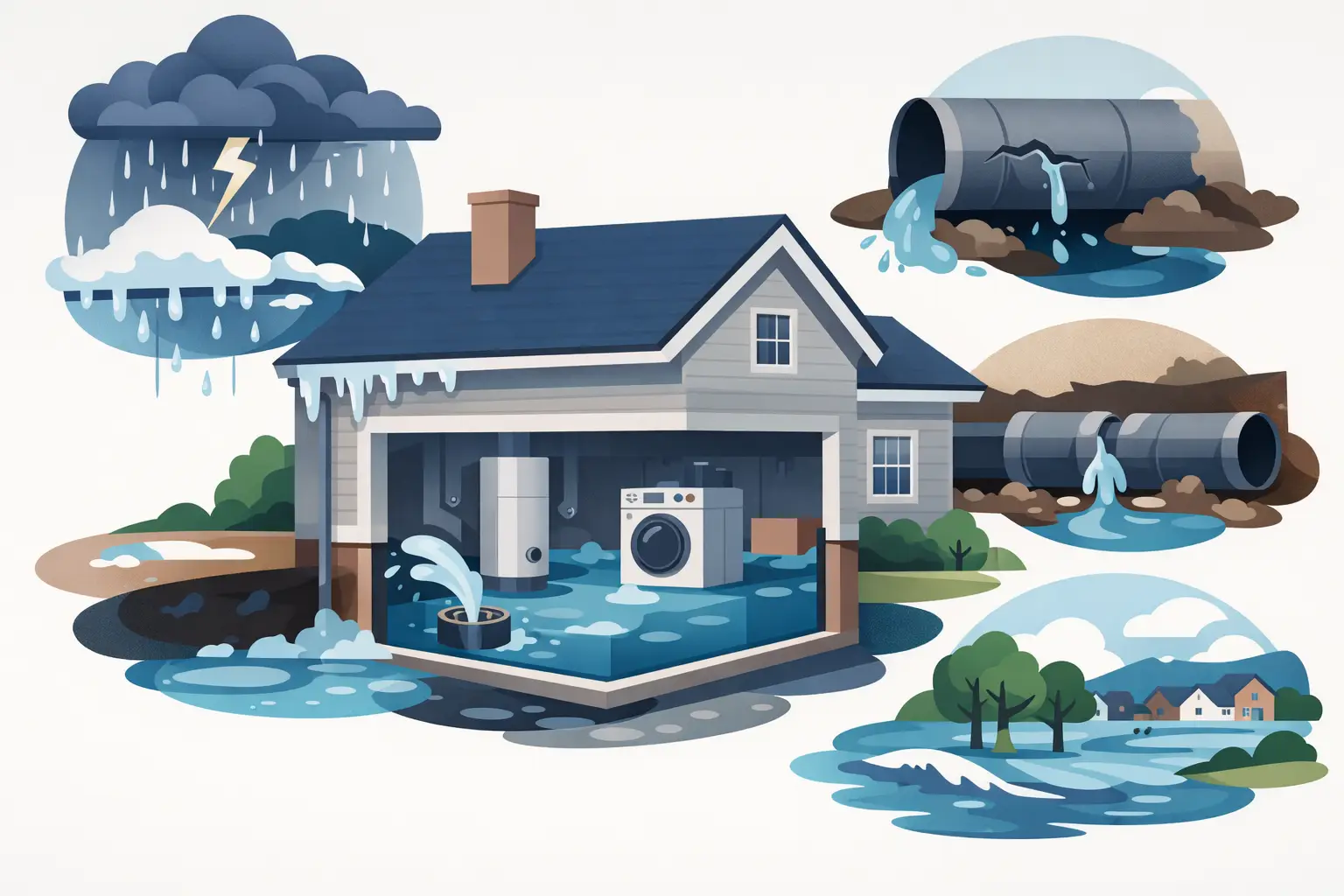
A basement can go from dry to damaged in a few hours. One hard Ohio storm, a failed sump pump, or a backed-up drain can leave carpeting soaked, drywall wet, and belongings at risk. Understanding the top causes of basement flooding can help you spot trouble early, but once water is inside, fast extraction and structural drying matter most.
Basement water is not always clean, and it does not stay contained. It can move behind finished walls, under flooring, and into insulation where mold can begin growing quickly. Here are the problems homeowners in Mason and surrounding Cincinnati communities see most often.
1. Heavy Rain and Poor Drainage Around the Foundation
A long, heavy rain can put enormous pressure on the soil around a home. When the ground becomes saturated, water looks for the easiest path forward. Cracks in foundation walls, gaps around utility lines, and joints where the floor meets the wall can all become entry points.
Poor grading makes the problem worse. The soil should slope away from the house so rainwater drains outward. If landscaping, mulch, settling soil, or hard surfaces direct water toward the foundation instead, that water can collect against the basement walls.
Watch for puddles near the foundation after a storm, damp spots along basement walls, peeling paint, or a musty smell. These may be early signs that outside water is finding its way in, even if you have not had a major flood yet.
2. Clogged Gutters and Bad Downspout Placement
Gutters are easy to overlook until they overflow beside the home. Leaves, shingle grit, and debris can clog gutters and downspouts, forcing roof runoff directly down the exterior wall. That much water landing beside a foundation can overwhelm the drainage system below ground.
Downspouts should carry water well away from the home. A short downspout that empties at the corner of the house may keep adding water to the exact area you are trying to protect. Extensions and properly maintained drainage routes are simple preventive measures, but they need to stay clear and functional through every season.
If basement water appears after rain but not during dry weather, exterior drainage should be one of the first places to investigate. The source may be outside, while the damage is happening below your feet.
3. Sump Pump Failure
A sump pump is often the last line of defense against groundwater entering a basement. It collects water in a sump pit and pumps it away before it can rise onto the floor. When it fails during a storm, flooding can happen fast.
Common problems include a tripped breaker, a stuck float switch, a clogged discharge line, an undersized pump, or a pump that has simply reached the end of its service life. Power outages are another major concern. A pump cannot protect the basement if the storm takes out electricity, which is why many homeowners consider a battery backup system.
Test the pump before the rainy season by adding water to the pit and making sure it activates, drains, and shuts off properly. If it runs constantly, makes unusual noise, or does not move water, do not wait for the next storm to address it.
4. Sewer or Drain Backups
A sewer backup is one of the most serious causes of basement flooding because the water may contain sewage, bacteria, and other contaminants. It can come up through a floor drain, toilet, shower, laundry drain, or sink. In some cases, the issue is inside the home’s plumbing. In others, a blocked municipal sewer line or stormwater overload is involved.
Tree roots, grease buildup, broken pipes, wipes, and other non-flushable materials can restrict a sewer line until wastewater has nowhere to go but back into the house. Older homes may be more vulnerable, especially when original sewer lines are damaged or deteriorating.
If water is dark, foul-smelling, or coming from a drain, keep people and pets away from the area. Do not try to clean sewage-contaminated water with household towels or a basic wet vacuum. Porous materials such as carpet padding, insulation, and some furniture may need removal. Professional sewage cleanup includes extraction, cleaning, disinfecting, drying, and evaluation of affected materials.
5. Foundation Cracks and Leaking Basement Walls
Not every foundation crack causes a flood, but any crack that allows moisture through deserves attention. Concrete can develop small cracks as a home settles, and seasonal expansion and contraction can make those openings more noticeable over time. Water pressure in saturated soil can force moisture through even narrow gaps.
A vertical crack may be relatively minor, while a horizontal crack, bowing wall, or widening gap can point to a larger structural concern. The right repair depends on the crack’s location, size, and cause. Sealing the visible interior surface may reduce minor seepage, but it will not solve a drainage problem outside the foundation.
When water enters through a wall, the immediate priority is to remove it and dry the affected structure. Wet drywall and insulation can hide damage long after the floor looks dry. A proper moisture inspection helps determine whether materials can be dried in place or need to be removed.
6. Plumbing Leaks, Burst Pipes, and Appliance Failures
Some of the top causes of basement flooding have nothing to do with rain. A burst supply line, leaking water heater, failed washing machine hose, broken refrigerator line, or overflowing utility sink can release a large amount of water indoors.
These incidents are especially destructive because they may continue unnoticed. A slow leak behind a finished basement wall can saturate framing and insulation for days. A burst pipe can flood the room in minutes, particularly if no one is home to shut off the water.
Look for rust around the water heater, dripping fittings, soft flooring near appliances, higher water bills, or stains on ceiling tiles below bathrooms and kitchens. If a pipe or appliance is actively leaking, shut off the nearest water supply if it is safe to do so. For a major leak, turn off the home’s main water valve and arrange for cleanup right away.
7. Window Wells, Exterior Doors, and Stairwell Drains
Below-grade windows and exterior basement entrances are common weak points during storms. A window well can fill like a bucket when its drain is blocked or missing. Once water rises above the window frame, it can pour directly into the basement.
Basement stairwells create a similar risk. Leaves and debris can block the drain at the bottom of the steps, allowing rainwater to build up against the door. Worn door seals, cracked window frames, and damaged covers add to the problem.
Keep window wells clear, confirm that their drains are working, and check exterior door seals before periods of heavy rain. These areas are small, but a clogged drain can cause a surprisingly large loss in a finished basement.
What to Do When Your Basement Starts Flooding
Safety comes first. Stay out of standing water if electrical outlets, appliances, or the electrical panel could be affected. Do not enter water that may be contaminated by sewage. If the water is clean and it is safe to do so, stop the source by shutting off a supply valve or moving water away from the foundation only if conditions allow.
Then act quickly. Water extraction is only the first step. Carpet, padding, drywall, baseboards, wood flooring, insulation, and framing can all retain moisture. Fans alone may not dry hidden areas or bring materials back to a safe moisture level. Delayed drying can lead to odors, warped materials, and mold growth.
Kans Water Restoration provides water cleanup, structural drying, sewage cleanup, and mold remediation for homeowners dealing with basement water damage in Mason and nearby communities. Trained technicians use specialized extraction and drying equipment along with industry-standard IICRC water restoration practices to assess the full scope of the damage.
A wet basement is stressful, but you do not have to guess what is happening behind the walls or under the flooring. The sooner the water is removed and the structure is professionally dried, the better your chances of protecting your home and getting your space back to normal.

