
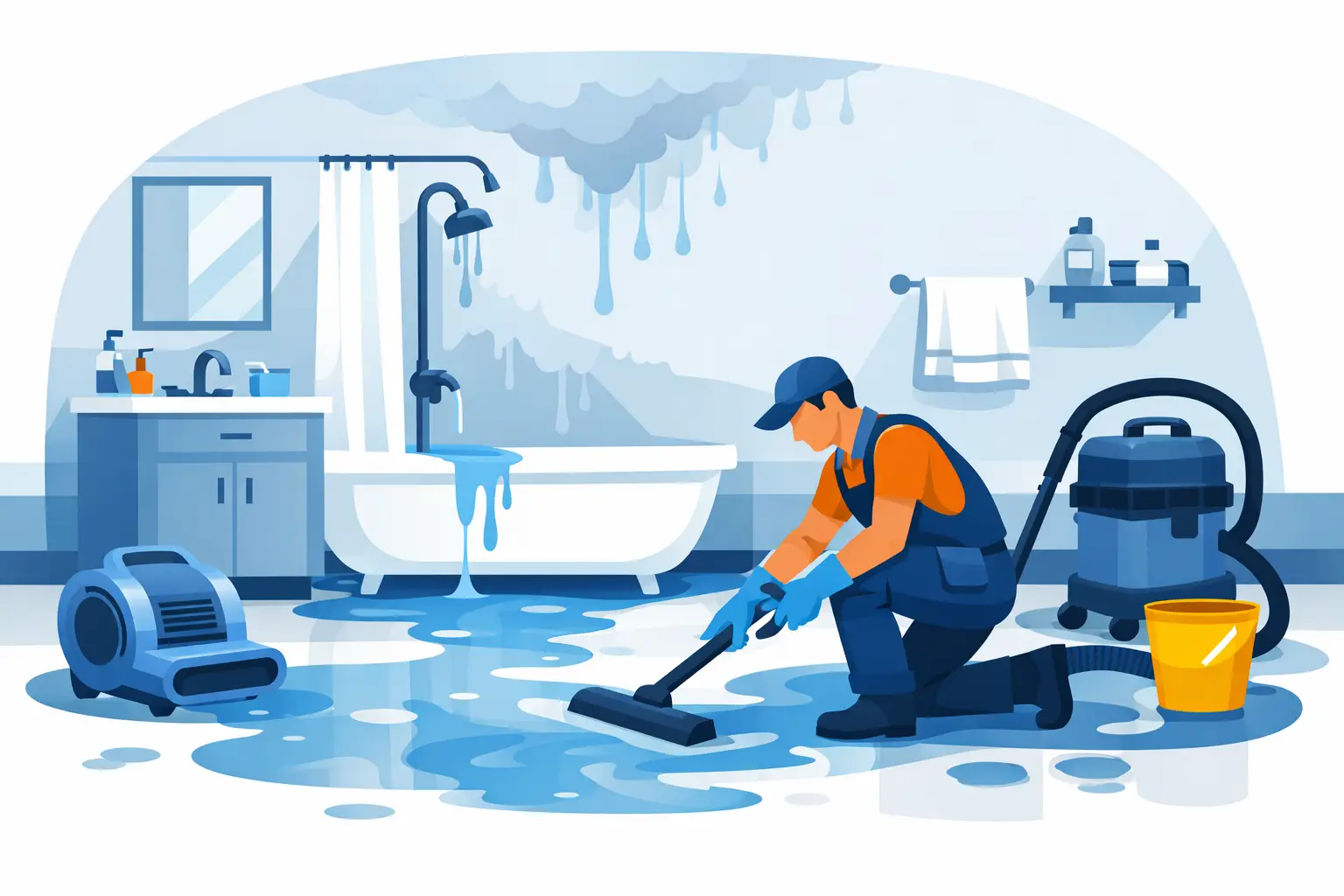
A bathroom flood rarely stays in the bathroom for long. Water from an overflowing toilet, failed supply line, shower leak, or drain backup can move under flooring, behind baseboards, and into nearby rooms before most homeowners realize how far it has spread. That is why bathroom water damage cleanup needs to happen fast, with the right equipment and a clear plan.
For homeowners in Mason and nearby communities, this kind of damage is more than a mess on the floor. It can affect drywall, subflooring, vanities, insulation, ceilings below, and indoor air quality if moisture lingers. The goal is not just to remove visible water. It is to find hidden moisture, dry the structure properly, and reduce the chance of mold and long-term damage.
What causes bathroom water damage cleanup calls
Most bathroom losses start with a small failure that turns into a bigger problem fast. A toilet overflow is one of the most common causes, especially when a clog is combined with repeated flushing. Supply lines under sinks can burst without warning. Tub and shower pans can leak slowly for weeks before staining appears on the ceiling below. In older homes, worn caulk, failed seals, and plumbing connection issues can let water escape into surrounding materials.
Some situations are clearly urgent, like standing water across the bathroom floor. Others are easier to miss. Soft drywall near the baseboard, warped trim, peeling paint, musty odor, or loose flooring can all point to hidden moisture. If the source involves a drain backup, sewage, or toilet overflow with contaminated water, the cleanup becomes more serious because sanitation is part of the job, not just drying.
Why bathroom water damage cleanup should happen quickly
Bathrooms are small spaces, but water spreads fast in them because of the materials and tight layout. Water can wick into drywall, get trapped under vinyl and tile assemblies, and settle into subflooring around the toilet flange or tub edge. If the bathroom is above another level, the damage may extend into the ceiling cavity and walls below.
The first 24 to 48 hours matter. The longer moisture sits, the more likely materials are to swell, stain, weaken, or support mold growth. Not every wet material has to be removed, but that depends on the water source, how long it has been wet, and whether the material can be cleaned and dried to an acceptable standard. That is where professional assessment makes a real difference.
Our approach to bathroom water damage cleanup
A good restoration response starts with containment of the problem and a clear understanding of where the water went. In a bathroom, that often means looking beyond the obvious wet floor. Moisture can move into vanity toe-kicks, behind cabinets, into adjoining hall carpet, and down wall cavities.
Step 1: Stop the source and inspect the affected area
Before drying begins, the source has to be corrected. That may mean shutting off the toilet supply, addressing a broken line, stopping a leaking shower valve, or coordinating plumbing repairs. Once the active leak or overflow is under control, the affected materials need to be inspected for both water spread and contamination level.
Clean water from a supply line is different from gray or black water from a toilet overflow or backup. That difference affects what can be salvaged, what must be removed, and how the space should be cleaned.
Step 2: Remove standing water and wet debris
Extraction is the first major step in reducing damage. The more water removed upfront, the faster the structure can dry. In a bathroom loss, this may include surface extraction from flooring as well as removal of wet rugs, damaged vanity materials, swollen trim, or compromised drywall.
If the water is contaminated, porous materials may need to be discarded rather than dried. That can include drywall, insulation, and other materials that cannot be reliably cleaned after exposure. This is one of those situations where it depends on the source. A simple sink overflow is not treated the same way as a sewage-related loss.
Step 3: Dry hidden moisture with professional equipment
Once visible water is gone, structural drying begins. This is where many bathroom losses are underestimated. A floor can look dry while the subfloor underneath is still holding moisture. Walls may appear fine while insulation inside is wet. Professional drying uses air movers, dehumidifiers, and moisture meters to bring materials back to an appropriate dry standard.
Bathrooms also have a higher mold risk because they already experience regular humidity. When an overflow or leak adds extra moisture, mold and mildew can begin growing behind surfaces that still look normal from the outside. Drying is not just about speed. It is about verification.
Step 4: Clean, sanitize, and address microbial risk
A proper bathroom cleanup often includes antimicrobial treatment and detailed cleaning, especially after toilet overflows, drain backups, or long-standing leaks. If materials show signs of microbial growth, applied microbial remediation methods may be needed to remove contamination safely and prevent it from spreading during demolition or drying.
This part of the process matters for health and odor control. Homeowners usually notice the visible mess first, but the lingering smell after a bathroom leak often comes from moisture trapped in materials or contamination that was not fully addressed.
What homeowners often miss after a bathroom leak
The biggest mistake is assuming the damage is limited to what they can see. A small ring around the toilet can mean the flange has been leaking into the subfloor for months. A wet bath mat can distract from the fact that water has run under the vanity and into the wall. A second-floor bathroom overflow may leave only a stain downstairs, even though the cavity above is still wet.
Another common issue is delay. Some homeowners try to wait and see if things dry on their own. In a bathroom, that usually leads to more removal later. The room may feel dry because the surface water is gone, but trapped moisture remains under flooring, behind trim, or in the lower wall sections.
When damage becomes a mold problem
Bathrooms are already one of the most mold-prone areas in a house. Add a leak, overflow, or poor drying, and conditions change quickly. Not every bathroom water loss turns into a mold remediation job, but enough do that it should always be considered during inspection.
Warning signs include musty odor, recurring discoloration, soft drywall, swelling around the vanity, and staining that returns after repainting. If the leak has been going on for days or weeks, mold growth inside wall cavities or under flooring is a real possibility. In those cases, cleanup needs to go beyond extraction and drying. Contaminated materials may need controlled removal, cleaning, and full moisture correction to keep the problem from coming back.
Why professional bathroom water damage cleanup is worth it
Homeowners call for professional help because they want the problem handled correctly the first time. That means more than bringing in a few fans. It means using industry-standard water damage restoration methods, checking moisture levels throughout the process, and adjusting the drying plan based on what the structure is actually doing.
A bathroom loss can look minor and still create expensive hidden damage. It can also look severe and end up being very manageable if the response is quick. The difference often comes down to how soon the cleanup starts and whether the work includes proper extraction, structural drying, sanitation, and moisture monitoring.
For local homeowners, there is also value in working with a nearby restoration company that understands the urgency and can respond quickly. When a toilet has overflowed or a bathroom leak has reached the ceiling below, waiting around is not a good option. Kans Water Restoration handles these situations with trained technicians, practical communication, and a focus on getting your home dry, clean, and safe again.
Bathroom water damage cleanup for homes in Mason and nearby areas
In homes across Mason, West Chester, Loveland, Maineville, Liberty Township, Blue Ash, Kenwood, and Montgomery, bathroom water damage tends to follow a few familiar patterns – toilet overflows during busy mornings, hidden plumbing leaks under vanities, and shower or tub failures that stay unnoticed until flooring or ceilings show damage. No matter the cause, fast response matters.
If your bathroom has standing water, a sewage-related backup, wet drywall, or signs of hidden moisture, the right next step is to get a trained restoration team involved. A fast inspection can clarify what is wet, what can be saved, and what needs immediate attention before mold and structural problems set in.
When water shows up in a bathroom, the best time to act is now, while the damage is still easier to contain and your home is easier to put back together.

