
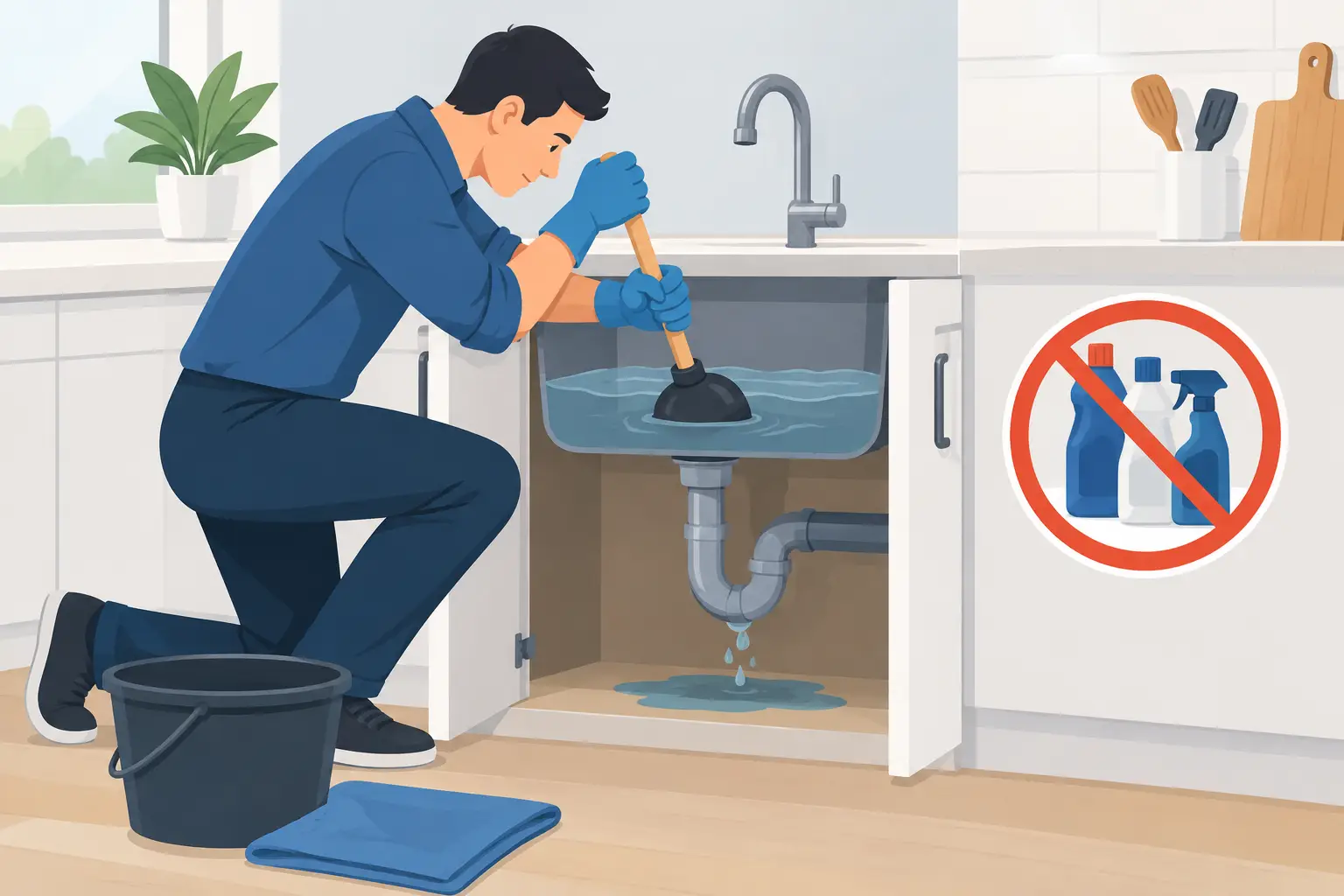
A drain backup can turn from an inconvenience into a contaminated water emergency in minutes. Knowing how to handle drain backups starts with one rule: do not keep using water in the house. A flushing toilet, running washing machine, or shower can add more water to a blocked line and push sewage farther into your basement, bathroom, or finished living space.
For homeowners in Mason and nearby Cincinnati communities, fast action protects more than floors. It can limit damage to drywall, insulation, cabinets, personal belongings, and the structure beneath them. It also helps reduce the health risk that comes with sewage-contaminated water.
Stop the Water at the Source
When a drain backs up, stop using every water fixture that may feed the affected line. Do not flush toilets, run the dishwasher, take a shower, or start laundry. If water is rising from a floor drain, basement shower, toilet, or sink, assume the main sewer line may be involved until a plumber confirms otherwise.
If a toilet is overflowing but the water has not reached the floor drain or other fixtures, remove the tank lid and close the flapper at the bottom of the tank. Then turn the shutoff valve behind or beside the toilet clockwise. This can stop clean supply water from continuing to fill the bowl.
Do not pour chemical drain cleaner into a backed-up drain. These products rarely solve a main-line blockage, and they can leave corrosive chemicals in standing water. That creates an additional hazard for anyone cleaning the area or servicing the drain.
Keep People and Pets Away From the Area
A backup from a sewer line, toilet, or floor drain should not be treated like ordinary spilled water. It may contain bacteria, viruses, waste, and other contaminants. Even a small amount of sewage water can soak into carpet padding, baseboards, unfinished walls, and stored belongings.
Keep children and pets out of the affected area. Avoid walking through the water and then tracking it into clean rooms. If you must enter briefly to shut off a water source or move an item out of immediate danger, wear waterproof boots, gloves, and clothing you can wash separately.
Never use a regular household vacuum to remove standing water. It is not designed for contaminated water and can create an electrical hazard. Do not use fans to blow air across sewage water before the contamination has been removed. Fans can spread moisture and airborne contaminants into adjacent rooms.
How to Handle Drain Backups Based on the Source
The right response depends on where the water is coming from and what is backing up. A single slow sink may point to a local clog in that fixture. Several drains gurgling, toilets bubbling, or water rising through a basement floor drain are more serious signs that the main sewer line is blocked or overloaded.
A backup after heavy rain may be connected to a municipal sewer issue, a failed sump pump, a clogged exterior drain, or stormwater entering the system. A backup that happens whenever laundry drains or a toilet flushes often points to a blockage in the home’s main line. Tree roots, grease buildup, wipes, damaged piping, and collapsed sewer lines are common causes.
If the water is clear and came from a broken supply line, cleanup still needs to happen quickly, but the contamination risk is lower. If the water came from a toilet, sewer, or floor drain, treat it as contaminated. The difference matters because porous materials exposed to sewage often cannot be safely cleaned and reused.
Call a Plumber and a Water Restoration Team
A plumber and a restoration company solve different parts of the problem. The plumber identifies and corrects the source, whether that means clearing a clog, repairing a damaged pipe, or inspecting the sewer line with a camera. Restoration professionals address what happened inside the home: water extraction, sewage cleanup, cleaning, disinfection, structural drying, and removal of materials that cannot be saved.
Call a plumber promptly when multiple fixtures are backing up, wastewater is coming up through a drain, or you suspect a main sewer problem. Do not wait for the water to go down and assume the issue is over. The blockage may remain, and the next use of water could cause another backup.
Call a professional restoration team as soon as sewage reaches flooring, carpet, walls, cabinets, or stored property. Quick extraction and drying can make a major difference in the amount of demolition required. Kans Water Restoration provides emergency water and sewage cleanup for homes and businesses throughout Mason and surrounding communities, with trained technicians equipped to address both visible water and hidden moisture.
Protect Your Home While Help Is on the Way
If it is safe to do so without stepping into contaminated water, move dry belongings away from the affected area. Lift boxes, furniture legs, and valuables off the floor. Take photos and videos of the damage before cleanup begins, especially if you plan to file an insurance claim. Document the source area, affected rooms, damaged materials, and any personal property that cannot be saved.
Do not try to save porous items that have been soaked with sewage. Carpet padding, insulation, cardboard boxes, particleboard furniture, and many upholstered items can hold contamination deep inside the material. A restoration professional can assess what is salvageable, but keeping contaminated materials in place too long can increase odor, bacteria growth, and mold risk.
If sewage has reached a finished basement, avoid pulling up carpet or opening walls unless directed by a professional. Improper removal can spread contamination and expose hidden moisture behind finished surfaces. Specialized extraction equipment, moisture meters, air movers, dehumidifiers, and cleaning procedures are used to return the area to a safe, dry condition.
Do Not Ignore the Drying Process
Standing water is only part of the damage. Moisture can move beneath vinyl flooring, behind baseboards, into wall cavities, and under cabinets. A floor may look dry within a few hours while the materials below it remain wet. That is where mold and mildew can begin to develop.
Professional drying is not simply placing a few fans in the room. Technicians measure moisture levels in materials, set drying equipment based on the affected area, and monitor progress until the structure reaches an appropriate dry standard. This is especially important after drain backups because contaminated water often reaches places that are difficult to inspect.
Odor is another warning sign. A lingering sewer smell after water removal may mean contaminated materials remain, a drain trap has dried out, or the plumbing issue was not fully corrected. Cleaning the surface alone will not solve contamination below the surface.
What to Tell Your Insurance Company
Contact your insurance carrier after you have stopped the source and documented the loss. Explain where the backup began, when you discovered it, what areas were affected, and whether sewage was present. Ask whether your policy includes sewer or drain backup coverage. This coverage is often separate from standard water damage coverage, so the answer can vary by policy.
Keep receipts for emergency services, plumbing work, temporary protective measures, and damaged items. Avoid throwing away damaged belongings before they have been documented unless they create an immediate health concern. Your restoration team can also provide details about affected materials and the cleanup work performed.
Prevent the Next Drain Backup
Some backups are impossible to predict, especially during severe storms or sudden sewer failures. Others can be reduced with routine maintenance. Avoid flushing wipes, paper towels, feminine products, cotton items, or anything labeled flushable other than toilet paper. Keep grease, food scraps, and coffee grounds out of kitchen drains.
If your home has mature trees near the sewer line, recurring slow drains, or an older property, ask a plumber about a camera inspection. Finding root intrusion or pipe damage early is less stressful than discovering it after sewage reaches the basement. A properly maintained sump pump and a backup power plan can also help protect lower levels during heavy rain.
A drain backup is not the time to test a quick fix or wait for the smell to fade. Stop using water, keep the area contained, and bring in the right help quickly. Fast, professional cleanup gives your home the best chance of getting back to clean, dry, and safe.

