
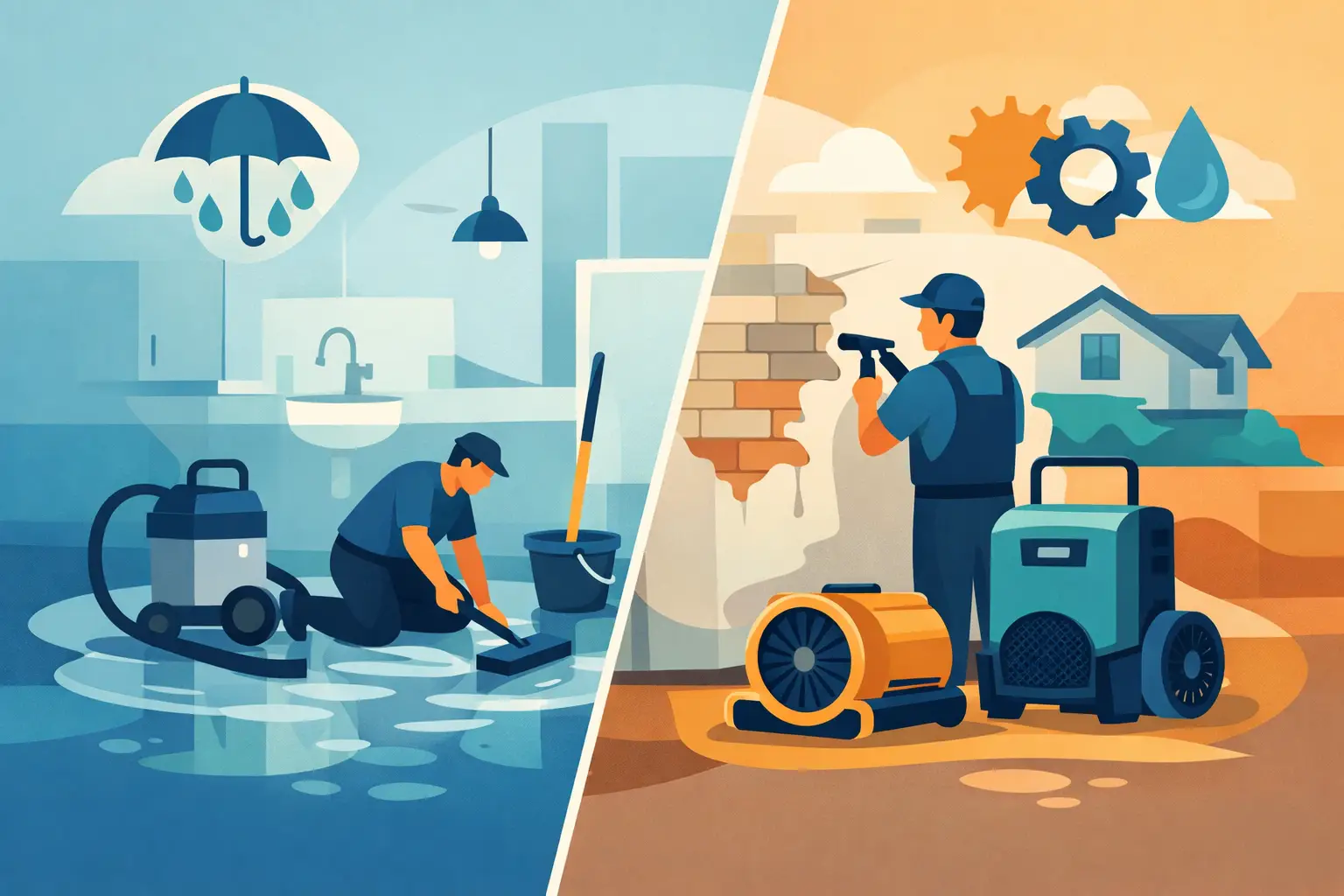
A basement flood, toilet overflow, or burst supply line creates one immediate question: who can get the water out? But water cleanup vs water restoration is more than a wording difference. Cleanup handles the urgent mess. Restoration addresses the damage water leaves behind in floors, walls, insulation, cabinets, and other parts of your home.
For homeowners in Mason and nearby Cincinnati communities, understanding the difference can help you respond quickly without stopping the job too soon. Water that looks gone can still be trapped beneath flooring, behind baseboards, or inside wall cavities. That hidden moisture is where mold, odors, warped materials, and costly structural damage can begin.
What Is Water Cleanup?
Water cleanup is the immediate work performed after unwanted water enters a property. The goal is to remove standing water, control the source when possible, and get the affected area cleaner and safer.
This may include water extraction from carpet or hard floors, removal of soaked belongings, cleaning visible debris, and disposal of materials that cannot be safely salvaged. If a toilet overflows or a drain backs up, cleanup also involves addressing contamination. Water from a sewage backup is not treated like a clean supply-line leak. It can contain bacteria and other harmful contaminants that require proper protective equipment, cleaning methods, and disposal practices.
Fast cleanup matters because porous materials absorb water quickly. Carpet padding, drywall, insulation, engineered wood, and cabinetry can hold moisture long after the surface looks dry. The sooner water is extracted, the better the chance of saving materials and limiting damage.
Still, extraction alone does not guarantee the structure is dry. That is where restoration work begins.
What Is Water Restoration?
Water restoration is the broader process of returning a water-damaged area to a safe, dry, usable condition. It includes cleanup, but it goes further by finding moisture, drying the structure, preventing secondary damage, and repairing or replacing damaged materials when needed.
A professional restoration job begins with an inspection. Trained technicians assess where the water traveled, what materials were affected, and whether the water is clean, gray, or contaminated. They use moisture meters, thermal imaging where appropriate, and hands-on inspection to identify wet areas that are not obvious from the room itself.
From there, restoration may involve controlled demolition of unsalvageable drywall or flooring, structural drying with air movers and dehumidifiers, moisture monitoring, antimicrobial treatment when conditions call for it, and repair planning after the area reaches drying goals. The work is not finished simply because the carpet feels dry or the puddle has disappeared.
For example, a washing machine hose may leak in a second-floor laundry room. Cleanup removes water from the floor. Restoration checks the subfloor, the ceiling below, nearby walls, and insulation for moisture. If water has moved through those materials, drying and repairs may be needed to prevent staining, sagging drywall, or mold growth later.
Water Cleanup vs Water Restoration: The Main Difference
The simplest way to look at water cleanup vs water restoration is this: cleanup removes the immediate water and mess, while restoration manages the full damage situation and works to return the property to normal.
Cleanup is often the first phase of restoration. In a minor spill caught quickly on a sealed floor, cleanup may be all that is necessary. In a larger flood, a leaking pipe that ran for hours, or water that soaked into building materials, cleanup is only one part of the solution.
The difference matters because homeowners sometimes wait until visible water is gone before deciding the problem is resolved. Unfortunately, moisture does not always follow visible lines. Water can travel under baseboards, wick into drywall, settle below vinyl flooring, and spread across a basement slab beneath stored items.
A restoration team is focused on that full picture. The objective is not just a cleaner room. It is a dry, stable space that is less likely to develop mold, odors, material failure, or lingering contamination.
When Cleanup May Be Enough
A small amount of clean water may only need basic cleanup when it is handled immediately and has not entered porous materials. A knocked-over glass of water, a minor sink splash, or a small appliance drip discovered right away may not require a full restoration project.
Even then, homeowners should pay attention to what sits below and around the water. A small leak on tile can still reach wood trim, cabinet bases, or the ceiling of a finished room below. The size of the puddle does not always show the size of the problem.
If you are unsure whether water reached hidden materials, a professional inspection is the safer call. It can prevent a minor incident from turning into a mold problem weeks later.
When Water Restoration Is Necessary
Full water restoration is usually needed when there is standing water, a significant leak, flooding, sewage exposure, or moisture in building materials. It is also the right response when water has been present for more than a short period, even if the source has been stopped.
Common situations that call for professional restoration include a flooded basement after heavy rain, a failed sump pump, a burst pipe, an overflowing toilet, a bathtub or shower leak, a refrigerator line leak, or a drain backup. Finished basements deserve special attention because carpet, padding, drywall, insulation, furniture, and storage materials can all absorb water.
Mold is another reason not to delay. Mold can begin growing when materials remain wet, often before a homeowner notices an odor or visible discoloration. Drying equipment must be placed correctly, and moisture levels should be checked throughout the process. Opening up wet materials may feel disruptive, but selective removal can be necessary when insulation, drywall, or flooring cannot be dried safely or effectively.
Why Professional Drying Makes the Difference
Fans from the garage and a household dehumidifier can help with a very small, surface-level spill. They are not a substitute for professional structural drying after a substantial water loss. The challenge is not only moving air. It is controlling humidity, removing moisture from dense materials, and verifying that the affected structure is actually drying.
Professional water restoration technicians use extraction equipment, commercial air movers, dehumidifiers, moisture meters, and containment practices when contamination or mold concerns exist. They also understand how materials respond to water. Hardwood flooring, drywall, carpet padding, insulation, and cabinet assemblies each require different decisions.
There are trade-offs. Drying some materials in place may reduce repair costs and save time. Other materials may need to be removed because they are contaminated, swollen, delaminated, or unable to dry thoroughly. A qualified assessment helps avoid unnecessary demolition while also avoiding the bigger mistake of sealing moisture inside the home.
What to Do Before Help Arrives
Your first priority is safety. Do not enter standing water if electrical hazards are possible, and do not handle contaminated water from sewage or a drain backup without proper protection. If the source is a plumbing leak and you can safely stop it, shut off the local supply valve or the main water valve.
Move dry valuables and furniture out of the affected area when it is safe to do so. Avoid walking through water and then into clean rooms, especially after a toilet overflow or backup. Do not use a regular household vacuum on standing water. Photograph the damage for your records before moving items if conditions allow.
Then call for professional help as soon as possible. Early extraction and drying can make a real difference in what can be saved.
Local Help for Water Damage in Mason, Ohio
Kans Water Restoration helps homeowners and commercial property owners handle both the immediate cleanup and the full restoration process. With trained technicians, industry-standard drying equipment, and 15 years of experience, the focus is on getting water out, finding hidden moisture, and helping prevent mold and further property damage.
Whether the problem started with a flooded basement, a bathroom overflow, a leaking appliance, or a drain backup, the right response is based on the actual conditions inside the structure. A quick inspection can clarify whether you need simple cleanup, full water restoration, or contamination and mold remediation as part of the work.
When water gets into your home, do not wait for stains, odors, or mold to tell you the damage was deeper than it looked. Get the area checked, dried, and handled properly so your home can feel safe and normal again.

