
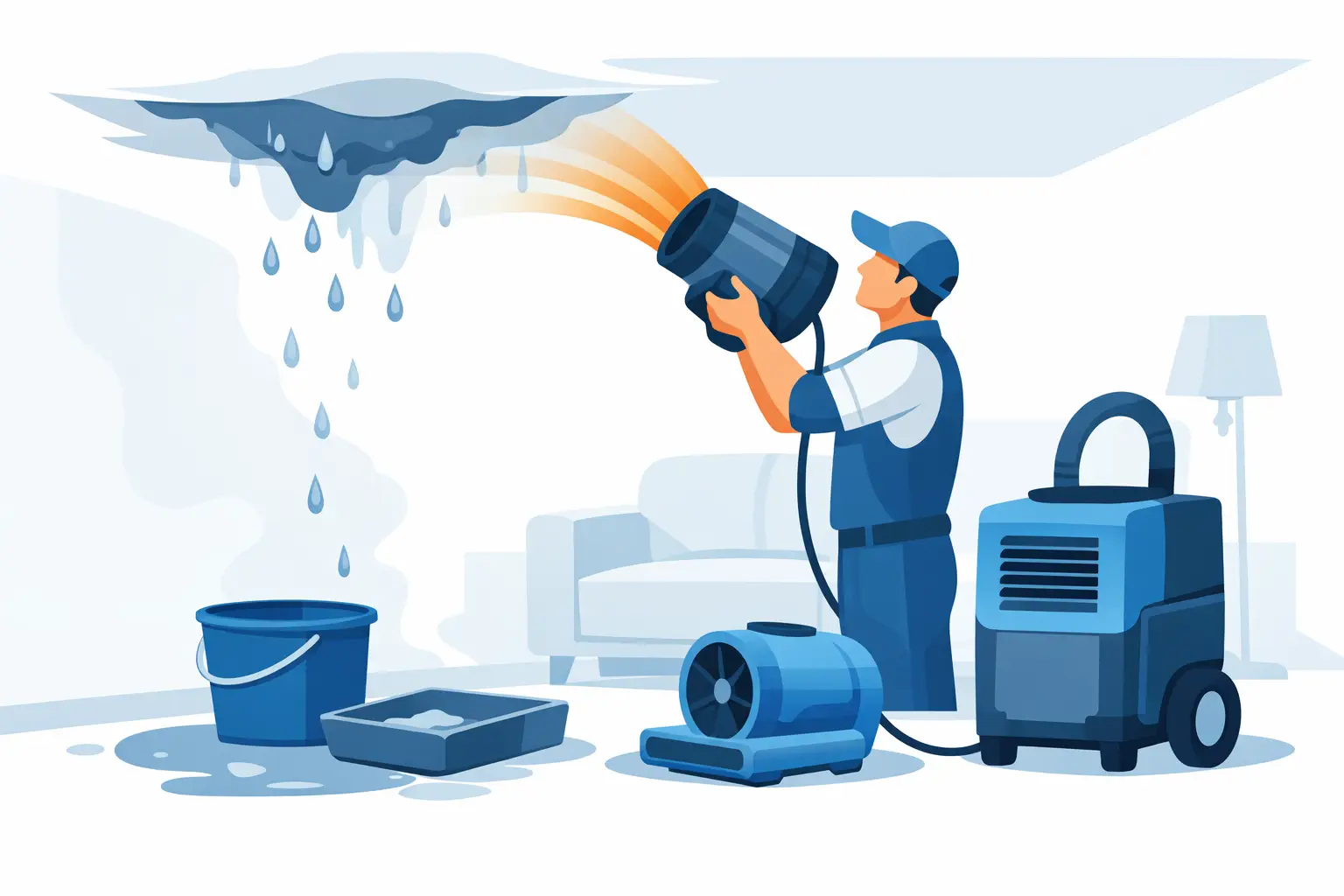
A brown ceiling stain, a soft spot near a light fixture, or a steady drip onto the floor is not a problem to watch for a few days. A professional ceiling leak drying service helps stop the damage from spreading through insulation, framing, drywall, and the rooms below. The visible water is only part of the problem. Moisture can stay trapped above the ceiling long after the drip stops.
For homeowners in Mason and nearby communities, a ceiling leak may start with an upstairs bathroom overflow, a plumbing leak, a roof issue, an HVAC drain line, or a broken appliance connection. No matter where it starts, fast water removal and structural drying give your home the best chance of avoiding mold, damaged materials, and larger repairs.
Why Ceiling Leaks Need Fast Drying
Ceilings hold water in places that are hard to see and difficult to reach. Drywall can absorb water and lose its strength. Insulation above it can stay wet and hold moisture against wood framing. Water may also travel along joists, pipes, wiring paths, and wall cavities, damaging an area much larger than the stain you can see.
A sagging ceiling deserves immediate attention. Wet drywall can become heavy enough to crack or collapse, especially after a major bathroom leak or roof leak. Keep people and pets away from the area. If water is near a ceiling light, fan, outlet, or electrical fixture, do not touch it. Turn off power to the affected area only if it is safe to do so, then call a qualified restoration professional.
Waiting can create a second problem: mold. In the right conditions, mold growth can begin within 24 to 48 hours. A ceiling may look dry from below while damp insulation or framing remains hidden above it. That is why placing a fan in the room or painting over a stain is not a reliable fix.
What a Ceiling Leak Drying Service Includes
Effective drying starts with finding and stopping the source of water. Drying a ceiling without repairing the plumbing leak, roof opening, or appliance issue only allows the damage to return. Once the source is addressed, trained technicians assess how far water has traveled and determine which building materials can be dried and which need to be removed.
A professional restoration crew does more than set up air movers. The work is based on moisture readings, material conditions, and the type of water involved. Clean water from a supply line is handled differently than water from a drain backup, toilet overflow, or sewage-related loss. Contaminated water may require removal of affected drywall, insulation, and other porous materials to protect the home.
The drying process commonly includes the following work:
- Moisture inspection of ceilings, walls, floors, insulation, and nearby rooms
- Water extraction from wet flooring, carpets, or contents below the leak
- Controlled removal of unsalvageable wet drywall or insulation when needed
- Placement of commercial air movers and dehumidifiers to dry structural materials
- Daily monitoring with moisture meters until drying goals are met
- Documentation that can support an insurance claim and guide repair work
The equipment matters, but proper placement and monitoring matter just as much. Drying equipment needs to move air across wet surfaces while dehumidifiers pull moisture from the air. Technicians adjust the setup as conditions change. This helps prevent the common mistake of drying the room air while moisture remains trapped inside the ceiling assembly.
Drying May Require Small Openings
Many homeowners worry that drying will mean tearing out the entire ceiling. Sometimes it does not. If materials are still structurally sound and contamination is not a concern, technicians may use limited access openings to release trapped water and improve airflow in the ceiling cavity.
In other cases, removing a section of wet ceiling is the safer choice. Saturated drywall, damaged insulation, or microbial growth can make selective removal necessary. It can feel disruptive, but removing compromised material early may prevent a much larger mold or reconstruction job later.
How Long Does Ceiling Drying Take?
Most structural drying projects take several days, but the actual timeline depends on the extent of water intrusion. A small, clean-water leak caught quickly may dry in two to three days. A leak that soaked insulation, traveled through multiple rooms, or involved contaminated water can take longer and may require material removal before drying can begin.
Humidity, outdoor weather, the type of ceiling construction, and whether the water source has truly been fixed all affect the schedule. Restoration technicians should confirm dryness with moisture measurements, not just by touch. A ceiling that feels dry on the surface may still have wet framing above it.
Do not rush into ceiling repair before drying is complete. Replacing drywall or applying texture too soon can trap moisture inside the structure. That can lead to stains returning, paint failure, musty odors, or hidden mold behind a freshly repaired ceiling.
Signs the Leak May Be Spreading
A ceiling leak does not always stay directly below the source. Water follows gravity, but it also follows the easiest path through your home. It can run along joists before soaking through drywall several feet away from the original plumbing problem.
Call for help if you notice a growing stain, bubbling paint, peeling texture, warped trim, a musty smell, damp carpet beneath the affected area, or a ceiling that appears bowed or soft. Check rooms next to and below the leak as well. In a two-story home, an upstairs bathroom issue can affect the bathroom ceiling, hallway, bedroom, and even the basement if water moves through wall cavities.
If the leak happened after a toilet overflow, drain backup, or sewage issue, keep children and pets out of the affected area. This water can contain harmful contaminants. Cleanup requires more than drying equipment and should be handled with the right protective procedures.
Why DIY Ceiling Drying Often Falls Short
A homeowner can put down towels, move furniture, and catch drips while waiting for help. Those steps are useful. The problem comes when surface cleanup is treated as complete drying. Household fans are not designed to confirm or remove moisture hidden above drywall, inside insulation, or behind walls.
Cutting into a wet ceiling without knowing the location of pipes, wiring, or contamination can also make the situation worse. A water-damaged ceiling can be unstable, and electrical hazards are possible around lights and fans. Professional equipment, moisture detection, containment practices, and trained judgment are especially valuable when the loss is overhead or involves more than a small, isolated leak.
Kans Water Restoration provides hands-on water cleanup, structural drying, and mold remediation support for homeowners and businesses throughout Mason, West Chester, Loveland, Maineville, Liberty Township, Blue Ash, Kenwood, Montgomery, and surrounding areas. Our trained technicians use industry-standard drying methods informed by IICRC water damage restoration and applied microbial remediation practices.
What to Do While You Wait for Help
If it is safe, move furniture, electronics, rugs, and valuables away from the affected area. Place a bucket under active drips and take photos or video of the damage for your records. If the water source is a plumbing fixture or appliance and you can safely identify the shutoff, stop the flow.
Avoid standing beneath a sagging ceiling, climbing onto furniture to inspect it, or turning on fans near wet electrical fixtures. Do not paint, patch, or cover the ceiling until a restoration professional has confirmed that the materials are dry and any contamination concerns have been addressed.
A ceiling leak can look manageable at first and still cause costly damage behind the surface. Quick action gives you more options, protects the parts of your home you cannot see, and helps repairs begin on a dry, safe foundation. If water has reached your ceiling, call for a professional assessment before a small stain turns into a larger restoration project.

