
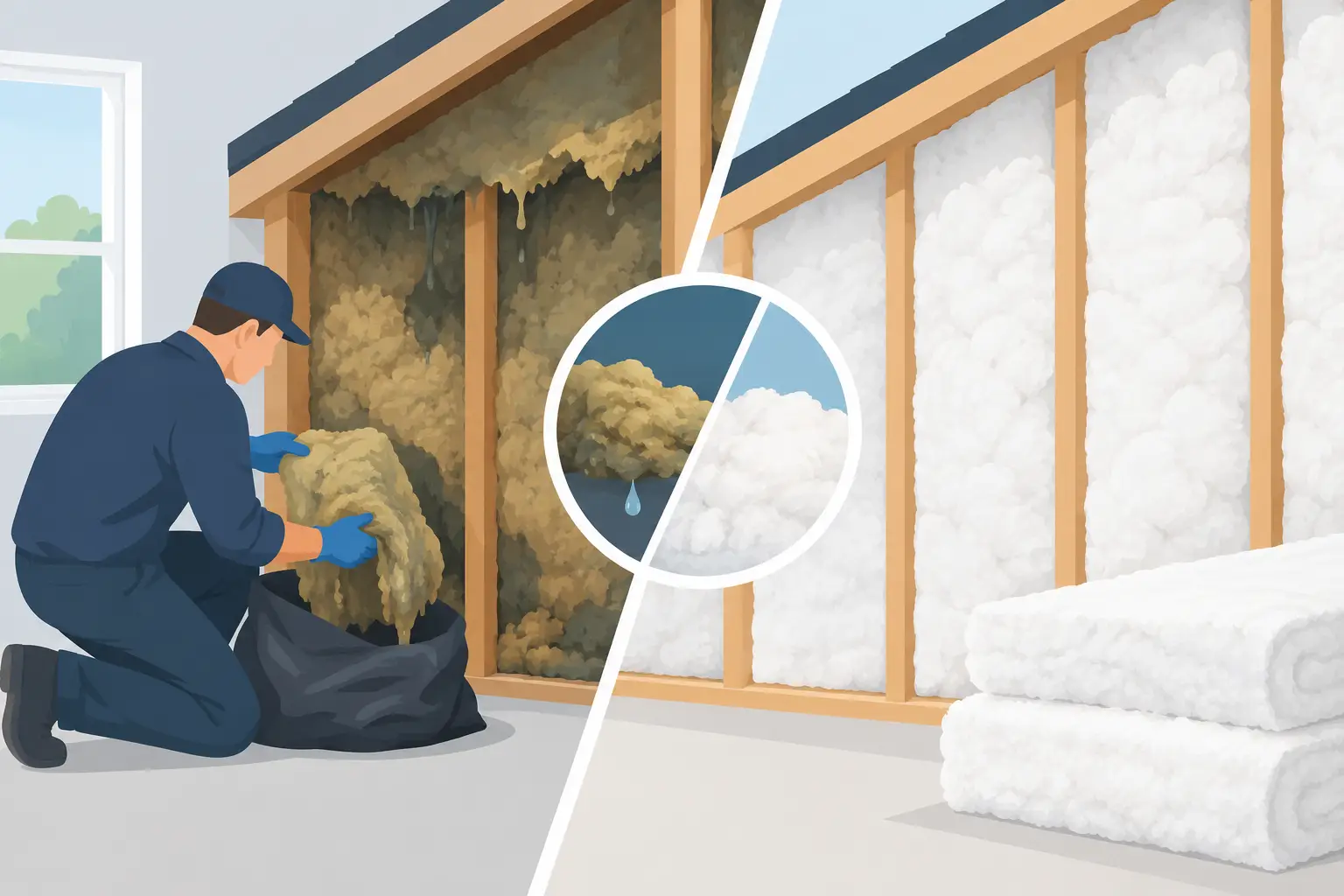
A wet basement can look manageable after the standing water is gone. The carpet may be pulled back, the floor may feel dry, and the air may seem normal. But insulation inside walls, ceilings, rim joists, and crawl spaces can hold moisture long after the visible cleanup ends. Knowing when to replace flooded insulation can prevent mold growth, odors, damaged drywall, and a much larger repair later.
The answer depends on the water source, the insulation type, how long it stayed wet, and whether trained drying can fully remove the moisture. In many cases, especially after a sewer backup, toilet overflow, or outside floodwater intrusion, replacement is the safer choice.
Floodwater Changes the Decision
Not all water damage is the same. A small supply-line leak involving clean water is different from a drain backup or a flooded basement after heavy rain. The more contaminated the water is, the less likely insulation can be safely saved.
Restoration professionals commonly classify water by its source. Clean water may come from a broken pipe or appliance line. Gray water can contain contaminants from a washing machine, shower, dishwasher, or overflow. Black water includes sewage, toilet waste, and floodwater that may carry bacteria, chemicals, and other harmful material.
If insulation is affected by black water, it should generally be removed and replaced. Porous materials absorb contamination, and surface cleaning does not make soaked insulation reliably safe. This applies to fiberglass batts, cellulose, cotton insulation, and many forms of foam insulation when water has reached gaps, seams, or surrounding building materials.
A fast response matters. Water that begins as clean water can become more contaminated as it moves through a home, saturates flooring, and sits for an extended period. Mold can start growing in damp conditions within 24 to 48 hours.
When Should Flooded Insulation Be Replaced?
Flooded insulation should be removed when it is contaminated, cannot be dried completely, has lost its shape, or is contributing to mold or odor problems. Waiting for visible mold is not a good test. Mold often starts inside wall cavities and beneath finished surfaces where homeowners cannot see it.
Replacement is usually the right call when:
- The insulation was wet from sewage, a toilet overflow containing waste, a drain backup, or exterior floodwater.
- Fiberglass batt insulation is soaked, compressed, falling apart, stained, or has been wet for more than a short period.
- Cellulose insulation has absorbed water. It often clumps, settles, and loses its insulating value after saturation.
- There is a musty odor, visible mold, damp drywall, wet framing, or elevated moisture readings after drying efforts.
- The affected area is enclosed and cannot be properly inspected or dried, such as behind finished basement walls or inside a ceiling cavity.
Wet insulation does more than create a mold risk. It stops doing its job. Fiberglass insulation can lose thermal performance when it is compressed or matted down. Cellulose can settle permanently after getting wet, leaving cold spots behind walls and raising heating and cooling costs. Even if the material appears dry later, it may no longer provide the coverage your home needs.
Which Insulation Can Sometimes Be Dried?
Some insulation may be recoverable after a clean-water incident if it was exposed briefly and professional drying begins right away. The key word is may. A technician needs to inspect the affected materials, identify the water category, and measure moisture in the insulation, framing, and wall surfaces.
Fiberglass batt insulation is sometimes dried if it was exposed only to clean water, was not heavily saturated, and can be removed or opened up for complete drying. It must return to its original thickness and remain free from stains, odor, and contamination. If it stays damp against wood framing or drywall, removal is usually safer.
Closed-cell spray foam is less absorbent than fiberglass or cellulose. In some clean-water situations, it can remain in place after proper drying and inspection. However, water can still become trapped behind foam or within the wall assembly. The surrounding drywall, wood, and subfloor still need attention.
Rigid foam board also resists water better than many insulation types. Still, seams, wall cavities, adhesives, and framing can hold moisture. A restoration team should inspect the full assembly rather than assuming the foam is fine because it does not look wet.
Cellulose insulation is rarely a good candidate for drying after flooding. It is made from recycled paper fibers, absorbs water easily, and can retain moisture deep inside the material. Wet cellulose can also settle and create hidden gaps after it dries. Removal and replacement are often the more dependable solution.
Why Drywall and Insulation Often Need to Be Opened
Homeowners often ask why a restoration crew needs to remove part of a wall when only the bottom section was wet. Water wicks upward through drywall and insulation. The visible water line on the wall may not show how far moisture traveled inside the cavity.
Controlled removal allows technicians to inspect the framing, remove wet insulation, clean affected surfaces, and position drying equipment where it can work. This is not unnecessary demolition. It is a way to stop hidden moisture from turning into mold, warped baseboards, rotten framing, or recurring odors.
The amount removed should match the damage. A clean-water leak caught quickly may require a limited opening and targeted drying. A basement affected by sewage or widespread stormwater may require removal of drywall and insulation several feet above the floor, depending on moisture readings and contamination conditions.
Do Not Judge Drying by Touch Alone
A wall can feel dry on the outside while insulation behind it remains wet. Carpet can feel dry while moisture stays beneath the padding or along the wall plate. This is why restoration work relies on moisture meters, thermal imaging when appropriate, dehumidification, air movement, and regular monitoring instead of guesswork.
Running a household fan can help with a very small spill, but it is not enough for saturated wall cavities or a flooded basement. Poorly managed drying can move humid air through the home without actually removing moisture from building materials. It can also spread contaminants after a sewage backup.
Professional drying is designed to bring materials back to an acceptable moisture level while controlling humidity. The goal is not simply to make the room feel dry. The goal is to dry the structure thoroughly enough that mold and material deterioration are less likely to follow.
What to Do After Insulation Gets Wet
First, stop the water source if it is safe to do so. Shut off the supply valve for a plumbing leak, avoid using overflowing fixtures, and keep people away from any sewage-contaminated area. Do not enter standing water near electrical outlets, appliances, or panels.
Next, document the damage for your insurance claim with photos or video before major cleanup begins, if conditions allow. Move dry belongings away from the affected area. Avoid pulling apart wet walls or handling contaminated insulation yourself, especially after a drain backup or toilet overflow.
Then call a qualified water restoration company as soon as possible. Fast water extraction, moisture inspection, and structural drying can reduce how much material needs to be removed. If replacement is necessary, proper containment and disposal help keep contaminants and mold spores from spreading into clean areas of the home.
Kans Water Restoration helps homeowners in Mason and nearby communities assess water-damaged materials, remove contaminated insulation, dry affected structures, and address mold concerns using industry-standard restoration methods.
The Cost of Waiting Is Usually Higher
Keeping wet insulation to avoid a repair can create a more expensive problem behind the walls. Mold remediation, drywall replacement, odor treatment, and structural repairs can quickly cost more than removing compromised insulation early. There is also the disruption of reopening a finished basement or bathroom after it appeared to be repaired.
That does not mean every damp insulation issue requires full replacement. A professional inspection can separate a limited clean-water loss from a contaminated flood that needs removal. The right decision is based on evidence – moisture levels, material condition, water source, and how quickly drying began.
If you are unsure whether flooded insulation can be saved, treat it as urgent until a trained technician can inspect it. A prompt evaluation protects the parts of your home you cannot see and helps you move from cleanup to a dry, safe space with confidence.

