
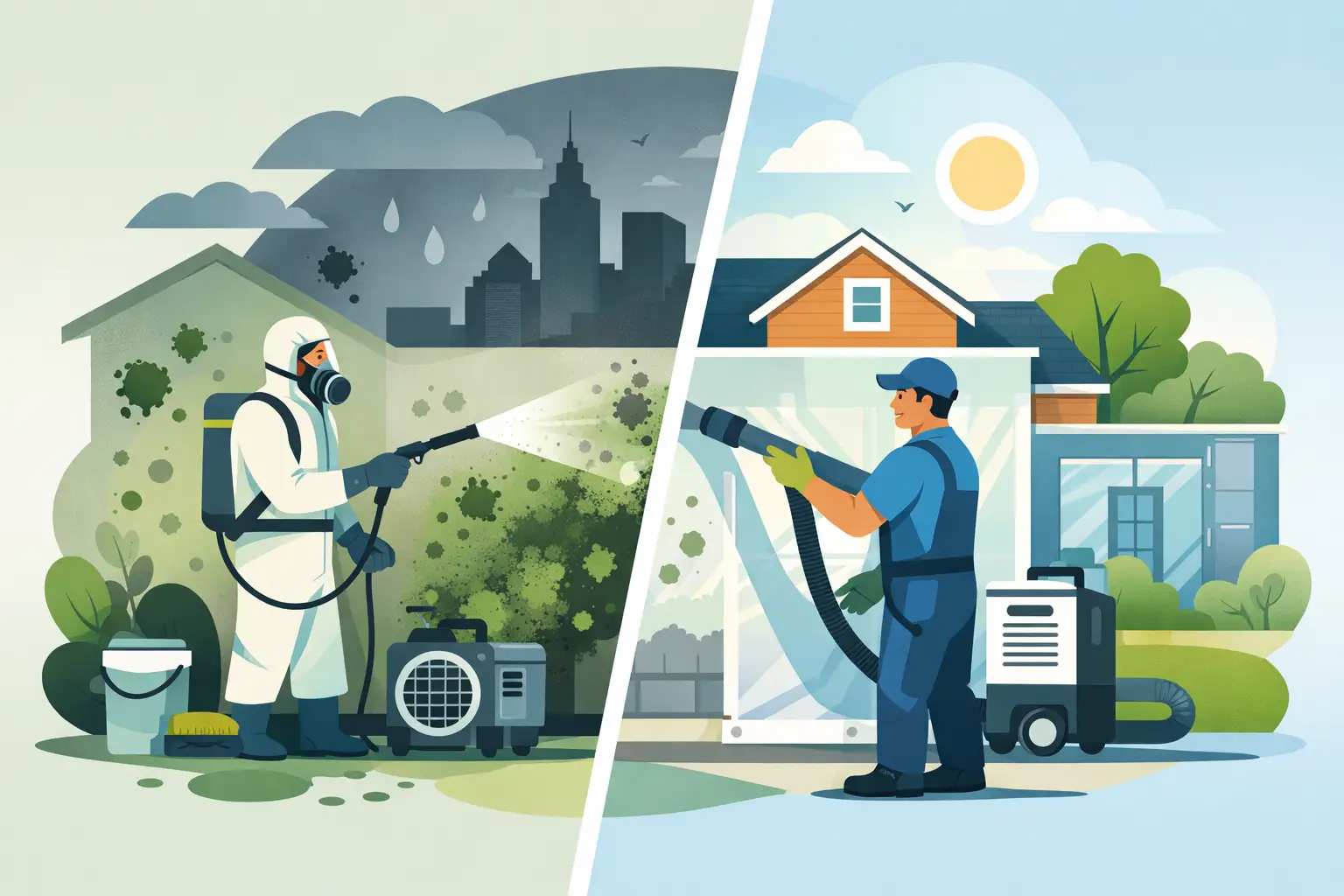
A dark patch on a basement wall or a musty smell after a toilet overflow can make homeowners want one thing: get it out. But mold removal vs remediation is not just a difference in wording. One approach may address what you can see, while the other is designed to address the moisture, contamination, and damaged materials that allowed mold to grow in the first place.
For homes in Mason and nearby Cincinnati communities, that difference matters. Basement seepage, appliance leaks, roof leaks, humid bathrooms, and backed-up drains can leave moisture inside walls, beneath flooring, and around framing. If the source is not corrected and the affected area is not properly dried, mold can return even after a surface appears clean.
What Mold Removal Means
Mold removal usually describes the physical act of taking mold off a surface or removing materials that have visible mold growth. That could mean cleaning a small affected area, taking out moldy drywall, or removing damaged carpet and pad.
The term sounds complete, but it can be misleading. Mold spores are naturally present indoors and outdoors. A house cannot be made completely spore-free. The real goal is to return the affected area to normal, acceptable conditions by removing active growth and controlling the moisture that feeds it.
For a small, isolated spot caused by a one-time issue that was fixed quickly, limited removal may be all that is needed. For example, a little mold around a bathroom caulk line may call for cleaning and repair, not a full restoration project.
The concern starts when mold is widespread, keeps returning, appears after flooding, or is tied to a hidden leak. Wiping the visible growth may make the surface look better, but it does not tell you whether moisture is still trapped behind the wall or below the floor.
Mold Removal vs Remediation: The Important Difference
Mold remediation is a process, not a single cleaning task. It focuses on finding and correcting the conditions behind the growth, containing affected areas when needed, removing contaminated materials, cleaning remaining structural surfaces, and thoroughly drying the property.
In other words, mold removal can be one part of remediation. Remediation is the larger job of making sure the problem is handled correctly.
A trained restoration team begins by assessing the affected space and looking for the water source. That may include a plumbing leak, foundation moisture, condensation, poor ventilation, a roof issue, or water left behind after a flood or sewage backup. Moisture detection equipment helps identify wet building materials that may not look damaged from the outside.
Once the cause is identified, the work may include controlled demolition of unsalvageable materials, cleaning of structural surfaces, use of containment to keep particles from spreading through the home, and professional drying. Air movement, dehumidification, and moisture monitoring are used to bring materials back to an appropriate dry standard before repairs move forward.
This is why a mold problem should not be judged only by what is visible. A two-foot spot on drywall may be connected to a larger wet area inside the wall cavity. The same is true of carpet, insulation, baseboards, subflooring, and cabinets affected by water damage.
When a Simple Cleanup May Be Enough
Not every mold concern requires extensive remediation. A small, surface-level area can sometimes be addressed with targeted cleaning and a repair to the moisture source. The key is being honest about the size of the issue and what caused it.
A limited cleanup may be reasonable when the growth is small, the surface is nonporous or easy to clean, the moisture event was short-lived, and the area is fully dry. A bathroom exhaust fan that was not working, for example, may need repair along with cleaning of minor surface growth.
Even then, homeowners should watch for a returning odor, discoloration, soft drywall, peeling paint, or continued condensation. Those signs point to a condition that has not been fully corrected.
When You Need Professional Mold Remediation
Professional help is the safer choice when moisture has affected building materials, when mold is spreading, or when the source is uncertain. Water can travel farther than most people expect, especially in basements and bathrooms where it can move under flooring or wick into drywall.
Call for an assessment if you notice a persistent musty odor, visible growth that keeps coming back, water stains on ceilings or walls, warped flooring, damp carpet, or a recent flood, backup, or major leak. You should also act quickly if mold is found after water sat for more than a day or two. Conditions can change fast once porous materials stay damp.
A professional remediation plan is especially valuable after a sewage backup. Sewage-contaminated water brings additional health and sanitation concerns, and affected materials may need specialized cleaning or removal. This is not a situation for ordinary household cleaning products or a weekend project.
Kans Water Restoration provides water cleanup, structural drying, and mold remediation for homeowners facing these kinds of urgent property problems. With trained technicians and industry-standard restoration methods, the focus is on correcting the damage rather than covering it up.
What a Proper Remediation Job Should Address
A dependable remediation job begins with the cause. If a leaking pipe, foundation intrusion, or failed appliance is still adding moisture, cleaning alone will not last.
The affected area may need to be isolated to reduce cross-contamination during removal and cleaning. Materials such as wet insulation, swollen drywall, damaged carpet pad, or contaminated contents may be removed when they cannot be safely or effectively restored. Remaining surfaces are cleaned using methods appropriate for the material and condition.
Drying is just as important as cleaning. Restoration technicians use professional dehumidifiers, air movers, and moisture meters to dry structural materials and confirm progress. This matters because a wall can feel dry at the surface while moisture remains deeper inside.
The final step is restoring the area so your home can get back to normal. Depending on the damage, that may involve replacing drywall, baseboards, flooring, insulation, or other materials removed during the remediation process.
Why Fast Water Cleanup Helps Prevent Mold
Many mold jobs start as water damage jobs that were not fully dried. A washing machine hose leaks while you are away. A toilet overflows into a bathroom and hallway. Heavy rain enters a basement through a crack. By the time the water is gone from sight, moisture may already be inside materials that need professional drying.
Fast extraction and structural drying reduce the opportunity for mold to develop. That is why it makes sense to call for help immediately after significant water intrusion, even if the affected room does not look severely damaged.
Homeowners often try fans, towels, or a shop vacuum first. Those steps can help with a very small spill, but they are not a substitute for checking moisture in walls, flooring, and other hidden areas after a larger loss. The right response depends on the amount of water, how long it was present, the materials affected, and whether the water was clean, gray, or sewage-contaminated.
Protect Your Home Without Guesswork
If you can see mold, smell mold, or know that your home had a recent water event, do not wait for the problem to grow behind finished walls or under flooring. The practical next step is to identify the moisture source and get the affected materials properly evaluated, cleaned, and dried.
A prompt call can save more of your home, limit disruption, and give you a clear path forward when a leak, flood, or backup has turned into something bigger.

