
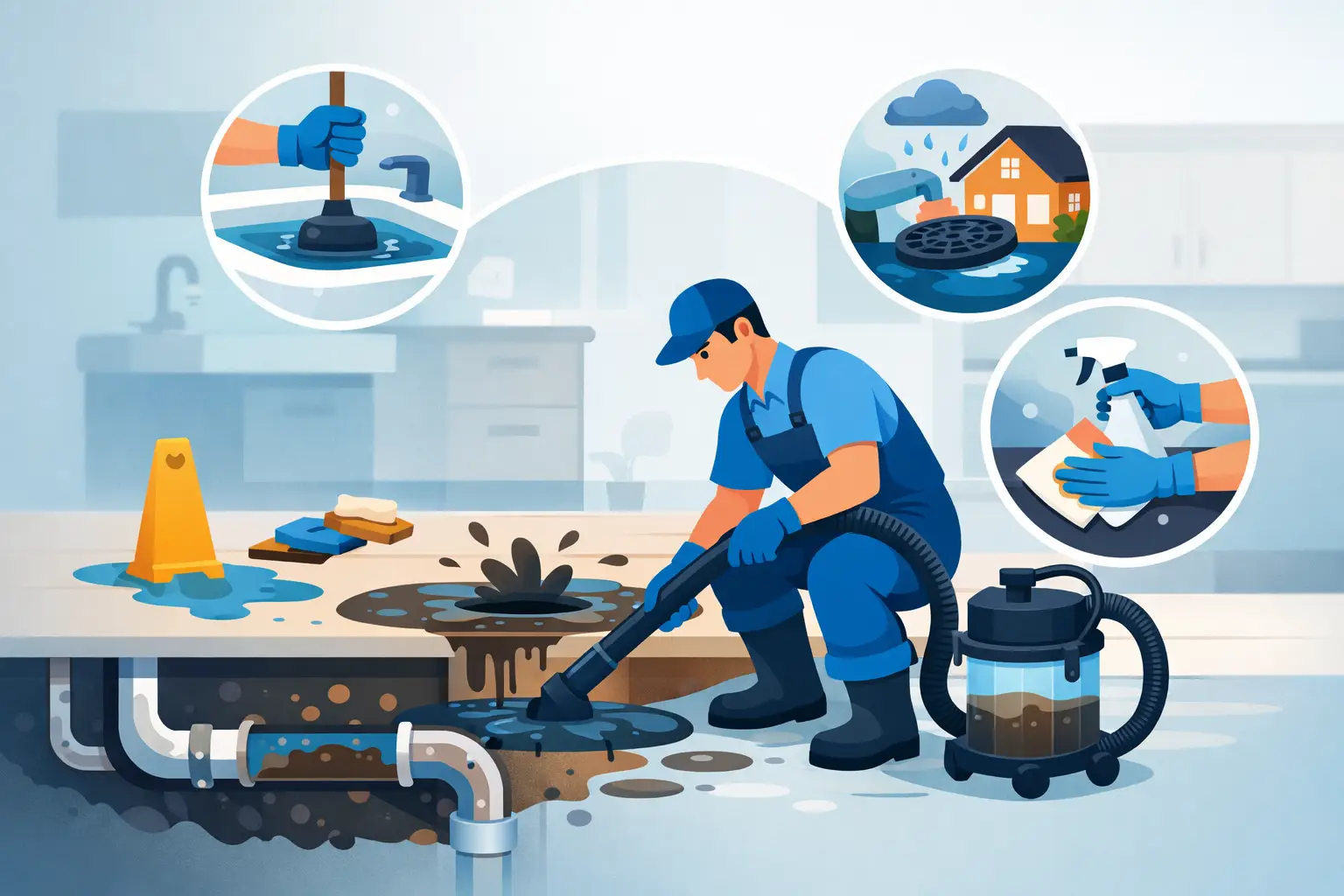
A drain backup can turn a usable basement, bathroom, or laundry room into a contamination problem within minutes. This drain backup cleanup process explained shows why quick professional action matters: backed-up water may contain sewage, bacteria, chemicals, and waste that can soak into flooring, walls, and belongings long after the visible water is gone.
For homeowners in Mason and nearby Cincinnati communities, the first priority is not saving a rug or mopping the floor. It is keeping people out of the affected area, stopping the source if possible, and getting trained cleanup help before moisture and contamination spread further.
What Makes a Drain Backup Different From a Clean-Water Leak?
A supply-line leak or rainwater intrusion can still damage a home, but a drain backup carries a different level of risk. Water coming back through a floor drain, toilet, shower, sink, or main sewer line is often treated as contaminated water. It may contain pathogens that can cause illness, along with debris that makes cleanup more difficult.
That distinction changes the cleanup plan. Porous materials such as carpet padding, insulation, cardboard, unfinished wood, and some upholstered items may not be safely salvageable after contact with sewage. A professional restoration crew evaluates what can be cleaned, what needs to be removed, and what steps are necessary to return the area to a sanitary condition.
The cause also matters. A single toilet overflow may be contained in one bathroom. A main drain backup can affect several fixtures and push wastewater across a finished basement. If water continues to rise or repeatedly returns after draining, the plumbing issue needs prompt attention along with the cleanup.
First Steps After a Drain Backs Up
Keep children, pets, and anyone with a weakened immune system away from the affected space. Do not walk through sewage-contaminated water and then track it across clean parts of the house. If the backup is connected to a toilet, sink, or appliance, stop using water in the home until the plumbing source has been assessed.
If it is safe to do so, shut off power to the affected area at the breaker. Do not enter standing water where electrical outlets, cords, appliances, or a panel may be involved. Avoid using a household vacuum, fan, or shop vacuum to remove contaminated water. Those tools can spread contamination and are not designed for proper sewage extraction.
Taking a few photos from a safe location can help document the loss for insurance purposes. Then contact a qualified water damage and sewage cleanup company. Fast response limits how far moisture travels into wall cavities, subflooring, baseboards, and stored belongings.
The Drain Backup Cleanup Process Explained Step by Step
Professional cleanup follows a controlled process designed to remove the immediate hazard and prevent secondary damage. The exact scope depends on the amount of water, the source of the backup, the materials affected, and how long contamination has been present.
1. Inspection and Safety Planning
Technicians begin by inspecting the affected rooms and identifying the likely category of water contamination. They look beyond the obvious puddles, checking behind baseboards, under flooring, around fixtures, and inside nearby wall areas when needed.
The crew sets up appropriate personal protective equipment and determines how to keep contamination from spreading into clean rooms. This can include establishing a contained work area and using controlled removal methods for damaged materials. The goal is to protect both the home and the people working inside it.
2. Water Extraction and Debris Removal
The next step is removing standing water and solid waste using commercial extraction equipment. Fast extraction is critical because water can wick into drywall, framing, carpet backing, and furniture legs. What looks like a small backup on the surface may have affected a much larger area underneath.
Technicians also remove debris and identify unsalvageable porous items. Carpet padding exposed to sewage is typically removed. Depending on the extent of contamination, sections of carpet, drywall, insulation, cabinets, or baseboards may also need removal to expose wet materials and allow proper cleaning.
This part of the job can feel frustrating, especially when a finished basement is involved. Still, leaving contaminated materials in place to avoid demolition can create a bigger problem later. Odors, bacterial growth, and mold can develop in hidden spaces if the area is not opened and dried correctly.
3. Cleaning and Disinfection
After extraction and removal, remaining hard surfaces are cleaned using professional methods and antimicrobial products selected for the situation. Floors, walls, trim, concrete, and nonporous contents may be cleaned and disinfected when they can be safely restored.
Cleaning is not the same as spraying a deodorizer over the room. Proper sanitation requires physical removal of soil and contamination before disinfecting. Odor control is addressed as part of the process, but it does not replace cleaning or drying.
Some items are worth evaluating individually. A solid wood table may be cleanable if contamination was limited and addressed quickly. Paper goods, fabric storage bins, mattresses, and heavily affected upholstered furniture are more difficult to safely restore. A trained crew can give a practical recommendation based on the material and exposure.
4. Structural Drying and Moisture Monitoring
Even after the water is extracted, materials can remain wet below the surface. Restoration technicians place air movers and commercial dehumidifiers to dry structural materials under controlled conditions. They monitor moisture levels rather than relying on how dry a room feels.
This is where many rushed cleanups fall short. A basement may appear dry after a day, while the lower drywall, wood framing, or subfloor still holds moisture. That trapped moisture can lead to warped materials, musty odors, and mold growth in the days or weeks that follow.
Drying equipment stays in place until readings show affected materials have reached appropriate dry standards. The timeline varies. A small, contained bathroom backup may dry relatively quickly, while a basement with wet flooring and wall materials can require more extensive drying and repair work.
5. Final Review and Restoration Planning
Before the job is wrapped up, the crew reviews the cleaned and dried areas, documents conditions, and discusses any remaining repairs. Cleanup and reconstruction are related but separate phases. The immediate job is to remove contamination, dry the structure, and stabilize the property. Replacing drywall, flooring, trim, or cabinets comes after the area is safe and dry.
A detailed assessment also helps homeowners communicate with their insurance carrier. Coverage depends on the policy and the cause of the backup. Sewer or drain backup coverage is often an optional endorsement, so it is wise to review your policy before an emergency happens.
Why Speed Matters After Sewage or Drain Water Enters a Home
The longer contaminated water sits, the more materials it can affect. Moisture can migrate under vinyl flooring, behind baseboards, and into adjacent rooms. Warm, damp conditions also create an environment where mold and mildew can begin growing.
Fast response does not mean cutting corners. It means getting the situation contained early, extracting water promptly, and using the right equipment to verify drying. That approach can reduce the overall repair scope and help protect the health of everyone in the home.
Kans Water Restoration brings 15 years of hands-on restoration experience to drain backups, toilet overflows, basement water damage, and mold concerns throughout Mason and surrounding communities. Trained technicians use industry-standard water damage restoration and applied microbial remediation practices to handle the cleanup carefully from the first inspection through structural drying.
When to Call for Professional Drain Backup Cleanup
Call right away if water has come up through a floor drain, toilet, shower, or multiple fixtures, especially if it has reached carpet, drywall, stored items, or finished basement areas. Professional help is also the right choice when the source is uncertain, the water has a sewage odor, or the backup involves more than a small, contained spill.
A drain backup is stressful, but the right response is straightforward: stay out of contaminated water, stop using plumbing if the backup is active, and get the area professionally cleaned and dried. Acting early gives your home the best chance of a cleaner, safer recovery.

