
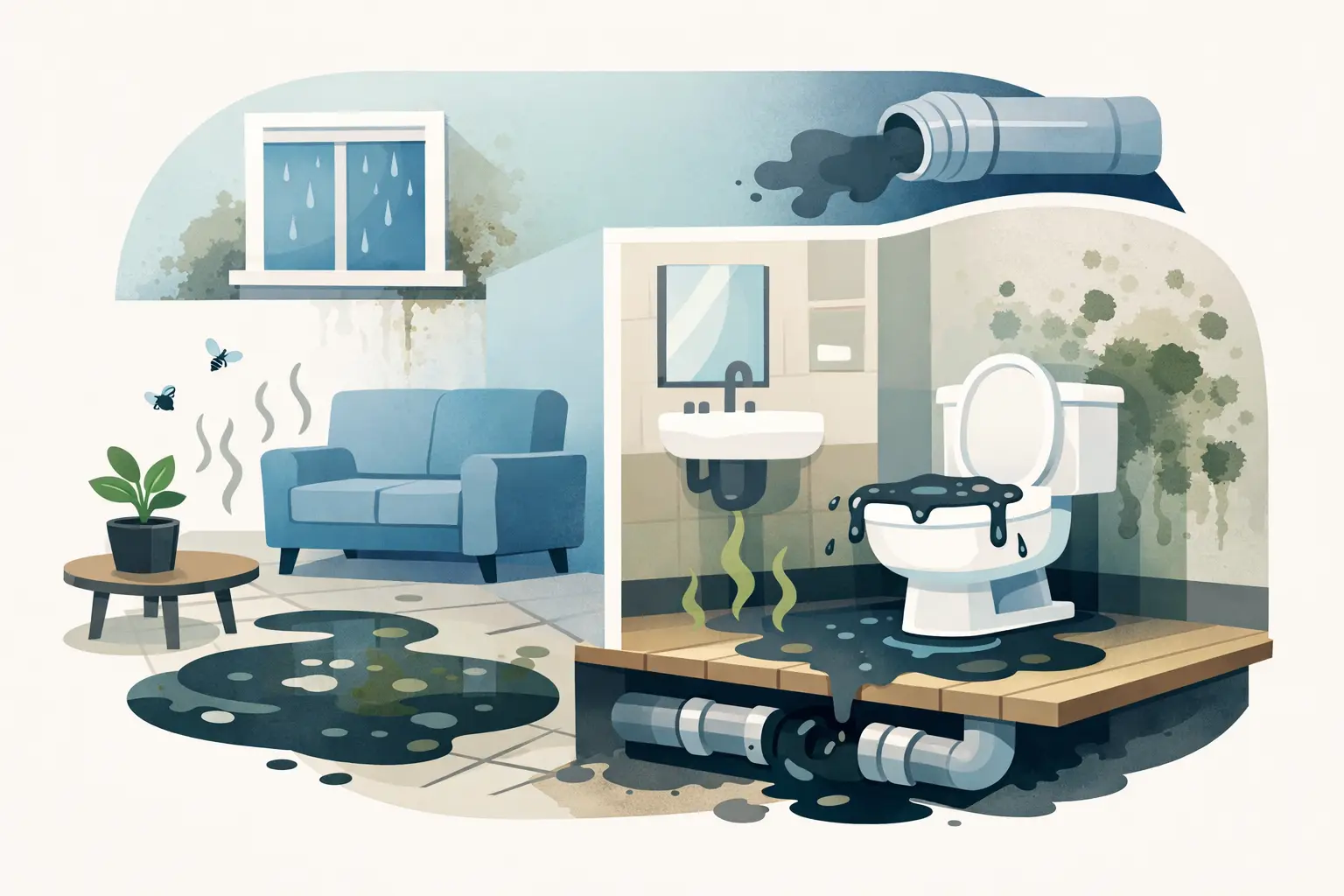
A bathroom floor that stays wet after a toilet overflow is not just a cleaning problem. It may be contaminated water moving beneath flooring, into walls, or through a finished basement. Knowing the top signs of sewage contamination indoors helps you act before odors, bacteria, moisture damage, and mold create a much larger repair.
Sewage backups are stressful because the visible mess is often only part of the problem. Wastewater can carry harmful microorganisms, soak porous materials, and leave behind contamination even after the surface looks dry. If you suspect a drain backup, toilet overflow, or sewer line issue in your Mason-area home, keep people and pets away from the affected space and arrange professional cleanup as soon as possible.
Top Signs of Sewage Contamination Indoors
A strong sewer or rotten-egg odor
A persistent sewage smell is one of the clearest warning signs. The odor may be strongest near a basement floor drain, bathroom, laundry room, crawl space, or utility closet. It can smell musty, sour, rotten, or distinctly like sewage.
Sometimes a dry plumbing trap causes a sewer-gas smell, particularly in an unused basement bathroom. But if the smell appears after an overflow, comes with dampness, or does not go away after running water into the drain, treat it seriously. An odor can mean wastewater has entered building materials or remains inside a drain line.
Dark, cloudy, or dirty water coming from a drain
Clean-water leaks are one thing. Water that is brown, black, gray, cloudy, or filled with debris is another. When water rises from a floor drain, shower drain, toilet, or sink instead of draining away, it can point to a sewer backup.
Wastewater can contain toilet paper, waste, grease, food particles, and other debris. Do not try to push the blockage farther down with a plunger if multiple fixtures are backing up. Using more water may worsen the overflow and spread contamination across the floor.
Multiple drains draining slowly or backing up
One slow sink may be a localized clog. A toilet that bubbles when the washing machine drains, a shower that fills while a sink runs, or several drains moving slowly at once can signal a main sewer line problem.
This matters because a main-line blockage can force sewage out through the lowest open drain in the house. For many homes, that means a basement floor drain, lower-level shower, or first-floor bathroom. Turn off water use when this happens. Avoid flushing toilets, running the dishwasher, or starting laundry until the cause is identified.
Toilet overflow that reaches floors, walls, or nearby rooms
A toilet overflow should never be treated as ordinary mop-up when water has escaped the bowl. Even a short overflow can spread contaminated water under vinyl flooring, along baseboards, into subflooring, and through nearby carpeting.
The risk depends on the source and what entered the water, but toilet water is not something to take lightly. If the overflow involved waste, came from a backup, or spread beyond a small contained area, professional sewage cleanup is the safer choice. Proper work includes extraction, removal of unsalvageable porous materials when needed, cleaning, antimicrobial treatment, and controlled structural drying.
Stained flooring, damp baseboards, or swollen materials
Sewage contamination is not always obvious on day one. You may first notice a brownish stain at the edge of carpeting, a dark line along a baseboard, warped laminate, loose vinyl, bubbling paint, or soft drywall. These changes suggest moisture has traveled where it should not be.
Basements are especially vulnerable. Water can move beneath finished flooring and behind wall panels before a homeowner sees any standing water. A damp or stained area following a backup deserves an inspection, even if the plumbing now seems to be working normally.
Sewage residue, debris, or a greasy film
After water recedes, look for residue left behind on hard surfaces. This may include dirt, toilet paper, dark sediment, greasy buildup, or a dried film around drains and floor edges. These are common signs that wastewater entered the room.
Do not sweep or vacuum dried sewage residue. That can spread contamination into the air and to other areas of the home. Avoid touching affected materials without proper protective equipment, and do not use household fans to dry the space. Fans can move odors and contaminants while pushing moisture deeper into walls and flooring.
Mold or mildew appearing after a backup
Mold growth does not prove sewage was present, but it often confirms that moisture was not fully removed. Musty smells, fuzzy spots, discoloration on drywall, and recurring mildew around baseboards can develop when wet materials were left in place or dried too slowly.
Sewage-related water damage requires more than surface mold removal. The source of moisture and contamination must be addressed. In many cases, porous items such as padding, insulation, drywall, and certain flooring materials cannot be safely cleaned once contaminated. The right approach depends on the extent of the spread, the materials involved, and how long they stayed wet.
Why Sewage Cleanup Needs a Fast Response
Sewage is generally treated as highly contaminated water because it may contain bacteria, viruses, parasites, and other harmful pollutants. The concern is not only what can be seen. Microscopic contamination can remain in cracks, subflooring, wall cavities, and contents after the standing water is gone.
The first 24 to 48 hours also matter for the structure. Moisture can wick upward into drywall and framing, weaken materials, damage flooring, and support mold growth. Quick extraction and drying can reduce the scope of repairs, but the work has to be thorough. A room that feels dry on the surface may still hold damaging moisture underneath.
For homeowners, the safest first move is usually simple: stop using water fixtures, keep the area closed off, and call a qualified restoration company. If water is near electrical outlets, appliances, or a breaker panel, do not enter the area until it is safe to do so.
What Professional Sewage Cleanup Should Include
A proper sewage cleanup is more involved than spraying disinfectant and removing visible water. Trained technicians assess the source, identify where water traveled, and determine which materials can be cleaned and which need to be removed. They use extraction equipment, moisture meters, air movers, dehumidifiers, and industry-standard cleaning methods to return the affected area to a safe, dry condition.
A careful restoration process typically addresses the contaminated water, affected contents, hard-surface cleaning, removal of damaged porous materials, and structural drying. Documentation can also help when you need to speak with your insurance carrier. The exact scope depends on whether the water was contained, how long it sat, and whether it reached finished areas, insulation, cabinets, or HVAC components.
Kans Water Restoration provides sewage cleanup, water extraction, structural drying, and mold remediation for homeowners in Mason and nearby communities. With experienced technicians and IICRC-informed restoration practices, the goal is to handle the immediate mess while preventing the moisture and contamination problems that can follow.
Do Not Wait for the Smell to Get Worse
If wastewater came up through a drain, a toilet overflow spread across the room, or your basement has a sewage odor with unexplained dampness, treat it as a time-sensitive property emergency. Do not rely on a mop, air freshener, or open windows to solve a contamination issue.
A fast professional assessment can tell you what was affected, what can be saved, and what needs to happen next. Getting the space properly cleaned and dried now helps protect your home, your indoor air, and the people who live there.

