
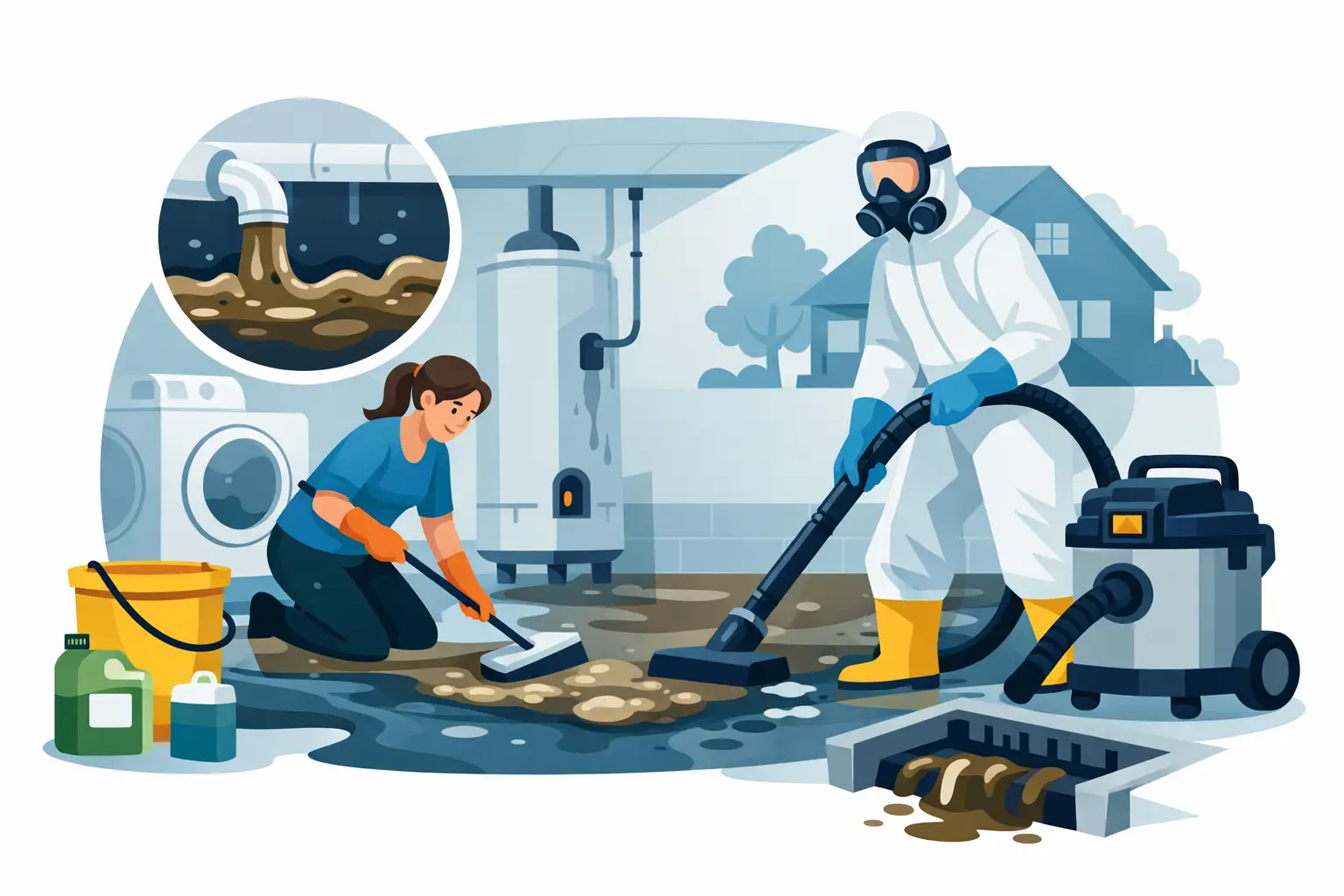
A sewage backup is not a mess to mop up and sort out later. It can carry bacteria, viruses, and other contaminants into flooring, walls, furniture, and the air inside your home. This homeowner guide to sewage cleanup explains what to do in the first few minutes, what should be removed, and when it is time to bring in trained restoration help.
Whether the source is an overflowing toilet, a basement drain backup, or a blocked sewer line, the priority is the same: keep people away from the affected area and stop contamination from spreading through the house.
Start With Safety, Not Cleanup
Keep children, pets, and anyone with a weakened immune system out of the affected area. Do not walk through sewage water and then continue through the home. Contaminated water can spread on shoes, socks, tools, and clothing, carrying bacteria into clean rooms.
If water is near outlets, appliances, electrical cords, or the electrical panel, do not enter the area until power can be safely shut off. Never stand in water to unplug equipment. If you smell gas, leave the home and contact the appropriate emergency utility service.
Close doors leading into the affected space if possible. In a basement, avoid running fans that could blow contaminants into other areas before proper containment is in place. Opening exterior windows may help with odor in some situations, but it does not make sewage contamination safe.
Stop the Source if You Can Do It Safely
A toilet overflow may stop when you turn off the toilet’s water supply valve, usually located behind or beside the fixture. If the toilet is still running, carefully lift the tank lid and close the flapper inside the tank if you can do so without contacting contaminated water.
For a drain backup or sewer line issue, stop using all water in the house. Do not flush toilets, run the dishwasher, use the washing machine, or take showers. Adding more water to the plumbing system can force more sewage through a lower drain, especially in a basement bathroom or laundry area.
If a municipal sewer backup may be involved, contact your local utility provider or a licensed plumber. A restoration company handles the water removal, cleanup, drying, and contaminated materials. A plumber identifies and repairs the drainage or sewer issue that caused the backup. In many cases, homeowners need both.
Why Sewage Water Requires Professional Cleanup
Restoration professionals generally treat sewage backups as Category 3 water contamination, often called black water. This category can include human waste, toilet water containing feces, drain backups, and water from a sewer line. Even if the water looks clear, it can still contain harmful microorganisms.
The hard part is not just removing visible water. Contaminated moisture can soak beneath vinyl flooring, into carpet padding, behind baseboards, inside drywall, and into insulation. If those materials are not assessed and handled correctly, odors, bacteria, and later mold growth can remain hidden.
A small toilet overflow that is caught immediately and stays on a hard, nonporous floor may have a limited cleanup scope. A backup that reaches carpet, drywall, unfinished basement contents, or several rooms is a very different situation. The right response depends on the water source, how long it sat, which materials it touched, and whether it traveled into concealed spaces.
What You Can Do Before Help Arrives
If it is safe to enter the area, take photos and short videos before moving anything. Document the affected rooms, damaged belongings, visible water lines, and the suspected source. This can be useful when speaking with your insurance carrier.
Wear disposable gloves, waterproof boots, and protective eyewear if you must enter a limited affected area. Avoid using a standard household vacuum, shop vacuum, or carpet cleaner on sewage water. These tools are not designed for contaminated water removal and can spread contamination or become contaminated themselves.
You can move clean, dry belongings away from the area if they have not been touched by sewage. Place them in a clean room, not in the garage or another damp area. Do not try to save items that are visibly saturated with sewage by rinsing them in a sink or bathtub. That can spread contamination to plumbing fixtures and surrounding surfaces.
Do not use bleach as a substitute for full cleanup. Bleach may disinfect some hard surfaces when used properly, but it does not remove contaminated water from padding, drywall, subfloors, or insulation. Mixing cleaning products can also create dangerous fumes.
Materials That Often Need to Be Removed
Porous materials absorb sewage water and are difficult to fully clean and disinfect. In many sewage loss situations, contaminated carpet and carpet padding need to be removed. Drywall that has absorbed sewage water, wet insulation, particleboard furniture, fabric-covered furnishings, books, and cardboard boxes may also need disposal.
Hard, nonporous items may be cleaned and disinfected if they can be thoroughly treated. This can include glass, metal, some plastic items, and certain sealed surfaces. Solid wood furniture is a case-by-case decision. Its condition, finish, exposure time, and level of contamination all matter.
Do not throw contaminated materials into your regular household trash unless local disposal rules allow it. A professional cleanup crew can bag, remove, and dispose of affected materials using appropriate containment practices.
A Homeowner Guide to Sewage Cleanup and Drying
Once contaminated materials are removed, the home still needs to be dried correctly. Water can remain under flooring, behind walls, and in framing long after the surface looks dry. Leaving that moisture behind can lead to structural damage, unpleasant odors, and mold growth.
A professional sewage cleanup process typically includes controlled extraction, removal of unsalvageable materials, cleaning and disinfection of remaining structural surfaces, and targeted structural drying. Technicians use moisture meters and other inspection equipment to determine where water traveled and to verify that the structure is drying as it should.
Air movers and dehumidifiers are useful when they are selected and placed correctly. However, drying equipment should not be used to skip cleaning or to dry contaminated contents in place. The affected space must first be made safe for drying.
Kans Water Restoration provides sewage cleanup and structural drying for homeowners in Mason and nearby communities. With trained technicians and industry-standard restoration methods, the focus is on getting contaminated water out, addressing affected materials, and helping return the space to a clean, dry condition.
Call Your Insurance Company Early
Call your insurance carrier after the immediate safety steps are handled. Ask what documentation they need and whether your policy includes sewer or drain backup coverage. Standard homeowners insurance does not always cover every kind of sewage backup, so the cause of the loss and your specific policy language matter.
Keep records of your conversations, claim number, photos, and any emergency services performed. Do not wait for an adjuster before taking reasonable steps to prevent additional damage. Removing standing sewage water and drying the structure promptly can protect both your home and your claim.
If you are unsure whether an item should be removed or saved, photograph it first. A restoration professional can help document affected materials and explain what can reasonably be cleaned versus what should be discarded.
Watch for Problems After the Visible Water Is Gone
A sewage loss can leave behind trouble signs days or weeks later. Watch for musty odors, staining along baseboards, bubbling paint, warped flooring, or dampness in nearby rooms. Mold can begin growing when materials remain wet, particularly in basements, bathrooms, and wall cavities with limited airflow.
Do not ignore a recurring floor drain backup or toilet overflow. Repeated incidents usually point to an underlying plumbing, drain, or sewer problem that needs repair. Cleaning the surface without fixing the cause can put your home through the same emergency again.
When sewage enters your home, fast action protects more than the floor. Keep the area isolated, stop using water if a drain or sewer line is backing up, and get qualified cleanup help before contamination and moisture have more time to spread.

