
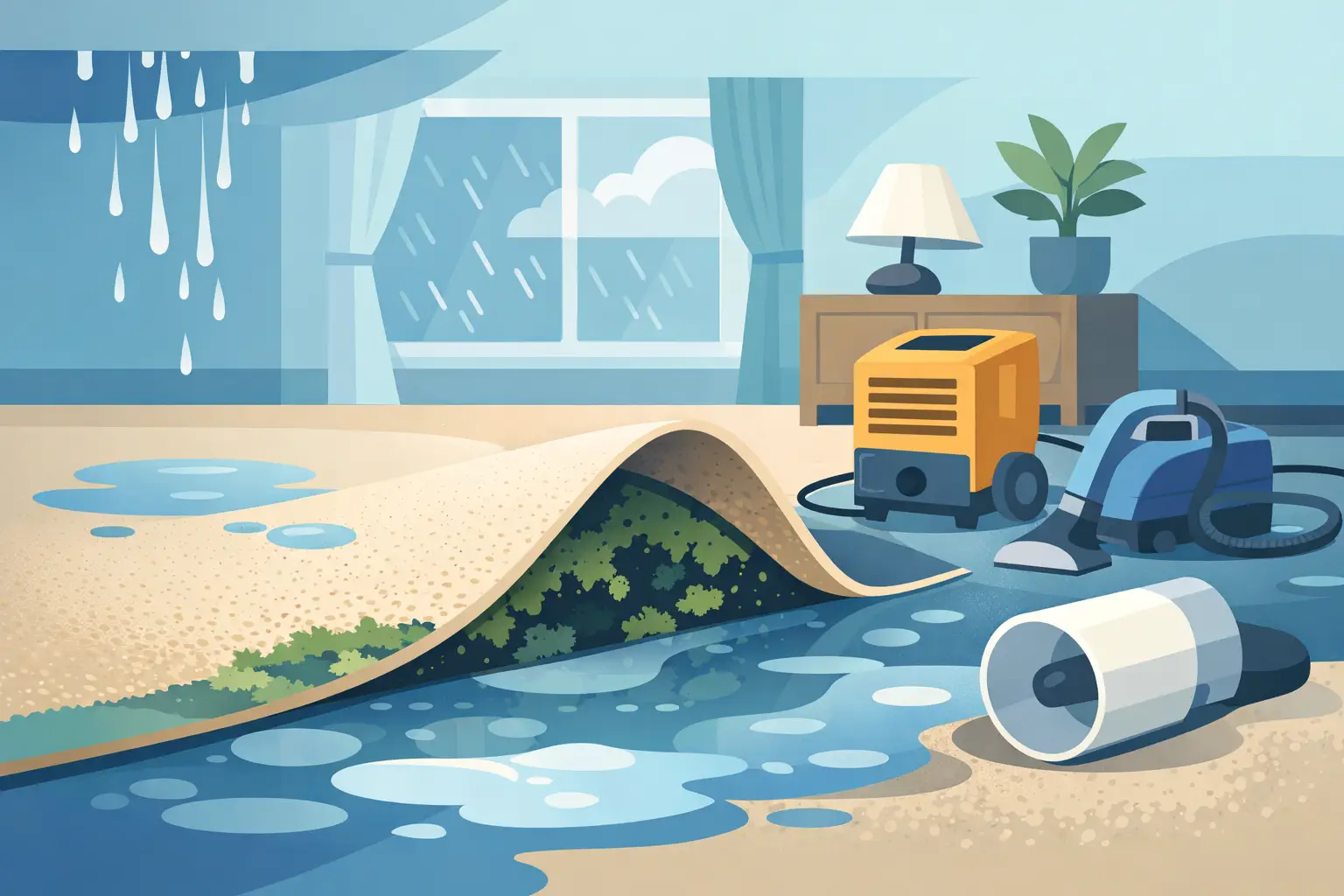
A soaked carpet can look like a cleanup problem, but the wet carpet mold risk starts beneath the surface. Water moves through carpet fibers into the padding, subfloor, baseboards, and wall edges. If that moisture is not removed correctly, a room may appear dry while mold has the conditions it needs to grow out of sight.
For homeowners in Mason and nearby communities, fast action after a basement flood, toilet overflow, broken pipe, or appliance leak can protect more than the carpet. It can help prevent odor, damaged flooring, contaminated materials, and a larger mold remediation project later.
How Quickly Can Mold Grow in Wet Carpet?
Mold can begin growing in as little as 24 to 48 hours when moisture, warmth, and a food source are present. Carpet backing, padding, dust, wood trim, paper-faced drywall, and the debris tracked into a home can all provide material for mold to feed on.
That does not mean every wet carpet has mold after one day. The real answer depends on where the water came from, how much water entered the room, how long it remained wet, and whether the carpet and padding were dried all the way through. A small clean-water spill caught immediately is different from several inches of water in a finished basement.
The biggest concern is hidden moisture. Homeowners may run fans, open windows, and feel dry carpet on top, yet the pad below can still be saturated. Moisture can also remain at the carpet tack strips, behind baseboards, under vinyl flooring, or inside wall cavities. Those areas need professional moisture testing, not guesswork.
Wet Carpet Mold Risk Is Higher After Contaminated Water
The source of the water matters as much as the amount. Water from a clean supply line can sometimes allow for faster salvage if extraction and drying begin right away. Water from a toilet overflow, drain backup, sewage release, outside flooding, or groundwater intrusion requires more caution.
Contaminated water can carry bacteria, waste, dirt, and other pollutants into carpet and padding. In many cases, porous materials affected by sewage or floodwater cannot be safely cleaned and reused. Keeping them in place to save a little money can leave behind odor, contamination, and ongoing mold conditions.
Do not assume clear water is clean water. A washing machine backup, dishwasher overflow, or shower drain issue may contain wastewater depending on the cause. A trained restoration technician can assess the water category, identify affected materials, and recommend the right removal and drying plan.
Signs Your Wet Carpet Needs Professional Attention
A musty smell is a common warning sign, but odor is not the only one. Watch for carpet that feels damp again after seeming dry, rippling or buckling, dark staining along the baseboards, damp drywall, peeling paint, or discoloration around floor edges.
You may also notice that a basement feels humid or that the HVAC system starts spreading a stale odor through the home. These signs do not prove mold by themselves, but they do mean moisture may still be present where it should not be.
If anyone in the home has asthma, allergies, respiratory sensitivities, or a weakened immune system, do not delay when there is visible mold or a persistent damp odor. Keep people away from the affected area as much as practical until the source is controlled and the materials are properly evaluated.
Why Shop Vacuums and Household Fans Often Fall Short
Homeowners naturally want to get the water up right away, and that first response can help. Towels, a wet vacuum, and portable fans may reduce visible water, especially after a small spill. But they rarely provide the extraction power, air movement, dehumidification, or moisture monitoring needed after a significant water event.
Carpet padding is designed to hold moisture. Once it is saturated, drying only the carpet face can leave a wet layer against the subfloor. Wood framing and drywall can also absorb water from the floor up. Without controlled drying, the problem can continue after furniture is moved back and daily life resumes.
Professional structural drying uses commercial extraction equipment, air movers, dehumidifiers, and moisture meters to remove water and track progress. The goal is not simply to make the room feel dry. The goal is to return affected materials to an acceptable dry standard and address materials that cannot be safely restored.
What to Do Right After Carpet Gets Wet
The first few hours matter. If the water source is still active, shut it off if you can do so safely. Avoid entering standing water near electrical outlets, appliances, or extension cords. If sewage, floodwater, or a backup is involved, keep children and pets away from the area.
Take photos for your insurance records before moving items, then remove lightweight belongings from the wet area if they are safe to handle. Do not pull up carpet or remove baseboards without knowing what is underneath, particularly after contaminated water. Unnecessary disturbance can spread contamination or release mold particles if growth has already started.
For a larger loss, the practical next step is to call a restoration company that can respond quickly. Fast extraction, material assessment, and documented drying are usually far less disruptive than waiting for odor or visible mold to appear.
When Carpet Can Be Saved and When It Should Go
Carpet is not automatically a total loss after every leak. If clean water affected a limited area and professionals can extract and dry the carpet, pad, and subfloor promptly, salvage may be possible. Age, carpet type, backing condition, and how long the materials stayed wet also affect that decision.
Padding is more difficult. It often needs replacement after substantial water exposure because it holds water deeply and does not dry evenly. In a finished basement, removing wet padding can also allow technicians to inspect the concrete or wood subfloor and check adjacent walls for moisture.
Carpet exposed to sewage, outdoor floodwater, or other heavily contaminated water is a different situation. The safest recommendation is often removal and disposal of affected porous materials. It is an unpleasant decision, but it protects the home from a problem that cannot be solved with surface cleaning.
The Cost of Waiting Is Usually More Than Drying
Waiting a day or two may seem reasonable when the carpet does not look badly damaged. Unfortunately, moisture damage does not always announce itself right away. A damp pad can lead to mold growth, damaged tack strips, swollen baseboards, weakened drywall, and odors that are difficult to remove.
Insurance claims can also become more complicated when a preventable secondary problem develops. Documenting the water event, response, affected materials, and drying process gives homeowners a clearer record of what happened and what work was needed.
Kans Water Restoration helps homeowners and businesses in Mason, West Chester, Loveland, Liberty Township, and surrounding areas respond to water damage before it becomes a larger mold problem. Trained technicians can extract water, evaluate carpet and padding, monitor moisture, and handle mold remediation when conditions call for it.
Get the Moisture Checked Before You Put the Room Back Together
Do not judge a water-damaged room by appearance alone. Before replacing furniture, reinstalling baseboards, or covering the area with rugs, make sure the carpet system and surrounding materials have been checked for retained moisture.
A fast response after wet carpet can preserve more of your home and spare you from a much bigger cleanup. If your carpet was soaked by a leak, backup, or flood, getting professional drying help now is the practical way to protect the room before mold gets comfortable.

