
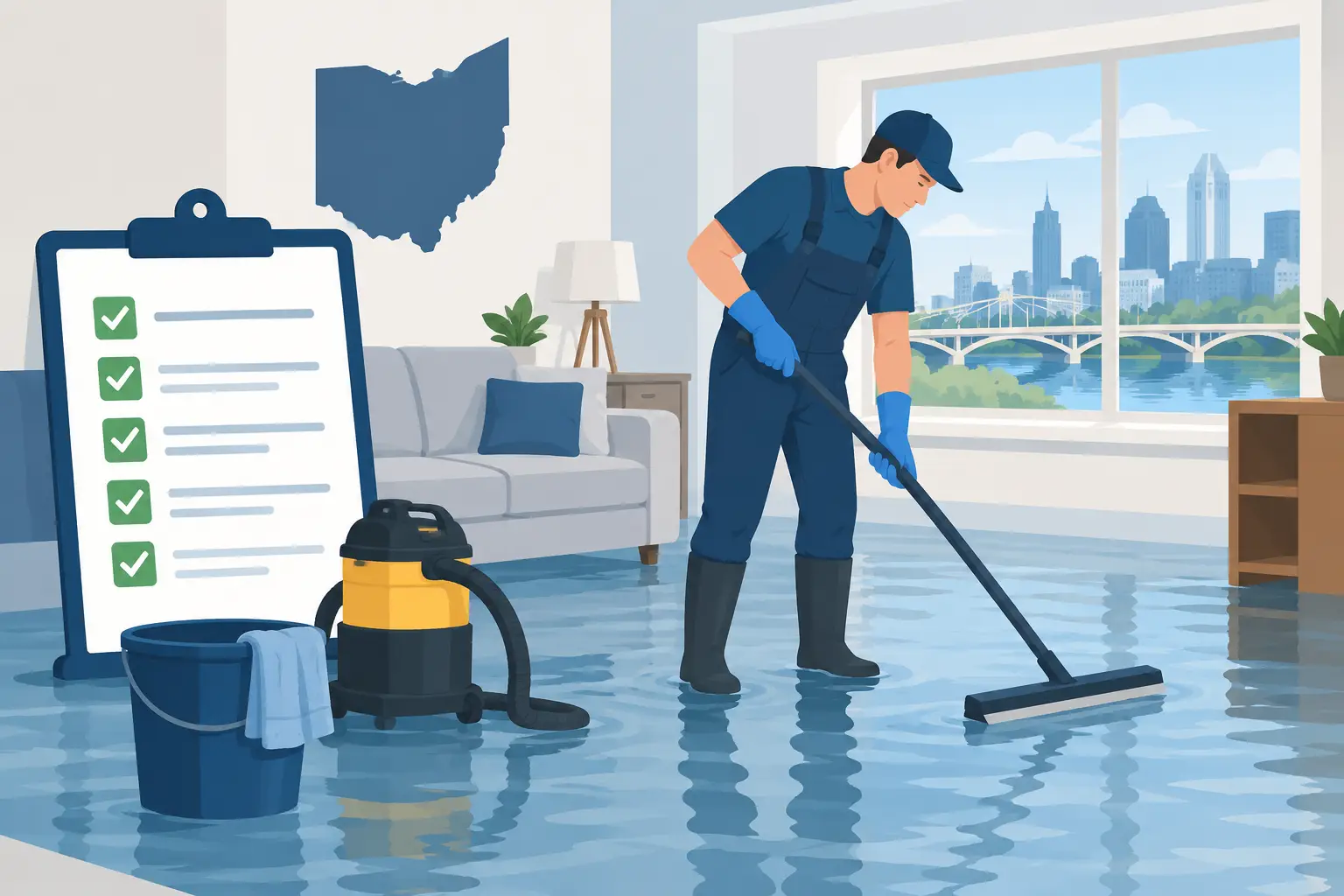
A wet basement floor can turn into soaked drywall, warped flooring, and mold growth faster than most homeowners expect. This flood cleanup checklist helps you make the right first moves after a basement flood, appliance leak, toilet overflow, or drain backup – without taking chances that put your home or family at risk.
The first priority is not saving every item. It is stopping the source, staying safe around water and electricity, and getting the structure dried before moisture moves deeper into walls, insulation, cabinets, and subfloors. If the water is dirty, rising, or has been sitting for more than a few hours, professional cleanup is the safer call.
Flood Cleanup Checklist: Start With Safety
Before entering the affected area, look for hazards. Standing water can hide sharp objects, slippery surfaces, damaged outlets, and contamination. A flooded basement can also affect a furnace, water heater, electrical panel, or other equipment that should only be inspected by qualified professionals.
Do not walk through standing water if electrical power may be present. If it is safe to do so from a dry location, turn off electricity to the affected area. If you cannot safely reach the breaker panel, leave it alone and call for help. Never use household electrical equipment in a wet area.
Floodwater from an outside source, sewage backup, toilet overflow, or drain line should be treated as contaminated. Keep children and pets away. Avoid touching the water, and do not attempt to clean it up with a household vacuum, mop, or fan. Sewage and gray water can carry bacteria and other contaminants into flooring, walls, and personal belongings.
Use this immediate safety checklist:
- Stop the water source if you can do it safely, such as closing a supply valve or shutting off a leaking appliance.
- Avoid flooded rooms with electrical hazards, structural damage, or sewage-contaminated water.
- Keep people and pets out of the affected area.
- Take photos and short videos for insurance documentation before moving belongings, when safe to do so.
- Call a trained water restoration company when water is widespread, dirty, or soaking into building materials.
Identify What Kind of Water Entered Your Home
Not all water damage can be handled the same way. The source affects what can be saved, what must be removed, and how the cleanup area needs to be treated.
Clean water usually comes from a broken supply line, overflowing sink, appliance hose, or rainwater that has not contacted contaminants. Even clean water can become a mold problem when it soaks carpet, drywall, padding, insulation, wood framing, or contents. Fast extraction and structural drying still matter.
Gray water can come from washing machines, dishwashers, shower drains, or a toilet overflow without solid waste. It may contain chemicals and microorganisms. Materials that absorbed gray water may need more than surface cleaning, especially if the water sat for a while.
Black water includes sewage, wastewater backups, and floodwater from outside. This type of loss requires controlled removal, cleaning, disinfection, and drying. Porous materials like carpet padding, insulation, upholstered furniture, and some drywall often cannot be safely restored after sewage exposure.
If you are unsure of the source, treat the water as contaminated until a restoration professional assesses it. That decision protects your family and prevents a cleanup mistake that creates a larger problem later.
Remove Water Quickly, But Do Not Skip Drying
Water extraction is the visible part of flood cleanup. Structural drying is what helps prevent the hidden damage. A floor can look dry while moisture remains trapped under vinyl, behind baseboards, inside wall cavities, or beneath carpet padding.
For a small, clean-water spill caught immediately, you may be able to remove a few items and blot the area while waiting for help. A larger loss needs commercial extraction equipment. Restoration technicians use professional pumps, extractors, air movers, dehumidifiers, moisture meters, and thermal imaging tools to locate water that is not obvious on the surface.
Do not assume opening windows or running a few box fans will solve the problem. In humid Ohio weather, outdoor air can add moisture rather than remove it. Household fans can also spread contaminated particles after a sewage backup. Proper drying depends on the materials affected, the humidity level, the amount of water, and how long the area has been wet.
Protect Belongings Without Spreading Damage
Move dry, undamaged belongings away from the affected area when it is safe. Place furniture on blocks or foil tabs to keep legs out of damp flooring. Remove wet rugs, boxes, and stored items from a basement floor, but do not carry contaminated items through clean areas of the home without containment.
Paper goods, cardboard boxes, mattresses, and upholstered furniture can hold moisture deep inside. Some items may be salvageable after clean-water damage if addressed quickly. Others are better removed to prevent odor and mold. Sentimental items, photographs, documents, and valuable contents may need specialized drying or content cleaning.
Avoid these common mistakes: do not stack wet items together, do not leave wet carpet in place for days, and do not seal damp belongings in plastic bags. Trapped moisture speeds up odor and microbial growth.
Watch for Damage Behind Walls and Under Floors
Flood cleanup is not finished when the standing water is gone. Drywall can wick water upward from the floor. Baseboards may hide wet wall cavities. Laminate flooring can swell at the seams, while hardwood can cup or buckle. In finished basements, insulation and framing may remain damp long after the carpet feels dry.
A trained restoration team checks moisture levels in affected materials instead of relying on touch alone. This is especially important after a basement flood, pipe leak behind a wall, bathroom overflow, or appliance leak that traveled beneath flooring.
Signs that moisture may still be present include a musty smell, peeling paint, swollen trim, soft drywall, dark staining, buckling floors, or condensation in an area that was previously dry. Do not paint over stains or cover the area with new flooring before the moisture source is corrected and the structure is dry.
Prevent Mold Before It Starts
Mold can begin growing quickly when wet materials are not dried correctly. It does not always appear as a large dark patch. Early growth may show up as a musty odor, light spotting, or discoloration along baseboards, inside closets, around windows, and behind furniture.
The goal is to remove water, control humidity, and dry affected building materials to acceptable moisture levels. If mold is already visible, avoid disturbing it with aggressive scrubbing or fans. That can spread spores to other rooms. Mold contamination following water damage should be evaluated and remediated with the right containment and cleaning methods.
Kans Water Restoration helps homeowners in Mason and nearby communities handle both the immediate water removal and the secondary mold concerns that can follow a flood or backup. Experienced technicians can determine which materials can be dried and cleaned, and which need removal for a safe recovery.
When to Call a Water Restoration Professional
A professional response is strongly recommended for sewage backups, outdoor flooding, water near electrical equipment, large basement floods, and any loss affecting drywall, flooring, insulation, or multiple rooms. It is also the right choice when water has been present overnight, you smell mold or mildew, or you cannot identify where the water came from.
Professional restoration is not simply about bringing in bigger fans. The work includes identifying the water category, extracting water, removing unsalvageable materials when necessary, treating affected surfaces, monitoring moisture, and documenting the drying process. That level of control helps reduce the chances of lingering odor, mold growth, and avoidable repairs.
If your home has flooded, act while the damage is still limited. A quick call for trained cleanup can protect the parts of your home you cannot see yet – and help your family get back to a clean, dry space sooner.

