
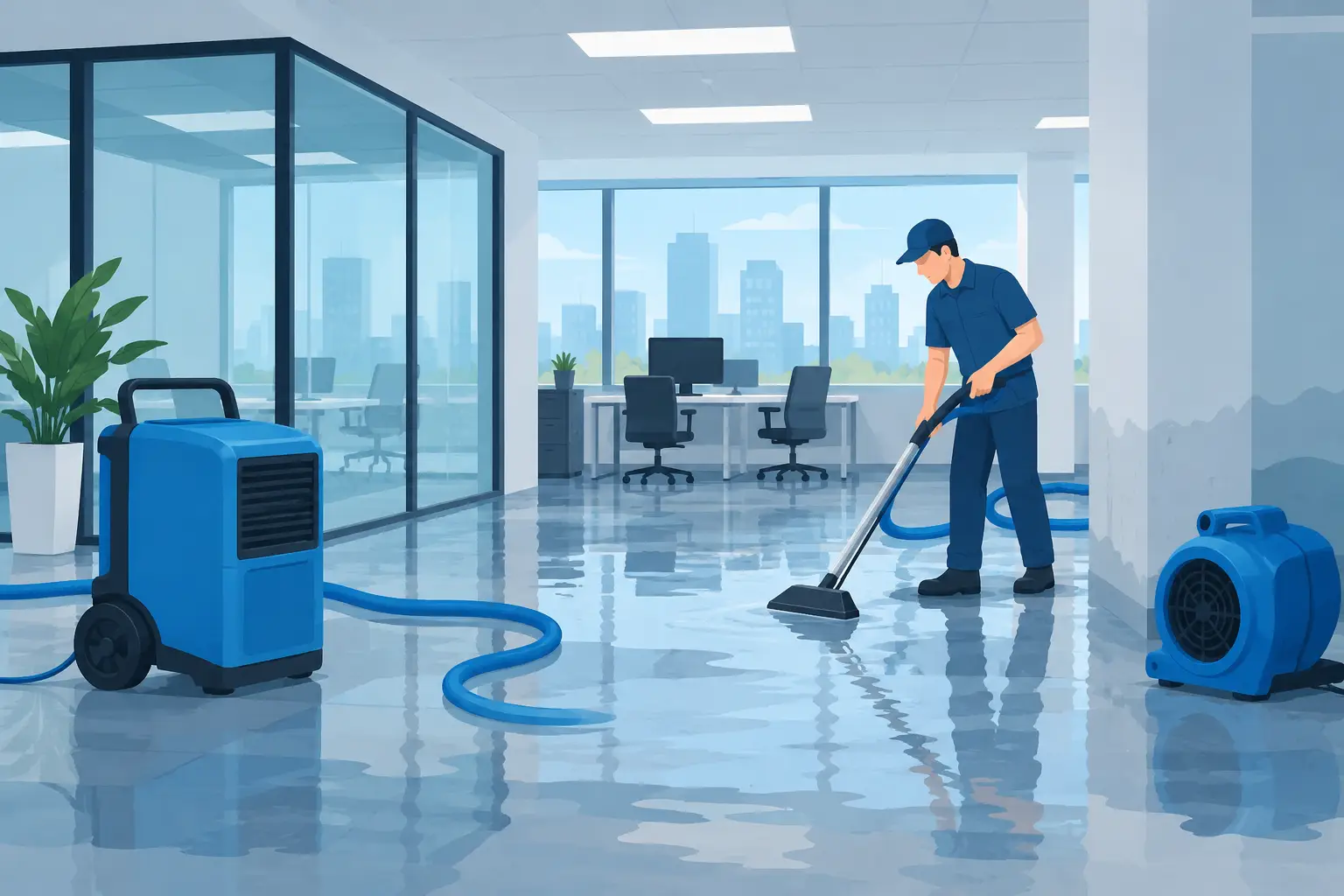
A burst supply line above a storefront, a backed-up floor drain in a restroom, or a roof leak after a hard Ohio storm can shut down a business fast. This guide to commercial water damage recovery explains what needs to happen in the first hours, how professional drying protects the building, and how to make sound decisions while employees, customers, and revenue are affected.
Commercial water loss is not simply a larger version of a wet basement. Offices, retail spaces, medical practices, restaurants, warehouses, and multi-unit properties have more people, more equipment, and more pressure to reopen safely. The right response limits structural damage and helps prevent a water emergency from becoming a mold, odor, or contamination problem.
First Priority: Stop the Water and Protect People
Do not send staff into standing water to move furniture or equipment if there is any chance of electrical exposure, sewage contamination, or weakened materials. Keep customers and employees away from the affected area. If water is near outlets, power strips, machinery, or electrical panels, shut off power to the area only if it can be done safely.
The source must be controlled before restoration work can succeed. That may mean shutting off the main water supply, calling a plumber for a failed pipe, stopping an overflowing toilet, or arranging emergency roof repairs. For a drain or sewer backup, treat the water as contaminated until a trained restoration team evaluates it.
If conditions are safe, move undamaged inventory, documents, electronics, and movable furnishings out of the wet area. Take clear photos and video before major cleanup begins. Documentation supports insurance claims and gives your restoration contractor a record of where water traveled.
Call for Commercial Water Damage Help Early
Time matters because water moves behind walls, beneath flooring, through ceiling cavities, and into insulation. A floor may look dry on the surface while moisture continues spreading underneath. Within a day or two, damp drywall, wood framing, carpet backing, and contents can create conditions for mold and mildew growth.
A professional restoration company brings extraction equipment, air movers, dehumidifiers, moisture meters, thermal imaging tools, and containment materials that are not practical for most businesses to keep on hand. More importantly, trained technicians know how to use those tools without creating new problems. Adding fans without proper dehumidification, for example, can move moisture into other areas rather than removing it from the building.
Kans Water Restoration provides local water cleanup, structural drying, mold remediation, and sewage cleanup for commercial properties in Mason and nearby Cincinnati-area communities. Fast action gives your business the best chance of saving finishes, contents, and usable space.
A Guide to Commercial Water Damage Recovery: The Professional Process
Every loss is different, but proper recovery follows a clear sequence. The scope depends on the water source, how long materials were wet, the size of the affected area, and the type of construction in the building.
Inspection and moisture mapping
Technicians begin by identifying the source, classifying the water, and checking where moisture has migrated. Clean water from a broken supply line may be recoverable if handled promptly. Water from a toilet overflow, dishwasher discharge, drain backup, or exterior flooding requires more caution. Category 3 water, often associated with sewage or serious contamination, calls for controlled removal, cleaning, and disinfection.
Moisture readings are taken from floors, walls, baseboards, ceilings, insulation, cabinets, and other materials. This creates a drying plan based on actual conditions, not guesswork. It also helps identify hidden pockets of water that could otherwise lead to odors, material failure, or mold later.
Extraction comes before drying
Removing standing water quickly is one of the most effective ways to reduce damage. Truck-mounted extractors, portable extraction units, pumps, and weighted extraction tools may be used depending on the building and flooring. The goal is to remove as much liquid water as possible before equipment is set for drying.
Some materials can be dried and saved. Others may need removal because they absorbed contaminated water, swelled, delaminated, or cannot dry within an acceptable timeframe. Wet insulation, saturated ceiling tiles, damaged particleboard furniture, and affected carpet padding are common examples. The decision should be based on condition and contamination, not appearance alone.
Controlled structural drying
After extraction, drying equipment is positioned to move moist air away from wet materials and pull humidity out of the space. Air movers create airflow across surfaces, while dehumidifiers collect moisture from the air. In some buildings, technicians may use wall cavity drying systems or floor drying equipment to reach hidden moisture without unnecessary demolition.
Drying is monitored daily or as conditions require. Technicians adjust equipment and record moisture levels until building materials reach appropriate dry standards. This verification step matters. Removing equipment too early can leave moisture inside walls or below flooring, where it can cause trouble weeks after the business reopens.
Cleaning, sanitation, and odor control
A clean-water loss may require limited cleaning after drying. A sewage backup or contaminated water event requires a much more detailed approach. Affected materials may need removal, hard surfaces must be cleaned and disinfected, and the work area may need containment to prevent contaminants from spreading through the building.
Odor control should never cover up a moisture issue. A musty smell is often a warning sign that damp materials or microbial growth remain. The source has to be corrected and the area thoroughly dried before deodorizing methods can be effective.
Protect Business Operations and Your Insurance Claim
Water damage recovery is also a business continuity problem. Decide early whether parts of the building can remain open safely or whether operations need to shift temporarily. A retail business may be able to close one affected section while serving customers elsewhere. A medical office, food service business, or childcare setting may face stricter sanitation requirements and may need to close until cleanup is complete.
Contact your insurance carrier promptly and ask about emergency mitigation coverage, documentation requirements, and business interruption provisions. Keep photos, videos, invoices, equipment records, employee communications, and a list of damaged contents. Do not wait for an adjuster before taking reasonable steps to stop further damage. Emergency extraction and drying are often necessary to protect the property.
Be careful about discarding damaged inventory or materials before they are documented, unless they create an immediate health or safety concern. Your restoration team can help organize the affected areas, identify what may be salvageable, and provide clear records of the work performed.
When Mold or Sewage Is Involved
Not every water loss creates mold, but extended moisture creates risk. Mold can begin growing on damp organic materials such as drywall paper, wood, carpet backing, and stored cardboard. If there is visible growth, a persistent musty odor, or materials that stayed wet for more than 24 to 48 hours, the affected area should be evaluated carefully.
Sewage backups need a higher level of caution. Do not use standard shop vacuums or household cleaners to handle contaminated water in a commercial facility. Porous materials may need to be removed, and the remaining structure must be cleaned and disinfected using appropriate procedures. Trained technicians with IICRC water damage restoration and applied microbial remediation knowledge can help determine the safest path forward.
Prevent the Next Disruption
Once the building is dry, review what caused the loss. A recurring drain backup may point to a sewer line issue. A leak above a ceiling may be tied to roof flashing, an HVAC drain line, or a plumbing failure. Correcting the source is just as important as repairing finishes.
For businesses with valuable equipment or frequent water risks, keep an emergency contact list, mark main water shutoffs, inspect roof drains and gutters, service HVAC systems, and store inventory off the floor where practical. Small preventive steps can reduce the size of the next loss.
A water emergency is disruptive, but fast, organized recovery can protect your building and help your team get back to work with confidence. If you see standing water, damp walls, warped flooring, or a musty odor, act before the damage has more time to spread.

