
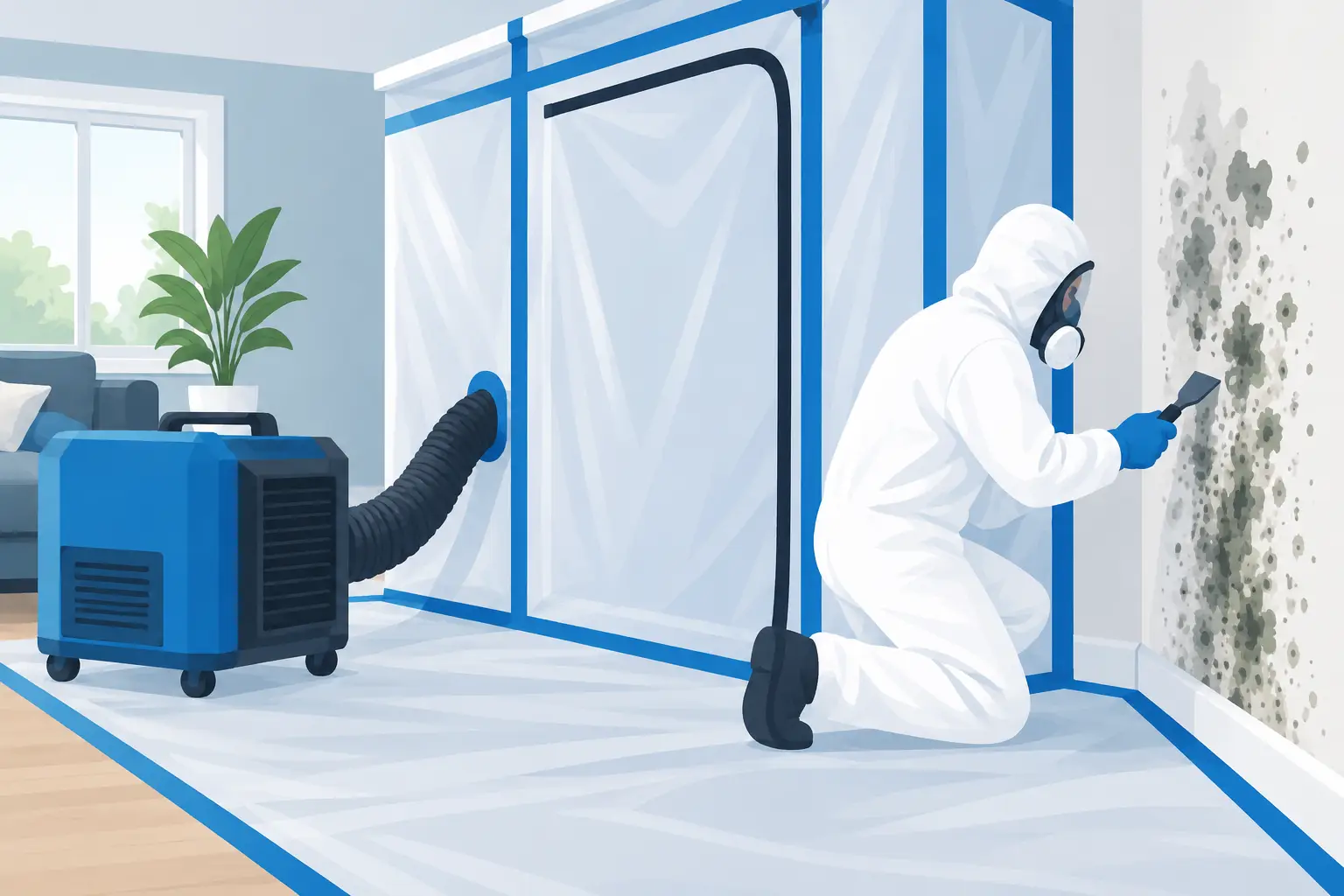
A mold problem can get worse fast when contaminated materials are disturbed without proper controls. This guide to professional mold containment explains why trained remediation crews do more than remove visible growth. They isolate the affected area, control airborne particles, protect clean parts of the home, and address the moisture source that allowed mold to grow in the first place.
For homeowners in Mason and nearby Cincinnati communities, containment matters most after a basement flood, hidden plumbing leak, bathroom overflow, roof leak, or long-term humidity issue. What appears to be a small patch on drywall or baseboard can release spores into other rooms when it is scrubbed, torn out, or dried improperly. The goal is to stop the spread before cleanup begins.
What Professional Mold Containment Does
Mold containment is the process of separating a contaminated work area from the rest of the property during remediation. It is not simply hanging a sheet of plastic in a doorway. Proper containment is a controlled setup designed around the location of the damage, the materials affected, the size of the area, and the way air moves through the home.
A trained crew first looks for the source of moisture and the full extent of damage. Mold behind a finished basement wall, under flooring, inside a vanity, or around wet insulation often reaches farther than the visible surface suggests. Removing materials before that assessment can spread debris and spores into clean areas.
Containment keeps remediation work focused where it belongs. It helps protect bedrooms, kitchens, living spaces, HVAC pathways, furniture, and personal belongings from cross-contamination while damaged materials are removed and the structure is cleaned and dried.
When Mold Containment Is Needed
Not every spot of mildew requires a full containment chamber. A small, isolated area on a nonporous surface may be handled differently than mold growth caused by a sewage backup or a long-term leak inside a wall. The right approach depends on the condition of the materials and whether cleanup activities could disturb contamination.
Professional containment is commonly needed when mold is widespread, when building materials must be removed, or when the affected area is inside a wall, ceiling, crawl space, basement, or HVAC-connected area. It is also a smart precaution when occupants have respiratory sensitivities, when the property is occupied during work, or when a commercial space needs to keep unaffected operations running.
Water damage changes the equation. Drywall, carpet padding, insulation, engineered flooring, and wood framing can retain moisture after a flood or plumbing failure. If drying is delayed, mold can begin growing where you cannot see it. Fast water extraction and structural drying can often reduce the need for larger mold remediation later.
How a Professional Containment Area Is Built
The setup should fit the property, not follow a one-size-fits-all routine. A crew may use a limited containment area for a small bathroom or a larger barrier system for a finished basement with multiple affected walls. In either case, the purpose is to keep airborne particles from traveling beyond the work zone.
Containment typically starts with durable plastic barriers secured around the affected area. Openings, gaps, vents, and pathways that could allow air movement are considered during setup. Workers use a controlled entry point so they are not repeatedly opening the containment barrier during removal and cleaning.
For more significant conditions, negative air equipment may be used to create pressure control inside the work area. This helps direct air into the contained zone rather than allowing contaminated air to drift outward. HEPA-filtered air scrubbers can also help capture fine particles during demolition, cleaning, and drying.
The equipment is only part of the process. A barrier that is not sealed correctly, equipment that is not positioned properly, or a work area that is opened too soon can reduce the effectiveness of containment. That is why professional experience matters when the damage involves hidden moisture and building materials.
Clean and dirty areas must stay separate
Containment works best when the crew treats the work zone as a controlled area. Tools, debris, and protective gear are managed so contaminants are not carried into clean rooms. Removed drywall, carpet, insulation, and other affected materials are bagged or wrapped before they leave the containment area.
This process may seem careful, but it prevents a bigger cleanup later. Carrying debris through a hallway without protection can turn one damaged basement room into a concern for the rest of the home.
The HVAC system needs attention too
Air movement can carry moisture and particles far beyond the original leak. Depending on the situation, a restoration professional may recommend shutting down or protecting HVAC components serving the affected area while work is underway. If mold or moisture has entered ductwork or air-handling equipment, that issue needs separate evaluation.
A homeowner should not assume that a room smells clean just because the visible mold is gone. Odors can remain when wet materials, microbial growth, or hidden moisture have not been fully addressed.
Containment Is Not a Substitute for Removing Moisture
Plastic barriers and air machines do not solve the underlying problem by themselves. Mold needs moisture to grow, so successful remediation always includes correcting the water source. That may mean repairing a leaking supply line, stopping foundation seepage, addressing a drain backup, fixing a failed shower seal, or improving drying after a flood.
Once the source is controlled, affected materials are evaluated. Some nonporous materials can often be cleaned. Porous materials that are heavily contaminated or cannot be dried properly may need removal. Wet insulation, swollen drywall, saturated carpet padding, and mold-damaged ceiling tiles are common examples.
The trade-off is straightforward: saving materials can reduce repair costs, but keeping materials that remain wet or contaminated can lead to recurring odors, repeat mold growth, and more extensive repairs later. A professional assessment helps homeowners make decisions based on the actual condition of the structure rather than appearances alone.
Why DIY Cleanup Can Spread the Problem
Homeowners often want to act quickly, especially when they see mold after a leak. Quick action is good, but tearing out drywall, using a household fan, or spraying cleaners onto a larger mold-damaged area can create problems. Fans can move particles into other parts of the home. Scrubbing can disturb growth. Bleach does not correct moisture trapped behind walls or under floors.
DIY cleanup may be reasonable for a very small surface issue with no ongoing moisture source. But if the area keeps returning, there is a musty odor, materials feel damp, or growth appears after flooding or sewage exposure, it is time for professional help. Those signs can point to damage outside the visible area.
A trained restoration team uses containment alongside moisture detection, water extraction, controlled demolition, structural drying, cleaning procedures, and specialized equipment. IICRC-based water damage restoration and applied microbial remediation practices help guide work that is meant to protect both the property and the people living in it.
What to Expect During Mold Remediation
Before work starts, the crew should explain the affected area, the likely source of moisture, and why specific containment measures are recommended. You should know which rooms will be restricted, how long equipment may need to run, and whether any materials need to be removed.
During remediation, the work area may be noisy due to air scrubbers, dehumidifiers, and drying equipment. That inconvenience is temporary, but rushing the process can leave moisture behind. The timeline depends on the size of the loss, the materials involved, access to the damaged area, and how long the moisture has been present.
After removal and cleaning, the structure must be dry before repairs move forward. Moisture readings help confirm that framing, subfloors, and other structural materials have reached acceptable drying conditions. Only then should new insulation, drywall, flooring, or finishes be installed.
Get Help Before Mold Reaches More of Your Home
If you have a musty basement, visible mold after a leak, damp drywall, or water damage that was never fully dried, do not wait for the problem to spread. Kans Water Restoration provides local mold remediation, water cleanup, and structural drying for homeowners and businesses in Mason and surrounding communities.
The right containment plan protects the clean areas of your property while the damaged area is handled correctly. A prompt inspection can give you a clear next step and help keep a manageable problem from becoming a larger restoration project.

