
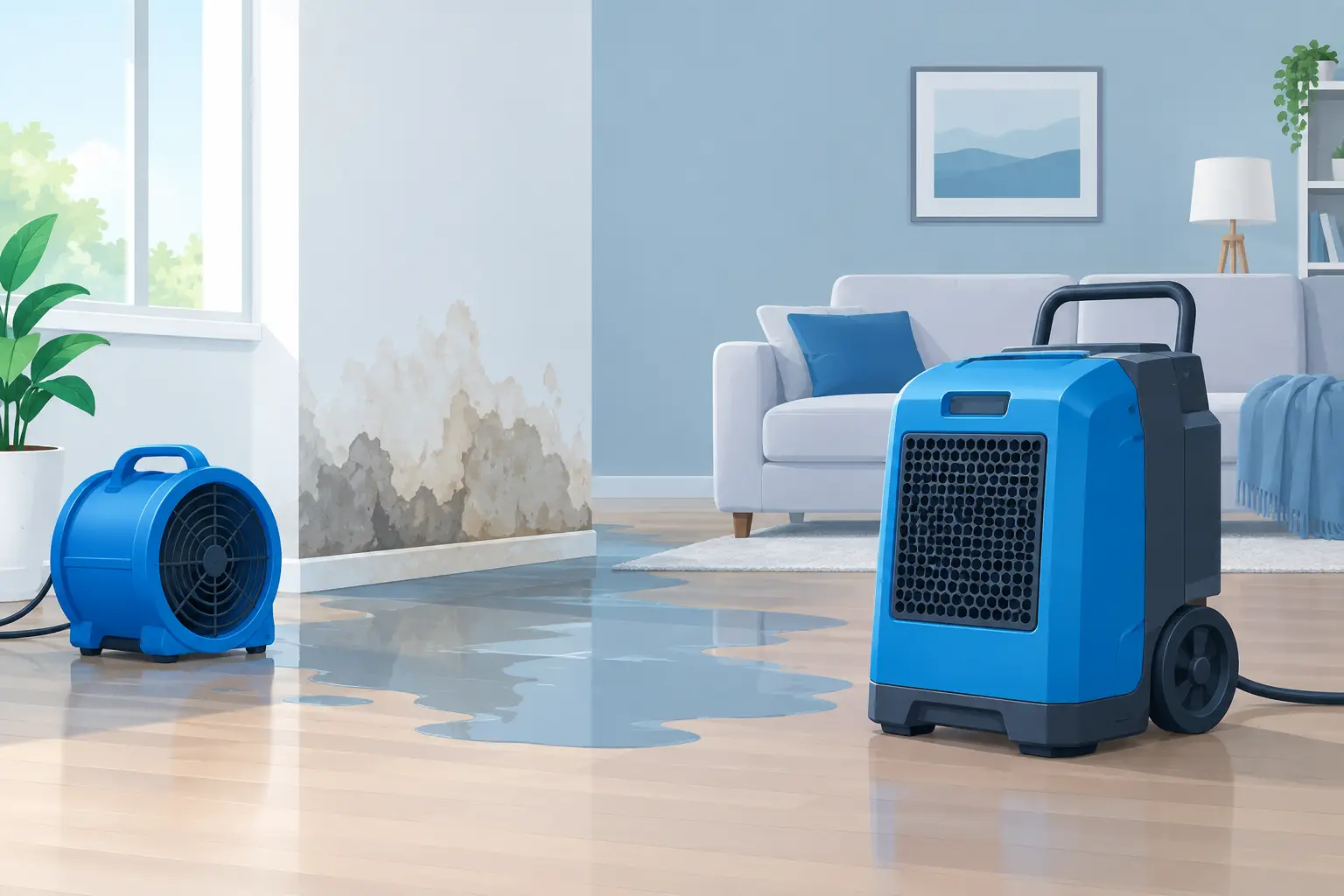
A basement can look dry after a sump pump failure, toilet overflow, or burst pipe, yet moisture may still be trapped under flooring, behind baseboards, and inside drywall. That is why dehumidification after water damage is not an optional finishing step. It is part of the work that helps stop a small water emergency from turning into warped materials, lingering odors, and mold growth.
For homeowners in Mason and nearby Cincinnati communities, the goal is simple: get standing water out, remove damaging moisture from the structure, and make the space safe to use again. A fan pointed at a wet room may help the surface feel better, but it cannot provide the controlled drying needed after a significant leak or flood.
Why dehumidification after water damage cannot wait
Water moves quickly through a home. Carpet padding holds it. Wood framing absorbs it. Drywall can wick moisture upward from a wet floor, sometimes well beyond the visible water line. In a finished basement, water may also travel beneath vinyl plank, laminate, cabinetry, insulation, and wall coverings.
Once standing water is extracted, the remaining moisture begins to evaporate into the air. If that humid air is not removed, it can condense on cooler surfaces and keep materials wet. This slows the dry-out and can spread the problem into areas that were not directly flooded.
Mold and mildew are another concern. Under the right conditions, microbial growth can begin within 24 to 48 hours. Not every wet material will grow mold immediately, and not every water loss requires demolition. But waiting to see what happens is a risky approach when moisture is already trapped in building materials.
Fast response matters most after a sewage backup, overflowing toilet, drain backup, appliance leak, or basement flood. The water source, how long materials were wet, and what was affected all shape the restoration plan.
Drying the air is only one part of structural drying
Professional dehumidification works alongside water extraction and air movement. Restoration technicians first identify affected materials, remove standing water, and inspect where moisture has traveled. Then they use specialized equipment to create drying conditions that pull moisture out of wet building materials and control the humidity in the affected area.
Commercial-grade dehumidifiers do more than make a room feel less damp. They remove water vapor from the air so moisture can continue evaporating out of carpet, subflooring, framing, and drywall. Air movers help move air across wet surfaces. Depending on the loss, containment may also be used to focus the drying effort or prevent contaminants from moving into unaffected rooms.
The equipment needs to be set up correctly. Too little drying power can leave materials wet for too long. Too much uncontrolled heat or air movement can create different problems, including uneven drying or pushing contaminated air through the home. A trained technician adjusts the setup based on room size, material type, temperature, humidity, and moisture readings.
This is why proper water restoration is not simply dropping off fans and returning a few days later. Drying is monitored. Moisture levels are checked, equipment is adjusted, and the job is not considered complete just because the room looks dry.
What can happen when a home is dried too slowly
Homeowners often focus on the water they can see, which makes sense during an emergency. The hidden damage is what creates costly surprises later. Wet drywall can soften and lose strength. Wood flooring can cup, buckle, or separate. Baseboards and trim can swell. Carpet backing and padding may hold moisture long after the surface appears dry.
Moisture also affects indoor air. A musty smell after water damage is often a warning that materials did not dry fully or that microbial growth has started. Covering the odor with cleaner or air freshener does not solve the source.
In some situations, materials can be dried and saved. In others, removal is the safer and more practical choice. Carpet padding, for example, often needs replacement after a significant water loss. Porous materials exposed to sewage or other contaminated water may require removal rather than drying. The right answer depends on the category of water, the length of exposure, and the condition of each affected material.
When homeowners should call a restoration professional
A small, clean spill that is dried immediately may not need a restoration crew. A larger loss, water that has entered walls or flooring, or any suspected contamination deserves a professional inspection. The same is true when a basement has flooded and you are unsure how far the water traveled.
Call for help right away when you are dealing with any of the following:
- A flooded basement, burst pipe, roof leak, or appliance failure affecting more than a small area
- Water under flooring, behind walls, inside cabinets, or in finished basement rooms
- A toilet overflow, sewage backup, or drain backup
- A musty odor, visible mold, damp drywall, or recurring humidity after a previous leak
- Water damage that has been sitting for more than a day
Before help arrives, stop the water source if it is safe to do so. Keep people and pets out of contaminated water, especially after a sewage backup. Avoid running a household fan into dirty water or opening walls without knowing whether electrical wiring or contamination is present. If the ceiling is sagging, stay out from underneath it.
The difference professional equipment and monitoring make
A restoration crew uses moisture meters and other diagnostic tools to find what cannot be judged by touch alone. Readings may be taken from drywall, flooring, trim, framing, and other materials to establish what is wet and track drying progress. This gives the homeowner a clearer answer than, “It feels dry now.”
The drying plan also changes as conditions change. A wet concrete basement floor needs a different approach from soaked carpet in a second-floor bedroom. Hardwood flooring may require carefully managed drying to reduce the chance of further damage. A bathroom overflow may require checking the room below, since water can migrate through the subfloor and ceiling cavity.
For contaminated losses, cleaning and applied microbial remediation may be needed in addition to structural drying. The goal is not just to remove moisture. It is to address the conditions that can affect the health of the home and prevent contamination from being left behind.
Kans Water Restoration brings 15 years of hands-on experience to water cleanup, structural drying, and mold-related recovery. Our trained technicians follow industry-standard restoration practices, including IICRC water damage restoration and applied microbial remediation principles, to help homeowners make informed decisions after a loss.
Dehumidification after water damage protects the recovery
Drying should continue until affected materials reach appropriate moisture levels, not until the equipment is inconvenient or the room appears normal. That may take a day or several days, depending on the size of the loss, outside conditions, construction materials, and how quickly the response began.
Insurance documentation can also benefit from a professional process. Photos, moisture readings, and a clear record of affected areas help show what happened and what work was required. While coverage depends on the policy and cause of loss, early mitigation is generally the best way to limit the damage from getting worse.
If you have water in your basement, bathroom, kitchen, or another part of your home, do not wait for a damp smell to tell you there is a larger problem. Fast extraction, controlled dehumidification, and verified drying give your property the best chance to recover cleanly and safely. A quick call for an assessment can bring clarity when your home feels anything but normal.

