
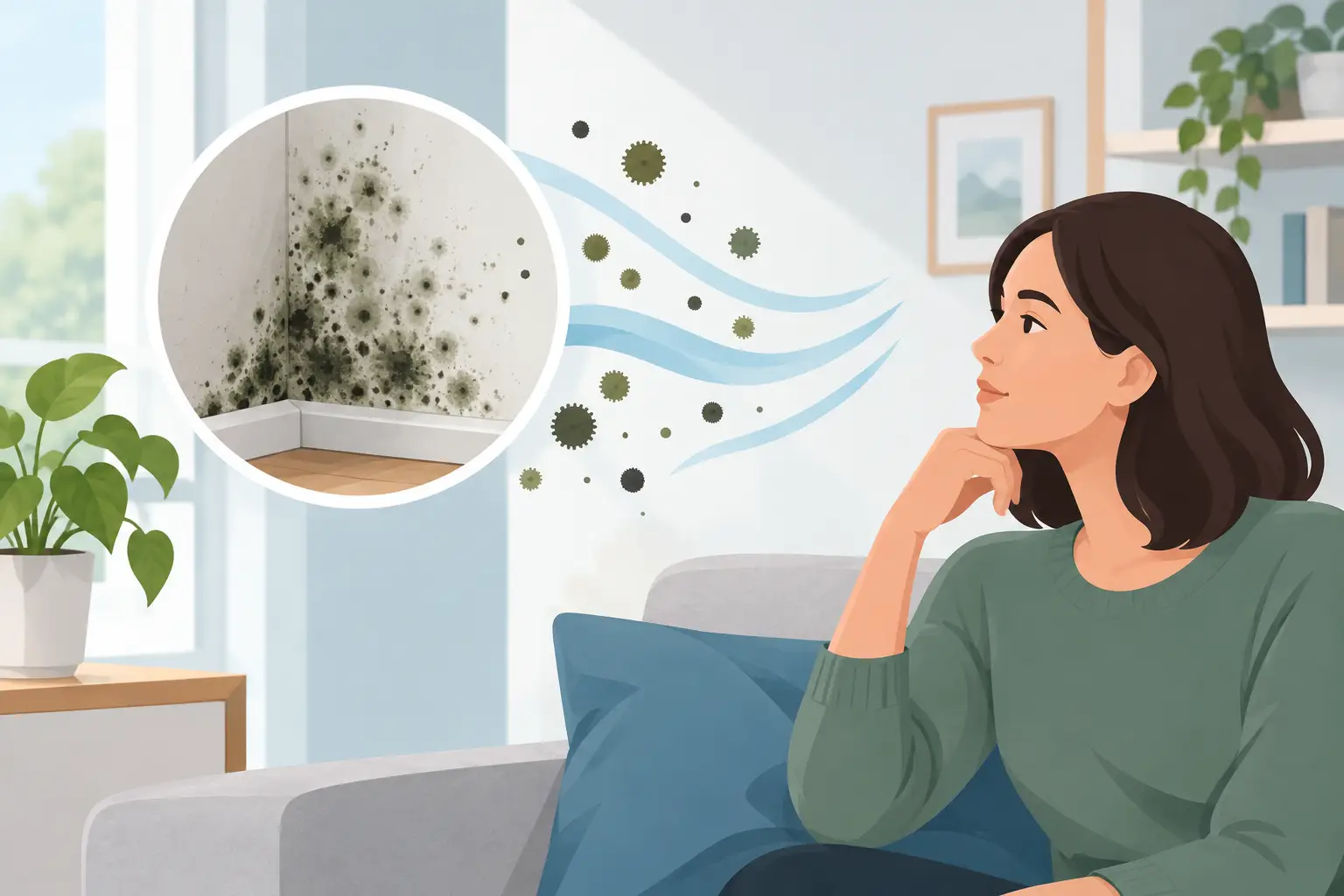
A basement can look dry after a small flood, a bathroom can seem fine after a slow leak, and a ceiling stain may not feel urgent. But moisture trapped behind walls, under flooring, or inside insulation can create a different problem: mold growth that affects the air throughout your home. So, does mold affect indoor air? Yes. When mold is actively growing indoors, it can release spores, fragments, and odors into the air you and your family breathe.
For homeowners in Mason and nearby Cincinnati communities, the key issue is not just whether mold is visible. It is whether there is an ongoing moisture source and whether contamination has moved into materials or spaces that need professional cleaning and drying.
How Mold Affects Indoor Air
Mold needs moisture and an organic surface to grow. Drywall paper, carpet backing, wood framing, insulation, dust, and fabric can all support growth after a leak, flood, toilet overflow, drain backup, or high-humidity event.
As colonies grow, they can release microscopic spores into the air. Spores are common outdoors and can enter a home through open doors, windows, HVAC systems, shoes, and pets. The concern increases when indoor conditions allow mold to grow continuously. Active growth can raise the concentration of mold-related particles indoors, especially in the room where the moisture problem started.
Air movement can carry those particles beyond the original damaged area. A basement mold issue may leave a musty smell on the first floor. A bathroom leak inside a wall may affect an adjoining bedroom. Running heating or air conditioning can move odors and loose particles through the home, although the extent depends on the size and location of the contamination and the condition of the HVAC system.
Mold can also produce volatile compounds that create the familiar musty, earthy odor many homeowners notice after water damage. That smell is not proof of the exact type of mold or a measure of health risk. It is, however, a strong reason to find the moisture source instead of covering it with air freshener or paint.
Why Some People Notice Mold More Than Others
Indoor mold can bother people differently. Some occupants may notice eye, nose, throat, or skin irritation, congestion, coughing, or a worsening of allergy and asthma symptoms. Young children, older adults, people with respiratory conditions, and people with weakened immune systems may be more sensitive to poor indoor air conditions.
Not every odor or symptom in a home is caused by mold. Dust, pets, cleaning products, pollen, smoke, plumbing gases, and poor ventilation can all affect comfort and air quality. Still, when symptoms or odors appear after water intrusion, it makes sense to treat the moisture problem seriously.
A professional restoration team should not diagnose medical conditions. What trained technicians can do is inspect the affected area, identify likely moisture pathways, remove damaged materials when needed, clean contamination using appropriate methods, and dry the structure to help stop future growth.
The Problem Is Often Hidden Behind Finished Surfaces
Visible mold is only part of the picture. Water can travel under vinyl flooring, wick up drywall, soak insulation, or collect behind a vanity long before a homeowner sees discoloration. By the time paint bubbles, baseboards swell, or a musty odor becomes obvious, moisture may have been present for days or weeks.
Common hidden trouble spots include basement walls after seepage, carpet and padding after a sump pump failure, cabinets around a dishwasher or refrigerator line, bathroom walls near a shower, and ceilings below an upstairs toilet or tub. In older homes, slow plumbing leaks can also feed mold inside wall cavities without causing a dramatic flood.
This is why surface cleaning alone is often not enough. Spraying a visible spot with store-bought cleaner may remove what you can see, but it will not dry wet drywall, address saturated insulation, or correct the leak that caused the growth. If the material remains wet, mold can return.
Signs Your Indoor Air May Be Affected by Mold
A musty odor that returns after cleaning is one of the most common warning signs. You may also see spotting on drywall, window trim, caulk, stored boxes, furniture, or basement contents. Other clues include peeling paint, warped flooring, recurring condensation, water stains, damp carpet, and a room that feels humid or stale.
Pay close attention after any water event. A toilet overflow, appliance leak, broken pipe, sewage backup, or basement flood should be dried quickly and thoroughly. Porous materials can hold moisture even when the surface feels dry to the touch. Delayed drying gives mold the conditions it needs.
If the water involved sewage or other contaminated water, do not treat it as a standard cleanup job. Contaminated water can introduce bacteria and other hazards in addition to causing moisture damage. Professional cleanup, removal of affected materials, and controlled drying are often the safer choice.
What Proper Mold Remediation Does for Indoor Air
Mold remediation is more than applying a chemical product to a wall. The job starts with finding and stopping the source of moisture. Without that step, cleaning is temporary.
Next, trained technicians determine which materials can be cleaned and which materials need to be removed. Nonporous materials may be cleaned successfully when contamination is limited. Wet or heavily affected drywall, insulation, carpet padding, and other porous materials may need removal because mold can grow into them, not just on top of them.
Containment is used when appropriate to help keep disturbed particles from spreading into clean areas of the home. Air filtration equipment can capture fine particles during the work, while controlled demolition and cleaning help remove affected materials. Structural drying then brings moisture levels back down using commercial dehumidifiers, air movers, and moisture-monitoring equipment.
The goal is practical and clear: remove contamination, correct the moisture source, and return the affected area to a clean, dry condition. That process can help improve indoor conditions far more effectively than masking an odor or painting over a stain.
What to Do After a Leak, Flood, or Musty Smell
Fast action matters. If water is actively entering the home, shut off the source if it is safe to do so and protect people from electrical hazards. Move dry belongings away from the affected area when possible, but avoid disturbing visible mold or contaminated materials unnecessarily.
Do not wait several days to see if wet carpet, drywall, or cabinets will dry on their own. Open windows and household fans may help in minor situations, but they are not a substitute for proper extraction and controlled drying after significant water damage. In humid weather, opening windows can even add moisture to the home.
Avoid tearing into walls or running fans directly on suspected mold growth before the area has been assessed. Disturbing contaminated materials without containment can spread particles to other rooms. Take clear photos for insurance purposes, then arrange for an experienced restoration company to inspect the damage.
When to Call for Professional Help
Call a professional promptly when you have visible mold larger than a small isolated area, a persistent musty odor, wet materials that have been sitting for more than a day, or water damage from a backup, overflow, or flood. You should also call when the affected area is inside a wall, beneath flooring, in an HVAC area, or near occupants with respiratory sensitivities.
Kans Water Restoration helps homeowners and businesses in Mason, West Chester, Loveland, Liberty Township, Maineville, Blue Ash, Kenwood, Montgomery, and surrounding areas handle water damage, structural drying, and mold remediation. With trained technicians and industry-standard restoration methods, the team can address the water source and the secondary mold issue instead of leaving you with a temporary fix.
If your home smells musty after water damage or you suspect hidden moisture, trust that warning sign. Getting the area inspected and dried now can protect your home, your belongings, and the comfort of everyone living inside.

