
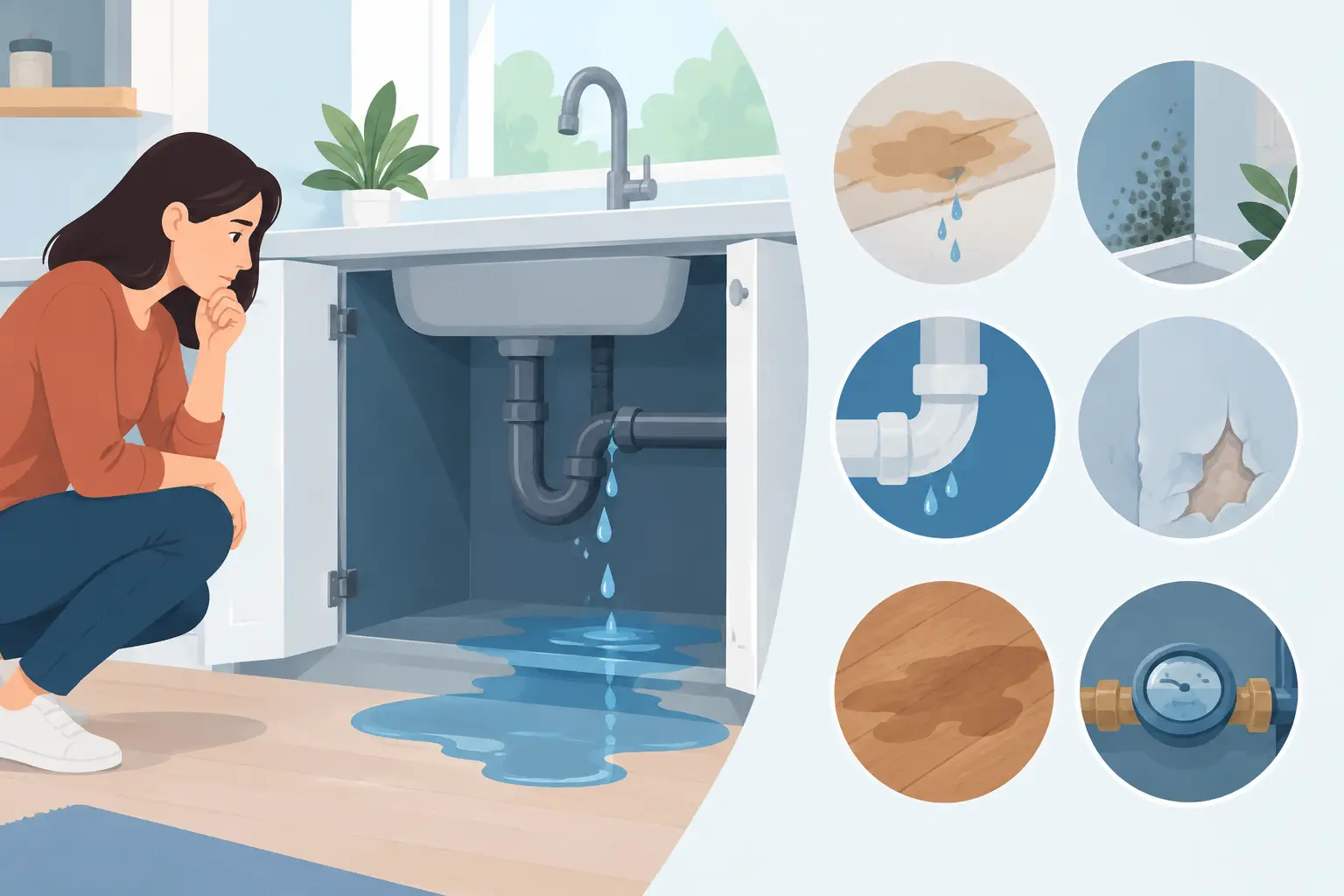
A plumbing leak does not need to flood a room to cause serious damage. A slow drip behind a bathroom wall, under a kitchen sink, or along a basement pipe can soak framing, flooring, insulation, and drywall for days before it becomes obvious. Knowing the signs of plumbing leak damage gives homeowners a chance to act before moisture turns into mold, structural deterioration, or a larger restoration project.
If you see evidence of water where it should not be, treat it seriously. Shut off the water supply if you can do so safely, avoid using the affected fixture, and arrange for professional help quickly. The visible water is often only part of the problem.
10 Signs of Plumbing Leak Damage You Should Not Ignore
1. Water stains on ceilings or walls
A yellow, brown, or gray stain on drywall is one of the clearest warnings that water has entered the structure. A ceiling stain may point to a leaking bathroom, shower drain, toilet seal, or water line directly above it. Wall stains can come from hidden supply pipes, drain lines, roof issues, or condensation, so the source needs to be located rather than guessed.
Fresh stains often feel damp or look darker around the edges. Even a dry-looking stain can mean the area was wet long enough to damage materials or support mold growth.
2. Peeling paint, bubbling drywall, or soft walls
Paint and drywall do not hold up well when moisture gets behind them. You may notice paint pulling away from a wall, small bubbles in the surface, cracked texture, or drywall that feels soft when lightly pressed. Baseboards may swell, separate from the wall, or become warped.
These problems are common around bathrooms, laundry rooms, kitchens, and finished basements. They can also develop behind cabinets, where a leak stays hidden until the surrounding materials begin to fail.
3. A musty smell that will not go away
A persistent musty odor is often a moisture problem before it is a visible mold problem. Water can be trapped inside wall cavities, below flooring, in insulation, or behind appliances. Ordinary cleaning may temporarily mask the smell, but it will return if the material remains damp.
Basements in Mason and nearby communities can be especially vulnerable because plumbing leaks, sump pump problems, foundation moisture, and poor drying conditions may overlap. A musty smell after a toilet overflow, drain backup, or pipe leak deserves attention, even if the room looks dry.
4. Warped, buckled, or separating floors
Wood flooring may cup, crown, buckle, or develop gaps when water reaches the subfloor. Laminate flooring can swell at seams, and vinyl may lift or loosen. In a bathroom, a floor that feels soft around the toilet or tub can signal a leaking wax ring, failing drain connection, or long-term water intrusion beneath the finished floor.
Do not assume flooring will dry on its own just because the surface feels dry. Water can remain trapped underneath, where it can damage the subfloor and create conditions for microbial growth.
5. An unexplained increase in your water bill
A sudden jump in water use without a change in household habits can point to a hidden supply-line leak. Toilets that run intermittently are a common source of wasted water, but leaks under slabs, behind walls, or in crawl spaces can also raise your bill.
Check for visible drips at faucets, under sinks, and near appliances. If the water meter continues moving when fixtures and appliances are off, call a licensed plumber to locate the leak. Once the leak is repaired, the affected building materials may still need professional drying and inspection.
6. Mold or mildew around plumbing fixtures
Small spots of mildew around a shower can be a ventilation issue. Mold spreading along baseboards, inside vanity cabinets, behind toilets, or on walls is more concerning, especially when it keeps returning after cleaning. That pattern can indicate a slow plumbing leak feeding moisture into hidden materials.
Mold is not just a surface-cleaning issue when the underlying wall, floor, or insulation is wet. The moisture source must be corrected, and contaminated materials may require controlled removal and remediation to protect the rest of the home.
7. Damp cabinets or damage under sinks
Open the cabinets below your kitchen and bathroom sinks periodically. Water rings, swollen particleboard, rusted pipe fittings, loose cabinet bottoms, and dampness around supply valves can all reveal a leak. A small drip from a drain trap or dishwasher line may cause major cabinet and flooring damage over time.
Cabinet materials absorb water quickly and rarely return to their original condition. If water has spread beyond the cabinet base, it may have reached the wall, adjacent flooring, or lower level ceiling.
8. Sounds of dripping or running water
Hearing dripping inside a wall, a faint hissing sound near pipes, or water running when no fixture is on should not be ignored. These sounds may be more noticeable at night, when the home is quiet. They can indicate a pressurized pipe leak, a leaking toilet, or a drain issue that is allowing water to escape.
The location of the sound is not always the location of the leak. Water can travel along framing and pipes before it appears elsewhere, which is why moisture detection and targeted inspection matter.
9. Low water pressure or discolored water
A drop in water pressure can have several causes, including municipal supply issues or mineral buildup. But if it appears suddenly at one fixture or throughout the home, it may also be related to a plumbing problem. Rust-colored or cloudy water, particularly after a leak or pipe repair, can be another reason to have the system evaluated.
These signs do not always mean your home has water damage. Still, they are worth checking promptly because a failing pipe can move from a slow leak to a significant break with little warning.
10. Cracks, loose tiles, or damage near a toilet
Tile cracks and grout problems can happen from normal wear, but loose tiles or spongy flooring around a toilet should raise concern. A failed toilet seal can leak a small amount every time the fixture is flushed. Because the water is often hidden under the floor, the damage may continue for months before a homeowner notices staining on a ceiling below or a soft bathroom floor.
If a toilet has overflowed, backed up, or leaked around the base, avoid treating it as a simple water cleanup. Wastewater can carry contaminants into flooring and structural materials. Proper extraction, cleaning, disinfection, and drying are necessary to return the space to a safe condition.
What to Do When You Find Plumbing Leak Damage
First, stop the water if possible. Turn off the fixture shutoff valve, the main water valve, or the appliance supply line, depending on where the leak is coming from. If water is near electrical outlets, appliances, or a breaker panel, stay out of the area and contact a qualified professional.
Next, call a plumber to repair the source of the leak. Repairing the pipe is essential, but it does not automatically dry what is behind the wall or under the floor. Wet drywall, insulation, carpet padding, subflooring, and framing can hold moisture long after the plumbing work is complete.
This is where a water restoration team can help. Moisture meters, thermal imaging, air movers, dehumidifiers, and controlled structural drying allow trained technicians to find and address water that is not visible from the room. Kans Water Restoration helps homeowners handle the cleanup after leaks, overflows, backups, and other water intrusions, with attention to drying and secondary mold concerns.
When a Leak Needs Immediate Restoration Help
Call for prompt water damage help when the leak has affected more than a small, easily dried surface. Water that has entered walls, ceilings, flooring, carpeting, cabinets, or a basement should be assessed quickly. The same is true when you smell mold, see visible growth, have sewage-contaminated water, or discover a leak that may have been active for an unknown amount of time.
Time matters because porous materials absorb water fast. Within a short period, swelling, staining, odor, and mold risk can increase. Fast extraction and drying can often limit demolition, reduce disruption, and help protect the parts of your home that are still salvageable.
A small stain, a soft floor, or a musty cabinet may feel easy to put off. It is usually cheaper and less stressful to investigate it now than to wait until the leak announces itself through a collapsed ceiling or widespread mold damage.

