
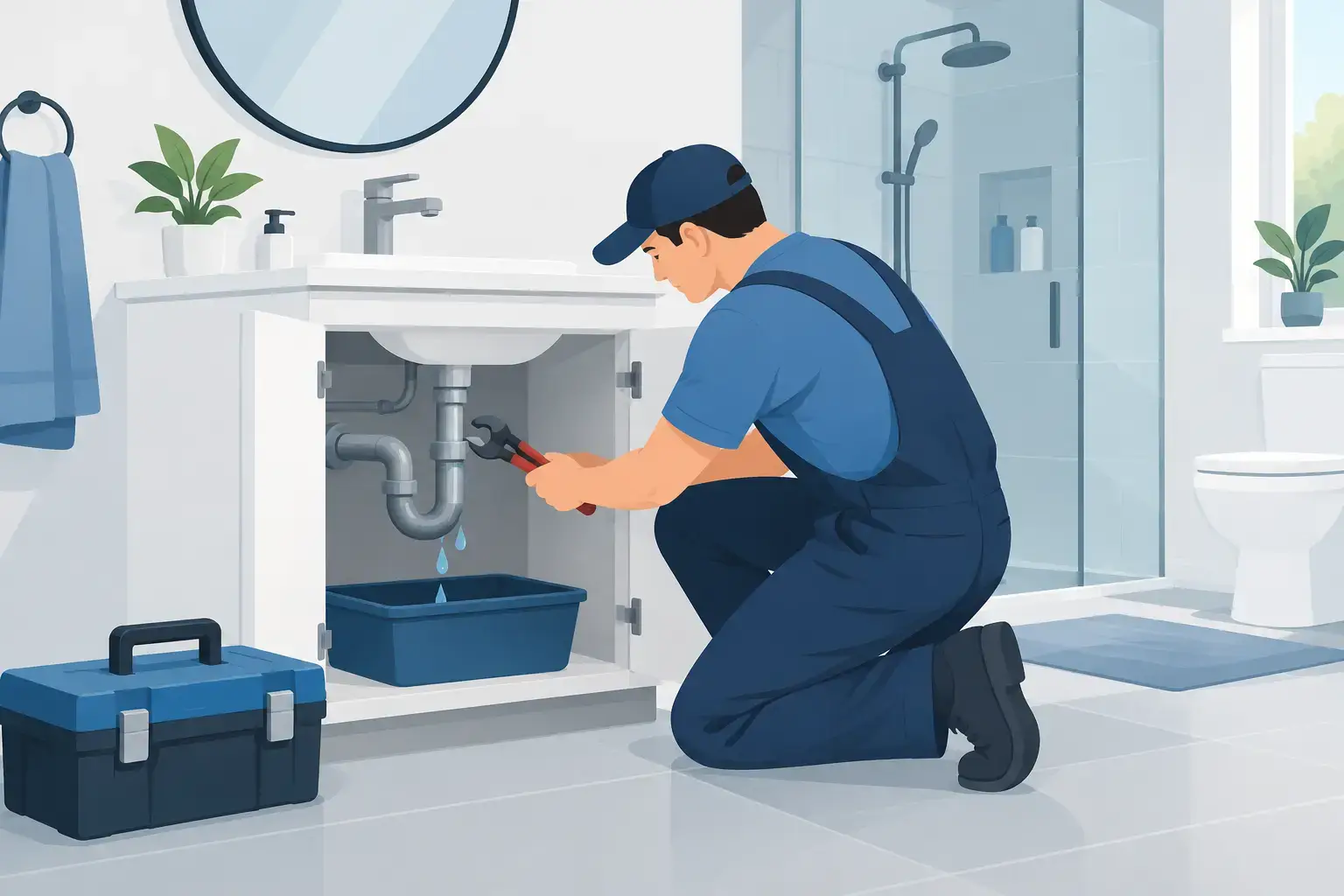
A bathroom leak rarely stays in the bathroom. Water can run beneath vinyl flooring, soak into the subfloor, travel through wall cavities, and stain the ceiling below before the problem looks serious. This guide to bathroom leak restoration explains what to do first, what damage may be hidden, and when it is time to call a trained restoration team.
For homeowners in Mason and nearby Cincinnati communities, the goal is simple: stop the water, protect the home, and get the area properly dried before mold or structural damage takes hold.
Start by Stopping the Water Source
The first priority is always stopping active water intrusion. A dripping supply line under the sink may be isolated at the fixture shutoff valve. A leaking toilet, overflowing tub, or failed shower valve may require shutting off the bathroom supply or the home’s main water valve.
Do not keep using a fixture that is leaking into the floor, wall, or ceiling. A slow leak can cause just as much trouble as a sudden overflow when it continues for days or weeks. If the leak came from a toilet overflow, drain backup, or sewage-related issue, keep people and pets away from the affected area. That water may contain contaminants that require professional cleanup and disinfection.
Once the source is stopped, remove what you safely can from the wet area. Pick up bath mats, towels, storage bins, and loose items from the floor. Avoid pulling up flooring or opening walls unless you know the extent of the damage. Disturbing wet materials can spread contamination, expose hidden mold, or make a repair harder to complete correctly.
Why Bathroom Leaks Cause Hidden Damage
Bathrooms are built around water lines, drains, fixtures, and enclosed spaces. That makes them especially vulnerable to damage that is not visible from the room itself. Water can collect beneath a toilet flange, behind a shower wall, under a vanity, or inside a ceiling cavity below the bathroom.
A dry-looking tile floor does not always mean the structure below is dry. Tile and vinyl can hold moisture underneath, while damp drywall may feel firm even after water has started weakening it. Moisture trapped behind baseboards or inside a wall can create conditions for mold growth in as little as 24 to 48 hours.
Watch for warning signs such as a musty odor, loose flooring, soft spots near the toilet or tub, peeling paint, warped baseboards, discolored grout, swollen vanity panels, or a stain on the ceiling below. These problems often mean the leak has been active longer than expected.
What Professional Bathroom Leak Restoration Includes
Bathroom leak restoration is more than extracting visible water and placing a few fans in the room. Proper restoration addresses the full path of the water, including materials and spaces where moisture can stay trapped.
A trained restoration crew begins by inspecting the affected room and nearby areas. Moisture meters, thermal imaging, and other specialized equipment help identify wet drywall, flooring, insulation, framing, and subflooring that may not be obvious during a visual inspection.
The work may include water extraction, removal of damaged materials, controlled structural drying, cleaning and sanitizing, odor control, and monitoring until moisture levels return to an acceptable range. If the leak involved a toilet overflow, drain backup, or other contaminated water, the cleaning process needs to be more detailed. Porous materials may need to be removed when they cannot be safely cleaned or dried.
The right approach depends on the source of the water, how long materials stayed wet, and what was affected. Clean water from a supply line is handled differently than water from a backed-up drain. A small leak caught the same day may only require targeted drying. A leak that has saturated a subfloor or traveled into a lower ceiling may require more extensive demolition and drying.
A Guide to Bathroom Leak Restoration After a Toilet Leak
Toilet leaks deserve fast attention because they can damage flooring around the base of the fixture without creating a large puddle. A failed wax ring, loose supply connection, cracked tank, clogged toilet, or damaged flange can send water into the subfloor and surrounding walls.
If the toilet overflowed with clean water and was stopped quickly, there may be limited damage. But if water reached baseboards, cabinets, adjacent rooms, or the ceiling below, professional moisture inspection is the safer choice. If sewage or drain water was involved, do not try to dry the area with household towels and a fan. Contaminated water can leave behind bacteria and odors even after the floor appears dry.
Restoration technicians can assess whether flooring needs to be lifted, whether the toilet area needs sanitation, and whether the subfloor has been compromised. This protects the home from recurring odors, mold growth, and soft flooring that can lead to larger repairs later.
Drying Is the Step That Cannot Be Rushed
Many homeowners focus on the plumbing repair, which is understandable. The leak has to be fixed. But fixing the pipe, drain, or fixture only stops new water from entering the home. It does not remove moisture already inside the building materials.
Household fans can help with surface moisture, but they usually cannot dry beneath flooring, inside walls, or within a saturated subfloor. Professional drying equipment is designed to move air, control humidity, and remove moisture from the structure. Technicians also monitor the drying process rather than guessing when the room is dry.
Drying too quickly without proper containment can spread dust or contamination. Drying too slowly can allow mold and mildew to develop. The right setup depends on the materials, the size of the affected area, and whether contaminated water was present.
When Mold Remediation May Be Needed
Mold is not guaranteed after every bathroom leak, but it becomes more likely when moisture remains hidden or the leak went unnoticed. Bathrooms already have high humidity, so a damp wall cavity, wet vanity backing, or soaked subfloor can become a problem quickly.
Visible growth, a persistent musty smell, or repeated moisture around the same fixture should be taken seriously. Painting over a stained wall or spraying a surface cleaner may hide the appearance temporarily, but it will not solve an active moisture problem behind the material.
Professional mold remediation begins with finding and correcting the moisture source. A qualified crew can contain the affected area, remove damaged materials when necessary, clean appropriate surfaces, and dry the structure so mold does not continue to return.
Protect Your Home and Your Insurance Claim
Take clear photos of the leak source, standing water, damaged flooring, wet belongings, and stains before cleanup begins when it is safe to do so. Save plumbing invoices and keep notes about when you found the leak and what actions you took. This information can be useful if you need to speak with your insurance carrier.
Insurance coverage varies by policy and by cause of loss. Sudden accidental water damage may be handled differently than damage from a long-term leak or neglected maintenance issue. A restoration company can document affected materials and drying work, but your insurer determines coverage.
Do not wait for an insurance decision before taking reasonable steps to prevent additional damage. Stopping the leak and beginning professional mitigation can help limit the size and cost of the loss.
Get Local Help Before the Damage Spreads
Bathroom water damage has a way of becoming more disruptive the longer it sits. What starts as a loose toilet connection or a small shower leak can turn into damaged flooring, a stained ceiling, mold growth, and an unusable bathroom.
Kans Water Restoration provides hands-on water cleanup, structural drying, sewage cleanup, and mold remediation for homeowners in Mason, West Chester, Loveland, Maineville, Liberty Township, Blue Ash, Kenwood, Montgomery, and nearby communities. Our trained technicians use industry-standard restoration methods to locate moisture, remove water, dry affected materials, and help bring your home back to a clean, safe condition.
If your bathroom floor feels soft, the ceiling below is stained, or water has reached areas you cannot fully inspect, getting professional help now can spare you a much larger repair later.

